Beef + Lamb NZ's Lambing Kit Checklist for a Tough Season
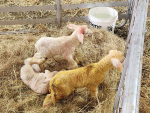
With lambing underway in many regions, Beef + Lamb New Zealand is encouraging farmers to put together a wellequipped lambing kit to help minimise lamb losses, particularly in bad weather.
 increase font size
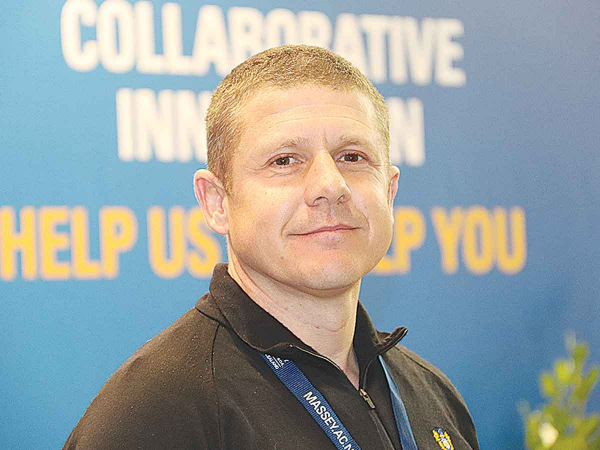 Professor Paul Kenyon.
Breeding hoggets at eight months of age can improve a ewe’s lifetime productivity.
However, if they are not well managed, it can have long term negative effects on ewe live weight and reproduction.
Current live weight targets for hoggets prior to breeding are a minimum of 40kg. However, some farmers are achieving pre-breeding weights of 45 to 50kg. It is unclear if there may be unforeseen consequences of achieving these greater pre-breeding weights.
The Sheep Research Centre at Massey University – led by PhD student Emmanuelle Haslin, with funding from B+LNZ – has done an experiment to determine the impacts of heavier pre-breeding live weight of hoggets on their subsequent live weight, reproductive performance and the growth of their progeny.
Twin-born Romney hoggets were allocated to one of two groups at weaning. The ‘Heavy’ group was preferentially fed until breeding to achieve an average live weight of 48.0kg, and the ‘Control’ group was managed to achieve an average pre-breeding live weight of 44.8kg.
From breeding at eight months of age onwards, both groups were managed and grazed together. The results showed that there was a 28% increase in pregnancy rate, a 6% increase in litter size which resulted in a 59% increase in lambing percentage in the heavy group compared to control group.
Hoggets in the heavy group were heavier than control hoggets throughout pregnancy. However, they did not differ during lactation or post weaning. Lamb live weights at birth, docking and weaning and lamb survival to weaning did not differ between groups.
As 2-tooths, there were no differences in the percentage ewes mated or pregnancy rate. There were also no differences in scanning or lambing percentages. Live weights of 2-tooths did not differ between groups.
Lambs born to the heavy and control 2-tooths had similar live weights and survival rates to weaning.
In conclusion, although hoggets in the heavy group had improved reproductive performance in their first breeding season, it had no impact on their live weight or reproductive performance as a 2-tooth. This suggests that hoggets can be bred at live weights up to 50kg to improve their reproductive performance without any impacts from their greater live weight.
• Paul Kenyon is a professor in sheep husbandry and deputy head of the agriculture & environment school at Massey University.
With lambing underway in many regions, Beef + Lamb New Zealand is encouraging farmers to put together a wellequipped lambing kit to help minimise lamb losses, particularly in bad weather.
Researchers at Massey University are using a special piece of scientific equipment to improve the measurement of greenhouse gas emissions from pasture soils.
Will a stronger, more coordinated voice help rebuild confidence and improve returns in the wool sector?
Interest in agritech and production animal systems has prompted Massey University's School of Agriculture and the Environment to new majors to its popular animal science degree.
The industry is crying out for graduates with agricultural related degrees.

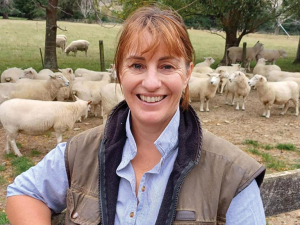
B+LNZ's Wormwise veterinarian Mary Bowron has won the Best Sheep and Beef Vet of the Year Award in recognition of her outstanding contribution to New Zealand’s sheep and beef sector.
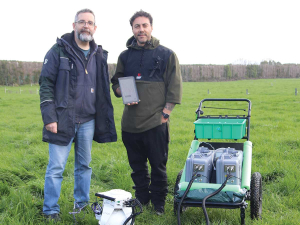
Researchers at Massey University are using a special piece of scientific equipment to improve the measurement of greenhouse gas emissions from pasture soils.
More signs of a booming kiwifruit sector.
OPINION: David Seymour and James Meager's plan to make it easier for farmers and orchardists to operate drones can best be described a 'courageous' move.
New Zealand wool is reaching new heights as air filtration companies move away from synthetic products to biodegradable alternatives.
Opuha Dam's ability to protect South Canterbury communities from major flooding has taken a significant step forward, with Opuha Water Limited (OWL) successfully commissioning a new outlet valve capable of releasing record volumes of water from the dam ahead of a weather event.