Damien O’Connor Criticises Budget 2026 as ‘Miserable’ for Rural New Zealand
A miserable budget that didn’t deliver much for anyone.
 increase font size
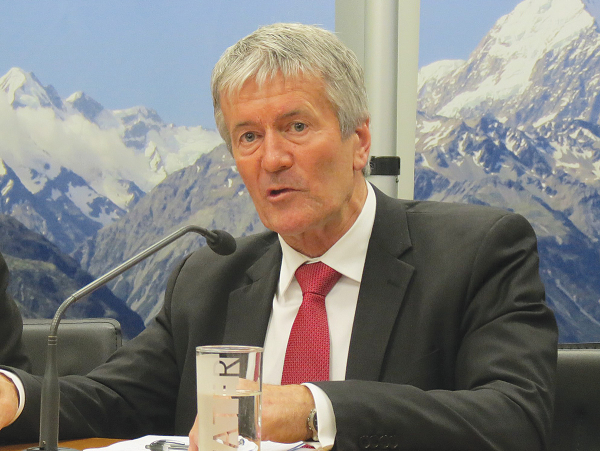 Former Agriculture Minister Damien O'Connor.
Damien O'Connor admits his six years in office were incredibly challenging, with Covid, droughts, floods, storms, M. bovis and volcanic eruptions to name a few.
He told Rural News that dealing with these issues had been very time consuming, which as a result, meant less time for things such as consultation and collaboration. But he says despite all the challenges thrown at the primary sector, it still managed to increase exports by 50%.
"Something I am very proud of and something that has largely gone unrecognised."
O'Connor claims that in terms of the primary sector, Labour packed a lot into its six years in office. He says four new free trade agreements were negotiated and a further three were upgraded and now the vast majority of NZ's trade is covered by formal legal structures.
He believes that almost eradicating M. bovis was a major achievement that meant the whole pastoral sector avoided significant consequences.
O'Connor concedes that, in terms of regulations, there were some "technical mistakes", but claims these were "quickly rectified". He says it's always a challenge dealing with other people in partnership, in a formal commercial arrangement or in government and mistakes do happen.
"What Labour can claim is that it was doing the right things for the right reasons," he says.
In his last days as a minister after the election, O'Connor represented NZ at a full meeting of the CPTTP in the United States. This meeting was significant because it was the first meeting that the UK attended as a full member of the group. He says NZ strongly supported Britain's membership of the CPTTP and says this is significant for NZ as it means that a European country is now connected to the Asia Pacific region.
Now that he's back in opposition, O'Connor says he has plenty to do, including work on his own place and giving some help on the family farm.
A miserable budget that didn’t deliver much for anyone.
The chief executive of Apples and Pears New Zealand, Danielle Adsett, says fruit quality this year is phenomenal and the sector is hitting crop estimates, which is great for growers.
National's decision to ‘dribble’ information about the NZ/India to Labour contributed to the delay in it deciding to supported the FTA.
Nearly three years on from Cyclone Gabrielle, Hawke's Bay apple orchardist Paul Paynter says they are still doing remedial work around their orchards and facing financial challenges.
When it comes to international trade, politicians from all sides of the aisle are united, says Labour's trade spokesman Damien O'Connor.



LIC shareholders have elected a new North Island representative to the co-operative's Board, along with five representatives to its Shareholder Reference Group (SRG), following the company's Annual Meeting held in Invercargill.
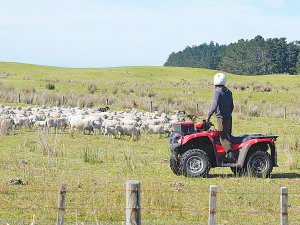
Farmers across parts of Southland and South Otago are continuing to deal with difficult conditions after a prolonged run of wet weather, with pressure building around feed supply, stock management, pasture damage, farm infrastructure and everyday workloads.
Federated Farmers says it welcomes Labour's commitment to reviewing the Sharemilking Agreements Act, calling on other major parties to do the same.
For Canterbury dairy farmers Sian Meijer and Rick Wobben, wearable technology has become one of their most valuable on-farm tools - helping manage 1850 cows across an expansive, high-performing dairy operation while improving efficiency, mating outcomes and day-to-day decision making.
Fonterra has unveiled its annual results for the 2026 financial year, posting $27 billion in revenue and close to $20 billion returned to New Zealand farmer owners and unit holders.
The first major update to the Dairy Cattle Code of Welfare in more than a decade has been released, marking what DairyNZ describes as an important step in ensuring animal welfare standards continue to evolve alongside scientific evidence and on-farm realities.