Lanaco and Blueair Launch World-First NZ Wool Air Filter
New Zealand wool is reaching new heights as air filtration companies move away from synthetic products to biodegradable alternatives.
 increase font size
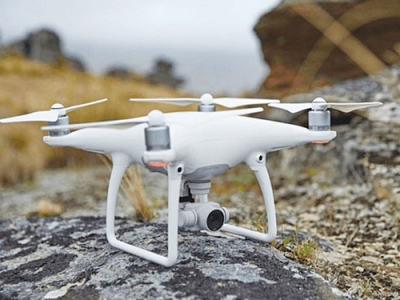 DJI's Phantom 4 is not just something to play with.
Drones have quickly evolved from being expensive toys to useful tools in a farmer's arsenal.
Farmers take advantage of them for looking at stock in distant locations, checking water lines for leaks or looking at arable crops for drainage, pest or fertiliser issues.
One thing stopping many from adopting the technology is the belief that they are difficult to fly, easy to crash and that you may need to have a ten-year-old nearby to help you, which may raise eyebrows in some circles.
A new starter kit from DJI sees its Phantom 4 quadcopter offering new technology such as obstacle avoidance and object tracking.
Dual cameras and proximity sensors detect any obstacles, such as ill-placed buildings, trees or even tractors, will bring the unit to a hover before impact, then move forward after re-plotting a new route.
Claimed to have 25% more battery life than the previous series 3 model, the machine has a top speed of 72km/h, around 28 minutes flying time and can relay images from 5km away.
The camera, which is mounted in a 3-axis, u-framed gimbal for enhanced stability, can shoot ultra HD video at 30 frames per second, full HD at 120 frames per second or can take 12 megapixel photos.
Flight management systems make flying, and avoiding things, a breeze with a 'follow-me' option for following a target, a course lock for restricting flight patterns, waypoint navigation and a feature called home-lock. In this mode the machine is tied to a base location with the option to pick a point of interest which keeps the unit circling above a specific area for best photo or video capture.
Ease of flying is also enhanced with 'active track' which keeps the drone automatically following an object as it moves, and allowing the operator to focus on getting the best from the camera, while 'tap fly' allows the use of a mobile device screen to pick a destination to which the machine will fly, then continuing the journey by tapping further points on the screen.
The final function is a return to home feature which brings the unit home safely, while also recognising the range left in the battery pack, and starting a return flight path so it is not left stranded somewhere.
New Zealand wool is reaching new heights as air filtration companies move away from synthetic products to biodegradable alternatives.

Generative AI in the workplace, trials in the field, and industry-relevant research took centre stage at this year’s Grape Days events in Central Otago, Hawke’s Bay and Marlborough.
Bradley Wadsworth lives on the family farm – Omega Station – in the Wairarapa about 30 minutes’ drive east from Masterton.
Virtual fencing company Halter is going global but for founder Craig Piggott, New Zealand farmers will always remain their main partners.
Felton Road Wines is using an electric drone sprayer to apply organic fungicides and monitor crops, cutting emissions and transforming management.


Mark Hooper has been appointed the new chair of NZPork, the industry organisation representing New Zealand pig farmers.

As the India-New Zealand free trade agreement enters into force, New Zealand’s apple industry has reaffirmed its commitment to the long-term development of India’s apple sector.
Fonterra shareholders can begin voting on Tuesday 20 October in the 2026 Board of Directors’ election, a Co-operative Council election in one Ward, and seven Annual Meeting resolutions.
National’s pledge to introduce 19 new national standards shows the party is serious about getting Wellington out of farming, Federated Farmers says.
The National Party’s policies to make it easier to grow fresh vegetables, secure reliable water and energy and simplify farm planning are practical changes that will give growers the confidence to invest, according to Horticulture New Zealand (HortNZ).
Fonterra Co-operative Group chief financial officer Andrew Murray has resigned to take up a role outside the dairy giant.