Major Parties to Debate Farming Policy Ahead of Election
Leading figures from the major political parties will be questioned on their primary sector policies at the Rural Issues Debate at Mystery Creek Events Centre, Hamilton, on 30 September.
 increase font size
 Immigration Minister Erica Stanford.
ACT's new immigration policy has come under fire from farmers and the Government.
Immigration Minister Erica Stanford says it's an attack on the dairy sector which relies heavily on migrant workers.
2025 data shows between 1400 and 2000 migrant workers are approved for dairy-specific jobs in New Zealand each year to fill employment gaps.
Stanford told Dairy News that for a dairy farmer employing a new migrant worker on a five-year visa, an extra $11,000 will need to be paid upfront.
NZ dairy farmers compete for the migrant workforce with Australia and Canada and Stanford says at the end of the day farmers will need to fork out the money to secure workers.
"If you are a dairy farm worker, a herd manager for example [on a] five-year visa, that's an $11,000 upfront cost that a migrant will have to pay on top of their visa fee, on top of their health check screening, and all those other costs," Stanford says.
Stanford said migrants would probably not be able to pay this upfront cost, which would then fall to the employer.
"I see this new policy as an attack on the rural sector."
Federated Farmers dairy chair Karl Dean agrees.
"We think it's poor policy, with negligible benefits and a whole lot of downsides," Dean told Dairy News.
"It's an idea floated by one coalition partner that we hope is not adopted - at the very least, not applied to the agricultural sector."
Dean points our that the Federated Farmers Mid-Season Farm Confidence Survey in January this year showed that farmers' ability to recruit skilled and motivated staff worsened compared to six months earlier (with 23% finding it harder and only 3% easier, compared to findings in the June 2025 survey).
Dairy farmers experienced the sharpest deterioration on this issue.
Dean adds that the dairy sector continues to rely on a flow of migrant staffing and production and this policy just throws up more cost and hurdles.
ACT plans to introduce a $6 per day infrastructure surcharge on temporary work visas, on top of existing charges.
ACT leader David Seymour says this ensures migrants contribute to New Zealand's infrastructure from day one, before they start paying tax.
"The fee is expected to raise around $80 million a year, while remaining more affordable than comparable visas in Australia and the United Kingdom," he says.
Dean says Federated Farmers hasn't reached out to ACT on the policy yet.
"We'll shortly be releasing our 'asks' of political parties as they work on their policies for the November election, and we'll no doubt be engaging with ACT and every other political group."
Leading figures from the major political parties will be questioned on their primary sector policies at the Rural Issues Debate at Mystery Creek Events Centre, Hamilton, on 30 September.

OPINION: A founding principle of Groundswell NZ is that farmers, and people generally, should be provided with full and accurate information about regulations that directly affect them.
OPINION: Well, the silly season is upon us and all us politicians are running around shaking babies and kissing hands, or maybe the other way around.
As the election heats up, Organics Aotearoa New Zealand (OANZ) has launched its election scorecard designed to help voters wanting to support policies that grow organic and New Zealand's organic sector.
It was billed as a chance for all the political parties to woo the rural vote, but question marks hang over just how effective this was.



LIC shareholders have elected a new North Island representative to the co-operative's Board, along with five representatives to its Shareholder Reference Group (SRG), following the company's Annual Meeting held in Invercargill.
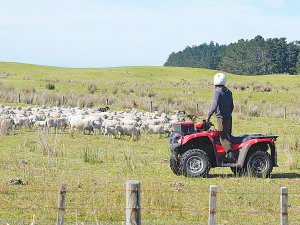
Farmers across parts of Southland and South Otago are continuing to deal with difficult conditions after a prolonged run of wet weather, with pressure building around feed supply, stock management, pasture damage, farm infrastructure and everyday workloads.
Federated Farmers says it welcomes Labour's commitment to reviewing the Sharemilking Agreements Act, calling on other major parties to do the same.
For Canterbury dairy farmers Sian Meijer and Rick Wobben, wearable technology has become one of their most valuable on-farm tools - helping manage 1850 cows across an expansive, high-performing dairy operation while improving efficiency, mating outcomes and day-to-day decision making.
Fonterra has unveiled its annual results for the 2026 financial year, posting $27 billion in revenue and close to $20 billion returned to New Zealand farmer owners and unit holders.
The first major update to the Dairy Cattle Code of Welfare in more than a decade has been released, marking what DairyNZ describes as an important step in ensuring animal welfare standards continue to evolve alongside scientific evidence and on-farm realities.