Rural Vote Debate on Q&A: Substance or Just Platitudes?
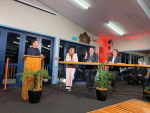
It was billed as a chance for all the political parties to woo the rural vote, but question marks hang over just how effective this was.
 increase font size
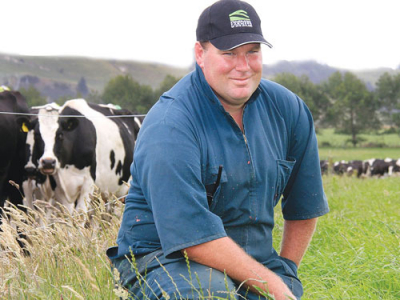 Andrew Hoggard.
Give us a “simple one-on-one” guide to the issue of climate change, says Federated Farmers vice-president and climate change spokesman Andrew Hoggard.
His plea follows the recent release of a 44-page report by the Parliamentary Commissioner for the Environment on how New Zealand could deal with greenhouse gas emissions.
A key finding is that if NZ’s emissions of livestock methane were held steady at 2016 levels, then within about ten years the amount of methane in the atmosphere from that source would level off.
However, the warming effect of that methane would continue to increase at a gradually declining rate for at least a century.
The report noted that if NZ wished to ensure that methane from livestock caused no extra contribution to warming beyond the current level, emissions would need to be reduced by at least 10-22% below 2016 levels by 2050, and by 20-27% by 2100.
Hoggard says the take-home message for him is that there is a helluva lot of uncertain science out there.
“You have similar reports on methane by Professor Dave Frame of Victoria University who teamed up with people from Oxford University; this says greenhouse gasses from agriculture just need to stabilise. So we have a variance here, with one report saying ‘stabilise’ and another saying ‘20 - 22 % reduction’.
“The one big positive is it doesn’t say we have to go to net zero which is option three, which supposedly a lot of people in government, and others, favour.”
Hoggard says clarity is needed on whether or not there needs to be a reduction.
He admits the latest report is very technical and “a few people who know some of the words throw them about and the rest of us feel ignorant because we don’t understand what they are talking about”.
“It would be useful to have a simple guide to explain the issues in laymen’s terms or at least in a simpler language, not such technical jargon.
“One of the things learned in university was that when you do put some of this technical stuff in simple layman's terms it proves you actually know the subject. Often when people use technical language it means they are reciting it from a textbook.”
Hoggard optimistic
Andrew Hoggard says Fonterra is taking a cautious approach in dropping the farmgate milk price to $6.75/kgMS, partly because of the levels of milk production in other countries.
But he doubts some of the countries will be able to maintain their present levels, especially in Europe.
“The drought has hit them hard and on social media I see stories of [European] farmers having fed out all their baleage and hay. I’m not sure how they will get through winter, so I would question whether they are going to be able hold up their production come winter,” he says.
Hoggard says unless the Europeans have secret supplies of feed they are not mentioning on social media they will have problems.
Fonterra’s financial position has him, as a shareholder, wondering what is going on.
“You have a whole bunch of questions but hopefully they are moving forward,” he says.
It was billed as a chance for all the political parties to woo the rural vote, but question marks hang over just how effective this was.
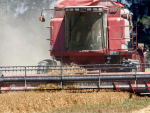
Mid Canterbury Federated Farmers arable chair, Bevan Lill, said Beef + Lamb NZ data indicated that for the last six years, the average arable return on investment was about 0.8% while inflation ran about 4% - so the average arable farm was going backwards at about 3% a year.
For the first time in a quarter of a century, Federated Farmers has something positive to say about the Labour Party’s climate change policy leading into a general election.
Rural leader Mark Hooper has been appointed as an independent director to the NZPork board, bringing extensive farming, governance and advocacy experience to the role.
Climate, nature and animal wellbeing make up Fonterra's refreshed sustainability roadmap released last week.


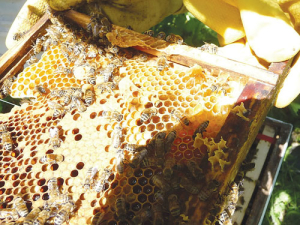
New Plymouth-based Manuka honey exporter Egmont Honey has completed its acquisition of Taihape beekeeping business Tweeddale's Honey, with settlement finalised on Friday, 18 September.
Westpac NZ is calling on farmers and growers to start preparing now for the possibility of a dry summer, as likely El Niño conditions raise the risk of drought across parts of the country.
Fonterra Co-operative Group has confirmed the independently assessed candidates standing for election to its board in 2026.
Fonterra has revised its Farmgate Milk Price forecast for the 2026/27 season, lifting the midpoint and narrowing the range on the back of improving global dairy commodity prices.
New Zealand's citrus growers were challenged to build their future on the value embedded in their fruit rather than the volume they produce, at Citrus New Zealand's annual gathering in Gisborne on 17 September.
Leading John Deere technicians and apprentices from New Zealand and Australians were recognised at the recent sixth annual JD Technician of the Year Awards, held in Brisbane.