Cameron Henderson Reappointed Unopposed as DairyNZ Deputy Chair
DairyNZ deputy chair Cameron Henderson has been re-appointed unopposed for another term.
 increase font size
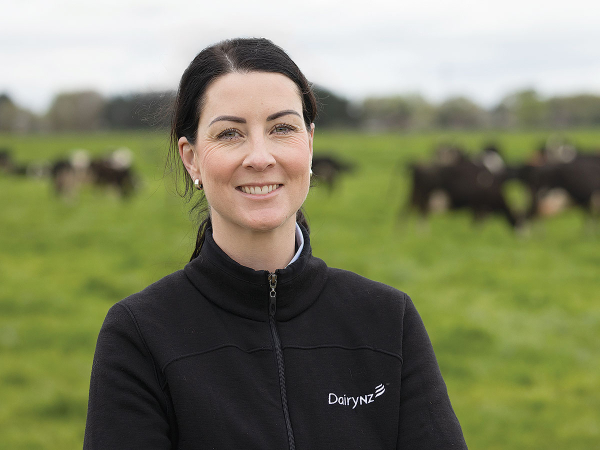 DairyNZ head of regional teams, Claire Bekhuis.
Dairy farmers are faring well despite data showing above average temperatures for most of the country.
DairyNZ head of regional teams, Claire Bekhuis, says that dairy farmers are doing well although the weather has varied from region to region.
“The Waikato and Bay of Plenty have experienced some summer rain combined with good growth conditions, season to date, meaning there is lots of feed available as well as supplementary feed on hand,” Bekhuis says.
She says that patches in the South Taranaki and Northland regions are experiencing relatively dry conditions, impacting pasture growth and day-to-day operations.
She says these regions are being watched and regularly assessed to see whether or not conditions worsen.
The rest of the lower North Island is experiencing relatively normal summer temperatures and has seen some rain in recent weeks, meaning that while those regions are slightly dry, it is not at a concerning level.
Bekhuis says in the South Island, conditions are similar, with Canterbury experiencing recent rain and Southland seeing consistent grass growth in the past month. However, the latter is still impacted by the extreme wet conditions that hit the region in the spring.
“While conditions are comfortable for most dairy farms right now, we are only halfway through summer, and conditions may change in the coming weeks,” she says.
“It is key for farmers to constantly assess and monitor their situation, and plan on how to handle feed, reduce stress and minimise the impacts on next season.
“This could include JESSICA MARSHALL DairyNZ head of regional teams, Claire Bekhuis. “While conditions are comfortable for most dairy farms right now, we are only halfway through summer, and conditions may change in the coming weeks.” considering different flexible milking options to reduce pressure on cows, demand on feed and people,” she says.
According to recent data from the National Institute of Water and Atmospheric Research (NIWA), 2024 marked New Zealand’s 10th warmest year on record.
According to NIWA’s 2024 Annual Climate Summary, annual temperatures were above average for much of Northland, northern Waikato, Bay of Plenty, coastal Hawke’s Bay, southern Taranaki, Whanganui, eastern and southern Wairarapa, Tasman, inland northern Canterbury, Banks Peninsula, and eastern Otago.
DairyNZ deputy chair Cameron Henderson has been re-appointed unopposed for another term.
Farms across the upper North Island are trialling different pasture mixes as part of a research programme that aims to build greater resilience into farming systems.
Election years are always a concerning time for farmers, according to DairyNZ chair Tracy Brown.
Most dairy regions around the country have had a pretty good season so far says Tracy Brown.


Minister of Conservation Hon Tama Potaka has appointed Susan O'Regan as Chair of the Queen Elizabeth II National Trust (QEII) for a three-year term.
Red meat farmers are welcoming Labour’s plan to review the Emissions Trading Scheme and not to campaign on pricing agricultural emissions.
Where any worker in the kiwifruit industry is mistreated, we expect the authorities to take action.
Mid Canterbury Federated Farmers arable chair, Bevan Lill, said Beef + Lamb NZ data indicated that for the last six years, the average arable return on investment was about 0.8% while inflation ran about 4% - so the average arable farm was going backwards at about 3% a year.
Seed and grain companies share the concerns of arable farmers about the viability of their sector, says Seed and Grain New Zealand chief executive Dr Sarah Clark.
The New Zealand Institute of Forestry (NZIF) says unnecessary changes to New Zealand’s Emissions Trading Scheme (NZ ETS) will seriously erode investor confidence and result in significant reductions in forest planting rates.