Europe’s largest dairy co-operative to launch in 2026 as Arla Foods and DMK merge
The creation of Europe's largest dairy co-operative should be complete by early 2026.
 increase font size
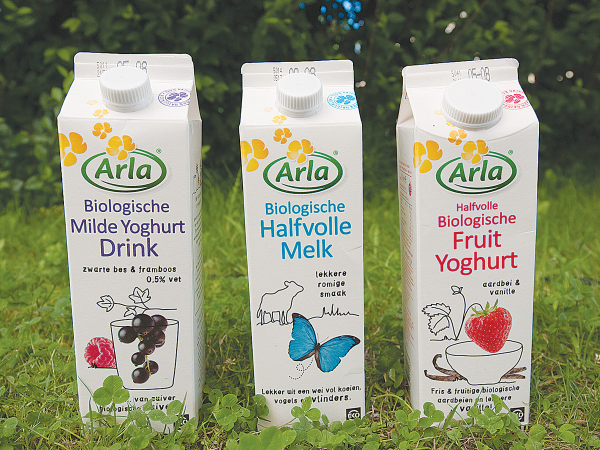 Caps make up 23% of plastics used in Arla cartons.
European dairy co-operative Arla Foods is eyeing a fibre-based cap for its milk cartons.
Arla claims this could be a first in the dairy industry and would reduce its plastic consumption by more than 500 tonnes annually if implemented.
The dairy cooperative is teaming up with Blue Ocean Closures in a formal partnership to create fibre-based caps.
The cardboard milk carton is a well-known classic in several countries and while the packaging has undergone several transformations over the years, it is now a near-optimal choice in terms of food safety and sustainability.
But Arla says the time has come to completely rethink a small yet significant part; the cap.
Making up around 235t of the plastic used in Arla's cartons, the farmer-owned dairy cooperative has now set its sights on the caps as part of its sustainable packaging strategy to eliminate use of fossil-based virgin plastic in its packaging by 2030. Arla Foods is partnering with Swedish start-up Blue Ocean Closures to create a solution that could see the dairy cooperative introduce the first fibre-based cap on milk cartons in the industry.
"Improving our packaging, including reducing our use of plastic, is imperative to us and we know that consumers are also very invested in this area. This project to explore what could very well be the first fibre-based cap on milk cartons is very exciting and shows that we at Arla are constantly looking to improve and transformation of sustainable packaging", says chief commercial officer at Arla Foods Peter Giørtz-Carlsen.
The cap has a body made of sustainably sourced FSC fibre material combined with a thin barrier coating.
Using advanced, proprietary vacuum press forming, this allows for a cap that is biobased, ocean biodegradable and recyclable as paper.
Blue Ocean chief executive Lars Sandberg says it is working with Arla to create a real difference in packaging sustainability.
"With increased fibre content, the solution will increase recyclability, starting in Scandinavia and paving the way for global change."
With funding from Arla Foods, the plan is now to develop a fully functional prototype and complete the testing phase by start of next year. With the cap responsible for 23% of the total plastic used for Arla's milk cartons, it is natural to ask why the dairy cooperative is not removing the cap altogether. Arla did in fact do that on its Danish organic range back in 2020 but it was not without criticism from consumers unhappy with the loss of convenience.
Arla Foods uses milk cartons in several markets including Denmark, Sweden and the Netherlands.
The creation of Europe's largest dairy co-operative should be complete by early 2026.
Reuters reports that giant food company Wilmar Group has announced it had handed over 11.8 trillion rupiah (US$725 million) to Indonesia's Attorney General's Office as a "security deposit" in relation to a case in court about alleged misconduct in obtaining palm oil export permits.
Global Dairy Trade (GDT) and Arla Foods have announced that Arla will begin offering European-sourced skim milk powder (SMP) on GDT Pulse from May 2025 as part of an extension to the GDT Pulse pilot.
Two European dairy co-operatives are set to merge and create a €14 billion business.
On the same day that the protesters against David Seymour’s Treaty Principles Bill marched on Parliament in Wellington, on the other side of the world, UK farmers were also marching on London.



Now in its fourth year, the 2026 Fencing Industry Awards, formed part of the proceedings of the FCANZ Conference, held in Nelson during August.
DairyNZ deputy chair Cameron Henderson has been re-appointed unopposed for another term.
OPINION: The stats speak for themselves.
Farms across the upper North Island are trialling different pasture mixes as part of a research programme that aims to build greater resilience into farming systems.
Election years are always a concerning time for farmers, according to DairyNZ chair Tracy Brown.
The Ballance Farm Environment Awards are coming to the West Coast of the South Island.