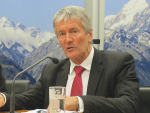
Damien O’Connor Criticises Budget 2026 as ‘Miserable’ for Rural New Zealand
A miserable budget that didn’t deliver much for anyone.
 increase font size
 A reliance on supplementary feed has caused New Zealand butter to start to turn white.
The Government has set up a $500,000 fund to help farmers and growers recover from drought.
Agriculture Minister Damien O’Connor says the fund will allow for grants of up to $5,000 to be made available to farmers and growers in areas badly affected by the 2020 drought: all of the North Island, the Chatham Islands, Christchurch, Marlborough, Nelson, Tasman, Selwyn, Kaikoura and Waimakariri districts and regions.
Farmers and growers who apply for grants will have to prove their businesses have been negatively affected by the drought and that they derive at least 50% of their income from the property.
The money is to be used by farmers to access a range of advisory services and drought-related advice, including help with strategic planning, technical advice on soil, pastures, animal production and feed budgeting. Grants can also be used for land management and sustainable management techniques.
O’Connor says that as New Zealand rebuilds its economy, there is an opportunity to rebuild better than before the pandemic and factor in resilience for our productive primary sector. He says so far this year the Government has invested $17 million to help drought-stricken regions recover from what many are saying is the worst drought in living memory.
“Although there has been a bit of rain relief recently, it takes steady rain at the right time to get grass growing again.
“The flow-on effects of water shortages and low feed availability take a long time to fully recover from and some farmers will be dealing with the effects of this drought for a year or more. One of the unusual consequences of the drought has already started to be noticed by consumers – that being the paler colour of our butter. As the saying goes ‘you are what you eat’ and the same goes for cows,” he says.
O’Connor says NZ’s unique pasture-based farming system gives our butter a wonderful yellow colour but the shortage of grass and reliance on supplementary feed has meant our butter has started to turn white.
“A return to yellow will maintain our competitive advantage in our export markets,” he says.
A miserable budget that didn’t deliver much for anyone.

National's decision to ‘dribble’ information about the NZ/India to Labour contributed to the delay in it deciding to supported the FTA.
Sheep and beef farmers in Hawke's Bay are being urged to keep a close eye on the wells that supply water to their stock.
Fears of a serious early drought in Hawke’s Bay have been allayed – for the moment at least.
OPINION: Farmers along the east coast of both islands are being urged to start planning for drought as recent nor'west winds have left soil moisture levels depleted.


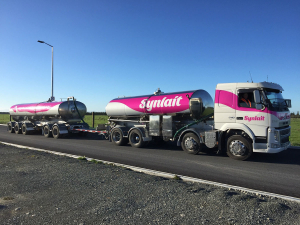
Synlait has swung to second-half profit as operations stabilise, but the dairy processor still posted a $75.4m annual loss.

LIC shareholders have elected a new North Island representative to the co-operative's Board, along with five representatives to its Shareholder Reference Group (SRG), following the company's Annual Meeting held in Invercargill.
Farmers across parts of Southland and South Otago are continuing to deal with difficult conditions after a prolonged run of wet weather, with pressure building around feed supply, stock management, pasture damage, farm infrastructure and everyday workloads.
Federated Farmers says it welcomes Labour's commitment to reviewing the Sharemilking Agreements Act, calling on other major parties to do the same.
For Canterbury dairy farmers Sian Meijer and Rick Wobben, wearable technology has become one of their most valuable on-farm tools - helping manage 1850 cows across an expansive, high-performing dairy operation while improving efficiency, mating outcomes and day-to-day decision making.
Fonterra has unveiled its annual results for the 2026 financial year, posting $27 billion in revenue and close to $20 billion returned to New Zealand farmer owners and unit holders.