Farmers Warned Over Track Dangers After Wairarapa Floods
The terrible floods that hit the Wairarapa may have subsided, but the danger to farmers still exists, according to local Federated Farmers president Rob Hickson.
 increase font size
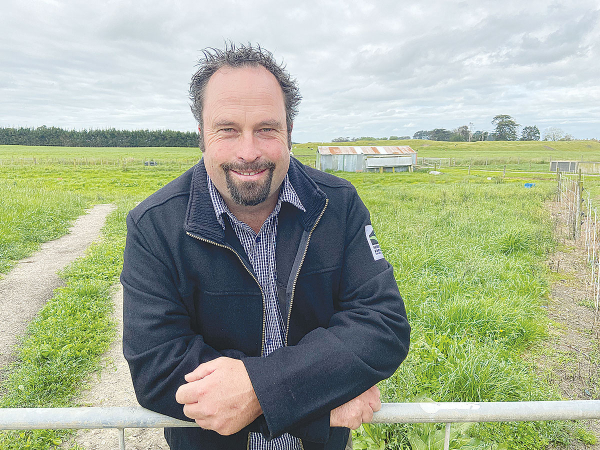 Richard McIntyre says suddenly finding an alternative to feed isn’t that easy in certain parts of the country.
If there is a maize grain shortage next season, farmers will have to look for an alternative and that may not be easy.
That’s the view of Federated Farmers dairy chair and Horowhenua farmer, Richard McIntyre. He was responding to fears about the uncertainty of having sufficient maize grain grown and available in the North Island in 2025.
McIntyre told Dairy News that right now he’s feeding out maize grain to his cows, which he normally does in the winter and spring.
“Famers rely on having a consistent and regular supply of supplementary feed and if they suddenly don’t have it, they must find an alternative which is not that easy in certain parts of the country. So, this is certainly a big issue for dairy farmers and has consequences including cost implication,” he says.
Fears of a shortage of maize grain stems from the fact that most of it is grown in the North Island and must be dried to a moisture level of around 14% which has to be done at large drying facilities off-farm. The crux of the matter is that gas is used for drying the grain and there is uncertainty about whether there will be gas available and if there is – how much it will cost.
So serious is the situation that the head of Federated Farmers arable group, David Birkett, has already called a meeting of all the interested parties – farmers, seed companies, grain merchants and rural contractors together to discuss what to do next. Because of the uncertainty, now seed companies are holding off giving contracts to farmers to grow grain maize and time is running out for growers to make plans for 2025.
“At this stage no-one knows what the position will be next year and that is creating huge uncertainty for potential maize grain growers,” he says.
In the North Island, maize grain is usually harvested in April, May and June and hence is damp when harvested. Normally the companies that put out contracts for farmers to grow the grain know in advance the cost of drying the grain and include that in the contract price they offer prior to planting. But few if any contracts have been offered so far.
Birkett says given that the past season for maize was something of a disaster, most are apprehensive about what might happen in 2025. He says it’s highly unlikely a farmer will grow a maize grain crop without a contract and he’s predicting maize grain supply will be down next year. But he adds the maize silage crop will remain about the same as it.
“We have also briefed central government on the issue, but have had little response and it would appear that they taking the view that this is a case of the market doing what it does,” he says.
Back on the land, McIntyre and other dairy farmers are thinking about alternatives to maize grain. He says maize grain is a carbohydrate and the other alternatives could be wheat, barley or tapioca. McIntyre also notes that others such as pig and poultry farmers could find themselves in a similar situation.
Finally, Birkett says the issue is a serious one with implications right across the primary sector. He says if less maize is planted it has implications for rural contractors among others.
“This is not just about farming – it’s something of national importance that needs to be sorted out,” he says.
He, like other farmers, is hopeful that a resolution to the problem can be found quickly.
Not everyone is affected by the gas price crisis. Farmers who grow maize silage are not affected. Roughly 50% of the maize grown in NZ is for grain and the other half for maize silage.
The terrible floods that hit the Wairarapa may have subsided, but the danger to farmers still exists, according to local Federated Farmers president Rob Hickson.

Will a stronger, more coordinated voice help rebuild confidence and improve returns in the wool sector?
New Zealand's pest problem has reached crisis point, according to Federated Farmers' second National Pests Survey, which shows farmers are spending more money and effort on control — yet pest numbers keep climbing faster than they were two years ago.
Despite political shenanigans in Wellington, farmers are confident that Resource Management Act (RMA) reforms will get over the line in this term of Parliament.
The Government has announced it will pause key parts of Waikato Plan Change 1 (PC1) in a decision that is set to give Waikato farmers a reprieve from new consenting and farm-planning requirements while the wider resource management system is overhauled.


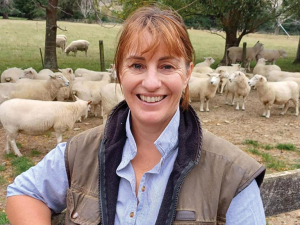
B+LNZ's Wormwise veterinarian Mary Bowron has won the Best Sheep and Beef Vet of the Year Award in recognition of her outstanding contribution to New Zealand’s sheep and beef sector.
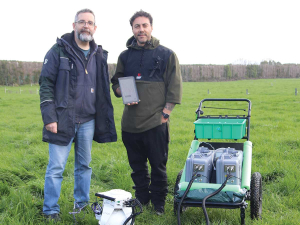
Researchers at Massey University are using a special piece of scientific equipment to improve the measurement of greenhouse gas emissions from pasture soils.
More signs of a booming kiwifruit sector.
OPINION: David Seymour and James Meager's plan to make it easier for farmers and orchardists to operate drones can best be described a 'courageous' move.
New Zealand wool is reaching new heights as air filtration companies move away from synthetic products to biodegradable alternatives.
Opuha Dam's ability to protect South Canterbury communities from major flooding has taken a significant step forward, with Opuha Water Limited (OWL) successfully commissioning a new outlet valve capable of releasing record volumes of water from the dam ahead of a weather event.