What Would Synlait Be Worth to Fonterra or a2 Milk?
Speculation of a possible joint move by Fonterra and a2 Milk to buy Synlait raises a much bigger strategic question, says agribusiness expert Dr Nic Lees.
 increase font size

FONTERRA CAN generate cash from within its business to finance growth but needs a stable capital base to do this, says chief executive Theo Spierings. He says TAF (trading among farmers) will ensure a strong capital base for Fonterra.
Briefing farmers on the co-op's strategy refresh last week, he made it clear Fonterra will not be asking farmers for cash to fuel growth. Instead he wants the co-op's New Zealand, Australia and Middle East businesses to generate more cash.
Spierings also hinted at downsizing Fonterra's US and Europe business saying their relevance had "gone down".
"We're not saying we won't be in the US and Europe but will look at the cost and cash delivery of business units," he says.
The co-op's growth strategy will target China, south-east Asia (ASEAN) and Latin America. Spierings will later this month present his growth strategy to Fonterra's board for approval.
The co-op is expected to release more details at its half-year results announcement on March 29.
Last week Spierings, co-op chairman Henry van der Heyden and Fonterra Shareholders Council chairman Simon Couper briefed farmers on the strategy refresh in Christchurch, New Plymouth and Hamilton. The Hamilton meeting was live on a Sky TV channel and farmers were allowed to phone in with questions.
Spierings explained the global dairy outlook and opportunities for Fonterra. For Fonterra, milk volume and growth in value are crucial. The long-term outlook for dairy product demand is bullish. Global demand is forecast to grow by 160 billion litres by 2020 while New Zealand's production is expected to grow by 5b L.
Spierings says the question for Fonterra is whether it will only focus on New Zealand milk or look at overseas milk pools. He warns Fonterra's market power in dairy will diminish if it's unable to obtain more milk to meet global demand.
The strongest demand growth is being recorded in emerging markets like India and China. Demand is flattening out in the US and Europe. Fonterra, which sends 40% of its milk to Asia, is well placed to capitalise on growth opportunities, he says.
Spierings wants Fonterra to use both its brands and ingredients businesses to target four key platforms; nutrition for mother and child as Asia's population grows, ageing population in Japan and China, tackling obesity and convenience foods.
At the same time Fonterra needs to protect its market share in China, south-east Asia and Latin America, regions that take 50% of its milk.
"If we don't protect our market share, we might lose our position. If that happens 50% of our
milk that goes to this region will end up on GDT and that will make a huge impact on the milk price," he told farmers.
Speculation of a possible joint move by Fonterra and a2 Milk to buy Synlait raises a much bigger strategic question, says agribusiness expert Dr Nic Lees.

In the past, much has been made of the concept of farm to fork, but an Australian expert in food science and marketing with experience in the dairy industry, Dr Angeline Achariya, says the reverse of this slogan is critical to win modern day consumers.
A four year trial has reaffirmed that mixing plantain into dairy pastures can help reduce nitrogen losses to freshwater while maintaining milk production and profitability, say researchers.
Fonterra has opened its upgraded Chengdu Application Centre, bringing New Zealand dairy expertise closer to customers in one of China's fastest-growing regions.
Tatua chair Stephen Allen says he leaves the co-op with a deep sense of gratitude for the people who have contributed to its success.


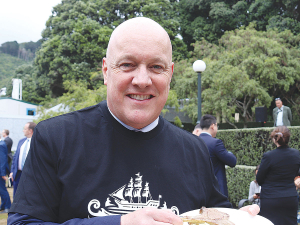
OPINION: In politics, credibility is and should be big. It must surely rank higher than charisma, which is quite trite and superficial. Yet, voters nowadays are often wooed and influenced by how someone looks or talks at a superficial level. TV plays a huge role in this.
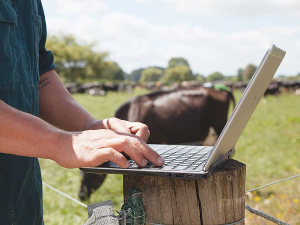
Farmers can spend less time on paperwork, thanks to a new data sharing agreement between DairyNZ’s DairyBase and LIC’s MINDA software.
Kaikōura families affected by July's severe storm have found a practical solution to a problem that's kept some children away from regular schooling for weeks: a washed-out section of Inland Kaikōura Road, which has stopped the local school bus from running its usual route.
Rural New Zealand is welcoming the Government’s recent package of rural healthcare initiatives.
Interest in agritech and production animal systems has prompted Massey University's School of Agriculture and the Environment to new majors to its popular animal science degree.
Ballance Agrinutrients chief executive Kelvin Wickham says despite a tough year, he is pleased the business has returned to profit.