Milk Powder Prices Prop Up Farmgate Milk Price
Milk powder prices are keeping farmgate prices up, helping processors offset the dip in milk fat prices.
 increase font size
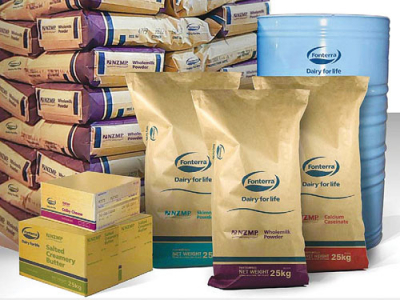 Global Dairy Trade (GDT) auctions have traded more than US$22 billion worth of products over the last 10 years.
GDT Events auctions rewrote the rules of engagement for buying and selling dairy commodities, says Eric Hansen, director Global Dairy Trade.
In the last 10 years to the end of June this year Global Dairy Trade has facilitated the trading of at least US$22 billion cumulative value of dairy products to buyers from 80 countries.
It held its first online auction ten years ago on the GDT Events platform, aiming to be the most credible and comprehensive maker of prices for core dairy ingredients.
“In the era before Global Dairy Trade existed, buyers and sellers were struggling to understand what constituted a current market price in the midst of unprecedented volatility,” he says.
“Dairy farmers had limited access to information about what the milk in their vats was worth in international markets.
“By applying advanced auction methods to create a new sales channel for globally traded commodity dairy products, Global Dairy Trade’s auctions provided assurance to buyers that they were paying a fair market price.
“Buyers and sellers were able to better manage price risk. And farmers had a regular market-based price signal on which they could plan their farming businesses.”
The transparent, market-based pricing Global Dairy Trade provides now has wide market interest and acceptance and furnishes the references prices on which financial risk management tools are built.
In the early days, however, the Global Dairy Trade development team was hard-pressed to prove that an online dairy auction platform would work in practice, says Hansen.
“We started with a team of three people, selling just one product each month -- whole milk powder.
“We launched at a challenging time. Our first auction on July 2, 2008 delivered prices in the mid-range of expectations. Not long after that, the global economy went into freefall. As the global financial crisis took hold, dairy prices crashed and they kept falling until February 2009.
“Then the recovery started. The result achieved in the first trading event provided proof of concept; we just had to hold on until the market hit bottom and turned.
“We kept the monthly sales going and GDT Events provided price discovery in a world of huge uncertainty.”
Over time, more sellers joined GDT Events which is now a trusted and transparent platform for high-volume, high-quality generic dairy ingredients.
Milk powder prices are keeping farmgate prices up, helping processors offset the dip in milk fat prices.
OPINION: With 10,500 dairy farms, New Zealand continues to punch above its weight around the world.
A milk glut around the world shows no sign of easing, putting downward pressure on farmgate milk prices for the next few months.
Fonterra has reduced its forecast 2026/27 Farmgate Milk Price.
New Zealand dairy farmers are set to be the first in the world to receive access to a new digital physical milk pricing tool that enables them to fix the price for their physical milk.


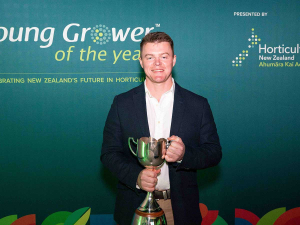
The potato industry is celebrating the success of two rising stars - James Blair, the 2026 Young Grower of the Year and runner-up and innovation award winner, Amber Davy.
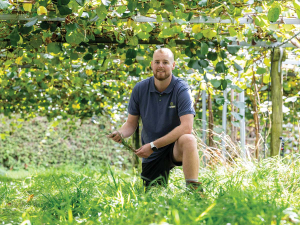
Twenty-eight emerging leaders from across the horticulture sector spent two days last month learning valuable skills and connecting with industry experts.
There are five entrants in this year’s Young Horticulturist of the Year, competing in a series of technical, practical, business and leadership challenges.
A seasoned horticulturist has been appointed to deliver the Apple Action Plan, a key initiative of the India-New Zealand Free Trade Agreement.
New Zealand's citrus growers have been told to compete on the value built into their fruit rather than the volume they grow.
Hawke's Bay fruit growers are being reminded of the need to prepare for whatever the El Niño weather system may bring in the coming months.