
Short courses for all visa holders
Primary ITO has a wide range of work-based training options to help you grow the skills and knowledge of your staff in 2025.
 increase font size
Primary ITO, the industry training organisation for the primary sector, is launching new qualifications for the agriculture sector this month.
The new qualifications will be filtering out to all primary ITO sectors – horticulture, sports turf, equine, seafood and food processing – over the next two years.
The new qualifications are aimed to "work the way you work" – more learning in the workplace and less time spent in the classroom.
"Our new programmes are designed with industry to ensure our learners leave with the skills and knowledge required to consistently perform in the workplace," says Graeme Couper, Primary ITO education manager.
"We want to ensure they understand the reasons behind the practical application, have the ability to perform to industry standards and have the skills to do the job they are employed to do.
"More training takes place in a workplace context, with structured field trips allowing learners to view different systems and discuss what's happening and why. Assessments are also more directly related to the workplace, with a variety of options for capturing evidence through technology and workplace based tasks."
The content of the training programmes will also be better matched to seasonal activities so learning can be implemented straight away.
For current Primary ITO customers, their current training programmes remain valid and they will have until December 2017 to complete them. Primary ITO's training advisers will talk with current students about what the changes mean and ensure any training is tailored to help meet their individual career or business aspirations.
"The new programmes are more holistic and applied," explains Couper. "Our overarching vision is to produce Primary ITO graduates with
the capabilities our industries need.
"We want to develop people who are adaptable to industry trends, technically capable, innovative problem-solvers with critical thinking skills. We must create lifelong learners and these new qualifications are a huge step in the right direction."
Primary ITO has a wide range of work-based training options to help you grow the skills and knowledge of your staff in 2025.

Now is the best time for training, says the new sector manager for dairy at Primary ITO, Marianne Awburn.
Nine lucky school leavers passionate about farming will join Pamu for a two-year journey into agriculture, living and working at Pamu farm, Aratiatia near Taupo.
Primary ITO will apply to the Ministry of Education for more Trades Academy places with demand from schools now outstripping supply.
New ‘micro-credentials’ in wool harvesting will help meet a critical need to train shearers and wool handlers, claims Primary ITO chief executive Linda Sissons.


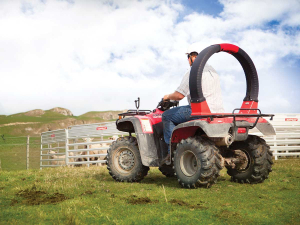
When Northland leather worker Vernon Suckling started making horse saddles 50 years ago, quad bikes and side-by-side vehicles were unheard of.

Alliance Group has confirmed that eligible farmer-shareholders who supply and continue to back the business will receive up to $20 million later this year, following the strategic investment partnership with Dawn Meats.
With a general election under five weeks away, Rural News is asking major political parties about their policies and positions on key issues facing the primary sector. We will run their responses to each question over the next four weeks. The ACT Party and the Greens didn't respond in time.
The red meat sector is in great heart.
Dr Scott Champion, Foundation for Arable Research chief executive, says that everyone in the supply chain had a role to play in driving the sector's long-term success.
Entries opened on Monday, 5 October 2026 for the 2027 New Zealand Dairy Industry Awards (NZDIA), which organisers describe as the nation's biggest celebration of excellence in the dairy sector.