What Would Synlait Be Worth to Fonterra or a2 Milk?
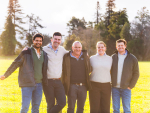
Speculation of a possible joint move by Fonterra and a2 Milk to buy Synlait raises a much bigger strategic question, says agribusiness expert Dr Nic Lees.
 increase font size
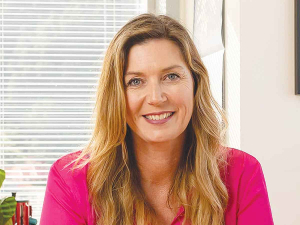
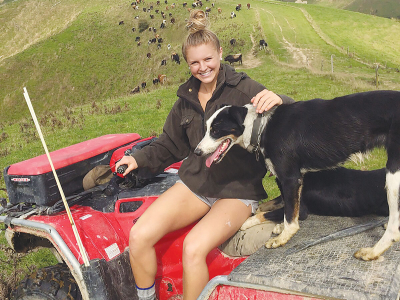 Third-year Lincoln student Lucy Hewitt was this year’s First Light Scholar.
A Lincoln University student, Lucy Hewitt (20), has a keen interest in maximising the value from every animal carcase.
Hewitt, in her third year of a bachelor of agribusiness and food marketing degree, is this year’s recipient of First Light Foods’ annual scholarship.
She grew up on a sheep and beef farm in Pahiatua and returns each summer to help her father on his land.
Hewitt has long known the First Light brand through an aunt and uncle who supply the grass-fed meat company. She was attracted by the hands-on experience the scholarship offers.
The scholarship, awarded annually since 2014, is for $5000 and an opportunity to spend a week at First Light’s Hawke’s Bay premises.
“First Light is a small company... agile and able to try new things,” Hewitt said. “I was excited to have won, particularly as it is a company I’d like to work for.”
Hewitt’s interest in supply chain management fits with the company’s criterion of awarding the scholarship to a person planning a career in a land based industry with an emphasis on agribusiness and food.
Hewitt visited Hawke’s Bay in late August to meet First Light and speak at the company’s annual farmer conference – the Spring Muster.
She spoke about wanting to see processors make better use of whole animal carcases.
“Less than 50% of an animal’s carcase is converted into valuable cuts of meat.
“The remainder is classified as low value or discarded as waste material,” Hewitt said. “As the industry faces sustainability and food security issues it needs to make better use of that remaining 50%.”
She believes organ meat and offal is one future solution.
“On a gram by gram basis they are much more nutrient dense than their muscle meat counterparts. Now is the time for organ meats to take the lead.”
Hewitt told the 200 farmers, business people and First Light managers at the conference that now is the time to capitalise on the premium pet food sector.
“Many consumers consider their pets equally important as family members, hence an untapped market for petfood of prestigious quality,” she said.
Greg Evans, First Light co-founder, says Hewitt was selected as the 2019 scholar because of her attitude and effort as a student, and a thirst for working in the red meat industry.
“Our objective is to develop relationships with young leaders and encourage them to continue to strive to be the best they can,” he said.
“Lucy is passionate about putting this into practice in business, she understands farming and she is an avid supporter of the First Light differentiated model.”
Hewitt’s career vision is to work in the red meat sector beyond the farmgate.
All about First Light
Set up in 2003 by Gerard Hickey, Greg Evans and Jason Ross, First Light is New Zealand’s only commercial producer of 100% grass-fed Wagyu beef. The company also markets premium venison. It has developed a unique value chain model to produce and deliver grass-fed meats directly from the farm to the person who presents or consumes the steak.
Speculation of a possible joint move by Fonterra and a2 Milk to buy Synlait raises a much bigger strategic question, says agribusiness expert Dr Nic Lees.

Lynnette Hudson's 30-year obsession with Pinot Noir was sparked working vintage in Burgundy, seeing how subtle changes in terroir were expressed in the glass. It was, she says, "an elightening moment in every way".
A four year trial has reaffirmed that mixing plantain into dairy pastures can help reduce nitrogen losses to freshwater while maintaining milk production and profitability, say researchers.
Twenty five secondary school students from around New Zealand recently completed a three day residential programme designed to explore career opportunities across the food and fibre production supply chain.
A Lincoln University student is set to become the first person to contest both the Young Viticulturist and the Young Winemaker national titles in one year.


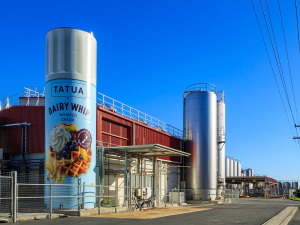
Waikato milk processor Tatua has again declared a record milk payout to farmer shareholders, leaving other processors in the dust.
A Labour-led Government won’t be bringing back the controversial freshwater rules of 2020.
National’s much-touted free trade deal with India featured in the Rural Issues Debate at Mystery Creek, Hamilton on Wednesday night.
New Zealand's 2026-27 freshwater fishing season has opened, with anglers encouraged to head to rivers and lakes over the coming days as conditions look favourable across much of the country.
Central Otago District Council (CODC) has voted against a plan to spread treated sewage sludge from Cromwell and Alexandra on farmland near Lauder, a decision Federated Farmers says reflects strong opposition from rural residents.
Pāmu has released its FY26 Integrated Annual Report, reporting a Net Operating Profit of $113 million, more than double the $49 million recorded in FY25.