Federated Farmers Welcomes ACT’s New Farming Policies
Federated Farmers has welcomed new rural policies released by ACT, saying they align closely with its own election priorities.
 increase font size
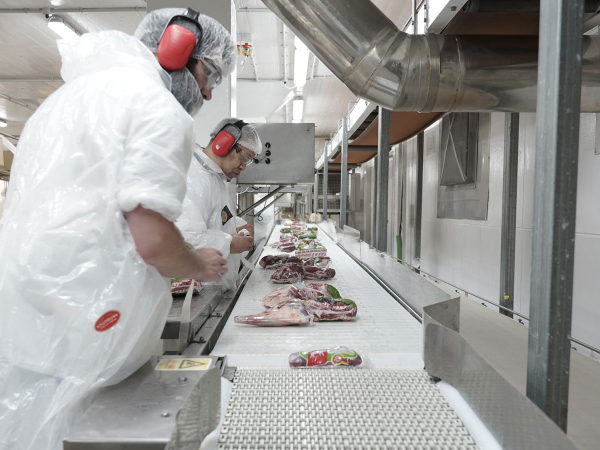 The big winners in the FTA are the wine, honey, dairy and red meat.
Farmers and agriculture exporters are welcoming the signing of a free trade deal with the United Kingdom.
The FTA was signed in London overnight by Trade Minister Damien O’Connor and the UK Secretary of State for International Trade Anne-Marie Trevelyan.
The big winners are the wine, honey, dairy and red meat sectors.
NZ exports $500 million of wine into the UK. Overnight, $14m of wine tariffs will evaporate.
New Zealand’s honey exporters will no longer face a $16 duty for every $100 worth of honey they send to the UK.
Dairy and red meat sectors will, for the first time since the 1970s, have tariff-free access that will grow through significant quotas until being fully liberalised.
O’Connor describes the FTA as “a commercially meaningful and excellent deal”.
“As soon as it enters into force this deal will cut costs for exporters and create opportunities for New Zealand businesses to grow and diversify their trade.”
Federated Farmers president Andrew Hoggard says with the world the way it is right now, this trade deal gives us reason to be reassured good things do still happen.
"With everything going on in Europe, in the hospitals and health centres, and even on the steps of our own Parliament, it’s reassuring to see this deal signed and sealed," he says.
The free trade deal will result in the full liberalisation of all trade between NZ and the UK, he adds.
"The UK is walking the talk when it comes to promising a truly global Britain.
"With the way the world is, it seems to us that strengthening rules-based trade between free democratic countries is more important than ever," Hoggard says.
For the red meat sector the deal allows quota and tariff-free access into the UK for the first time in decades.
Under the FTA, New Zealand’s beef and sheepmeat exports to the UK will be fully liberalised over time, with no duties from the 16th year after the deal comes into force following ratification by both countries.
During this time, beef and sheepmeat will be subject to duty-free transitional quotas with the quota for New Zealand beef increasing in annual instalments from a starting point of 12,000 tonnes until it reaches 60,000 metric tonnes in year 15, after which it will be duty and tariff-free.
“New Zealand has not had tariff-free access into the UK since Britain joined the European Economic Community (EEC) in 1973 so this deal will deliver a major boost for sheep and beef farmers and exporters,” says Sirma Karapeeva, chief executive of the Meat Industry Association (MIA).
Federated Farmers has welcomed new rural policies released by ACT, saying they align closely with its own election priorities.
Federated Farmers is backing Feilding High School’s call to keep Agriculture and Horticultural Science as a standalone subject in Year 11.
National’s pledge to introduce 19 new national standards shows the party is serious about getting Wellington out of farming, Federated Farmers says.
Mobile phone coverage and reliability are deteriorating in rural areas, and farming families are bearing the cost, according to a Federated Farmers survey.
Central Otago District Council (CODC) has voted against a plan to spread treated sewage sludge from Cromwell and Alexandra on farmland near Lauder, a decision Federated Farmers says reflects strong opposition from rural residents.



Federated Farmers has welcomed new rural policies released by ACT, saying they align closely with its own election priorities.

Rural Contractors NZ says proposed changes to land transport rules for agricultural vehicles are a welcome response by the Government to out of date regulations which have seen members hit with huge fines.
Alliance is calling for final applications for its 2027 Graduate Programme, with applications closing on Sunday 25 October.
Decades piloting planes has ensured vet and farmer David Hayes is focused on safety. So, after a serious accident while welding on farm, he is sharing his experience so others can learn from it.
Canterbury milk processor, Synlait Milk has confirmed Leon Fung as its chief executive officer.
OPINION: Making it easier to collect rainwater and use it to grow crops and livestock is a no brainer.




