Federated Farmers Welcomes ACT’s New Farming Policies
Federated Farmers has welcomed new rural policies released by ACT, saying they align closely with its own election priorities.
 increase font size
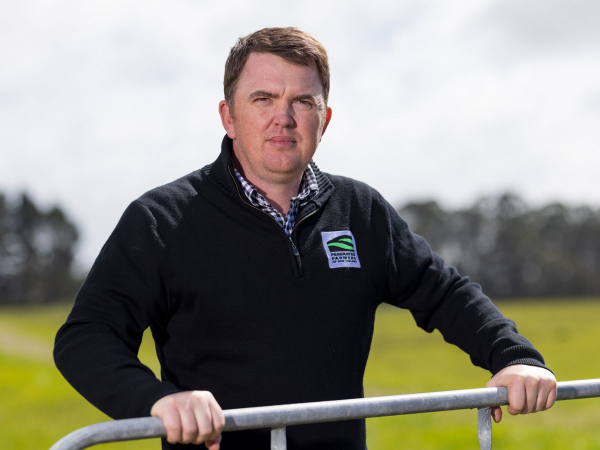 Federated Farmers president Wayne Langford
Federated Farmers supports a review of the current genetic technology legislation but insists that a farmer’s right to either choose or reject it must be protected.
Feds president Wayne Langford appeared before the parliamentary health select committee to present Federated Farmers’ views on the use of genetic technologies.
“We know this is a hot topic with our members, so I was very upfront with the politicians that farmers’ views on this issue are about as diverse as our individual farming systems,” Langford says.
He noted that many Feds members are in support of reforms, some are neutral, and others are firmly opposed.
“That’s why I put a real focus in my submission on protecting a farmer’s right to choose,” he says.
Langford says Federated Farmers operate a democratic voting system driven from the grassroots up, not from the top down, and “we’ve taken the same approach in forming our view on this issue”.
“After a lot of debate, delegates from our 24 provinces who sit on our National Council agreed to support a review of the current legislation and advocate for the benefits of genetic technology.
“That being said, we also put a very clear condition on that support: that an individual farmer’s right to choose must be protected.
“This means, as much as practicable, there need to be controls or systems put in place to block the spread of GE organisms onto properties of farmers who don’t want it.”
Langford notes that other countries, like Australia, have gone through similar reform. They now have growing rather than shrinking GE-free and organics industries, farming alongside use of GE crops, he points out.
“There are still questions around how we can achieve this ‘right to choose’, given our different climate and farming systems. That’s what needs more investigation, and careful drafting of regulation.
“We also propose regular system reviews to ensure whatever is brought in is working for all farmers and growers.”
On trade, Langford says giving farmers the right to choose will mean individual farmers and the companies they supply can determine this, taking into consideration their customers’ preferences.
“Whichever side of the fence you’re on regarding this topic, I hope you can see we’ve listened carefully to both sides of the argument and tried to find a pathway forward,” he says.
“Ultimately, it’s individual farmers who should be able to weigh up the worth of any premium from being GE-free, compared to any benefits of using a GE crop or grass.”
Federated Farmers has welcomed new rural policies released by ACT, saying they align closely with its own election priorities.
Federated Farmers is backing Feilding High School’s call to keep Agriculture and Horticultural Science as a standalone subject in Year 11.
National’s pledge to introduce 19 new national standards shows the party is serious about getting Wellington out of farming, Federated Farmers says.
Mobile phone coverage and reliability are deteriorating in rural areas, and farming families are bearing the cost, according to a Federated Farmers survey.
Central Otago District Council (CODC) has voted against a plan to spread treated sewage sludge from Cromwell and Alexandra on farmland near Lauder, a decision Federated Farmers says reflects strong opposition from rural residents.



Federated Farmers has welcomed new rural policies released by ACT, saying they align closely with its own election priorities.

Rural Contractors NZ says proposed changes to land transport rules for agricultural vehicles are a welcome response by the Government to out of date regulations which have seen members hit with huge fines.
Alliance is calling for final applications for its 2027 Graduate Programme, with applications closing on Sunday 25 October.
Decades piloting planes has ensured vet and farmer David Hayes is focused on safety. So, after a serious accident while welding on farm, he is sharing his experience so others can learn from it.
Canterbury milk processor, Synlait Milk has confirmed Leon Fung as its chief executive officer.
OPINION: Making it easier to collect rainwater and use it to grow crops and livestock is a no brainer.




