
NZ Technicians Honoured at 2026 John Deere Awards in Brisbane
Leading John Deere technicians and apprentices from New Zealand and Australians were recognised at the recent sixth annual JD Technician of the Year Awards, held in Brisbane.
 increase font size

Heightened macroeconomic and geopolitical risks are likely to exert a strong influence on global agricultural markets in 2012 resulting in considerable uncertainty in the New Zealand food and agribusiness sector, according to a new report released by Rabobank.
On balance though, the report says, New Zealand agriculture looks set for a generally positive year ahead – with the country's economy buffered, to some degree, from the global economic weakness by developing trade ties with Asia and reconstruction spending in Christchurch.
In its keynote annual research report New Zealand Agriculture in Focus 2012, Rabobank says the elevated level of uncertainty associated with the global economic outlook has seen the world's agricultural markets join their financial and industrial counterparts in beginning to exhibit greater risk aversion, price volatility and a deterioration in demand.
General manager for Rabobank's Food & Agribusiness Research and Advisory division Luke Chandler says there is a closer alignment developing between the agri commodity markets and the global macro economy, where the drivers of global economic conditions and financial markets are increasingly influencing global trade in agriculture.
"Historically, agri commodity markets have been less attuned to shifts in macroeconomic sentiment than other global commodity markets and industry sectors, but now that's all changing," he says. Chandler says this closer alignment is manifesting in a number of ways.
"There is a heightening of the real demand factor – how the scale and distribution of global growth is flowing through into real incomes and impacting the demand for global agricultural commodities," he says.
"But this trend is also apparent in investor activity where market speculators shift funds into and out of agri commodities in keeping with broader risk sentiment, therefore influencing agri commodity price movements."
In addition, Chandler says: "Geopolitical factors are having an increasing influence on global agricultural markets, which are being increasingly politicised, impacting international agricultural trade and contributing to heightened uncertainty and price volatility".
The Rabobank report forecasts a slow year for the global economy dictated by uncertainty over exactly when and how the euro zone sovereign debt crisis will be resolved
Leading John Deere technicians and apprentices from New Zealand and Australians were recognised at the recent sixth annual JD Technician of the Year Awards, held in Brisbane.
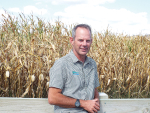
Surprised, humbled and quite thrilled. That’s the reaction of James Allen, one of the founding partners and now chief executive of AgFirst, on being made a life member of the Institute of Rural Professionals.
OPINION: Succession and long-term planning are perennial topics because it is perpetually sidelined on busy farms.
More signs of a booming kiwifruit sector.
Chinese beef trade quotas and a looming suspension of Brazilian beef imports into the European Union are expected to reshape global beef trade flows over the remainder of 2026, with implications for New Zealand exporters, according to Rabobank's Q3 Global Beef Quarterly report.


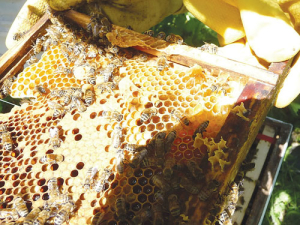
New Plymouth-based Manuka honey exporter Egmont Honey has completed its acquisition of Taihape beekeeping business Tweeddale's Honey, with settlement finalised on Friday, 18 September.

Westpac NZ is calling on farmers and growers to start preparing now for the possibility of a dry summer, as likely El Niño conditions raise the risk of drought across parts of the country.
Fonterra Co-operative Group has confirmed the independently assessed candidates standing for election to its board in 2026.
Fonterra has revised its Farmgate Milk Price forecast for the 2026/27 season, lifting the midpoint and narrowing the range on the back of improving global dairy commodity prices.
New Zealand's citrus growers were challenged to build their future on the value embedded in their fruit rather than the volume they produce, at Citrus New Zealand's annual gathering in Gisborne on 17 September.
Leading John Deere technicians and apprentices from New Zealand and Australians were recognised at the recent sixth annual JD Technician of the Year Awards, held in Brisbane.