Manuka honey trader posts sour results
Manuka honey trader Comvita slumped to a $104 million net loss last financial year, reflecting prolonged market disruption, oversupply and pricing volatility.
 increase font size
 Noelani Waters
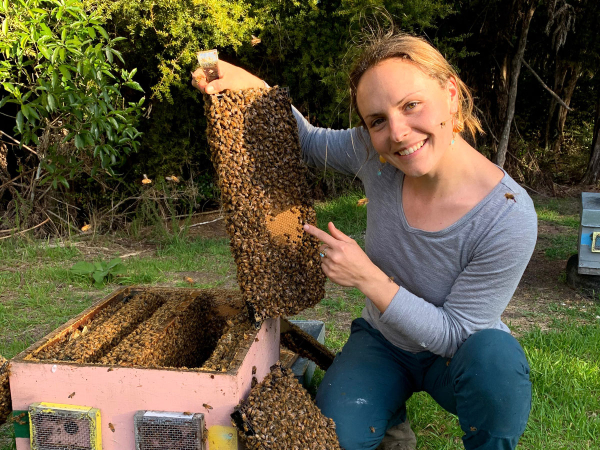
Comvita bee and nature advocacy lead Noelani Waters describes her role, educating people on bees and honey, as a privilege.
“Bees make people light up. They are fascinating and full of magic, and I hope to inspire greater advocacy and awareness of these critical creatures through the lens of science and engaging storytelling,” Waters says.
Hailing from Hawai’i, Waters started out her career with the state’s Department of Agriculture as an apiary inspector. In that role, she worked across the state with apiary businesses of all sizes, performing inspections for export certificates, bee biosecurity, community education and disease diagnosis, and national honeybee surveys.
“After four years I decided to explore queen breeding and worked as an inseminator on a Varroa Sensitive Hygiene (VSH) breeding program with the state’s largest honey producer to gain experience in commercial beekeeping,” she says.
In 2019, Waters immigrated to New Zealand to help run Comvita’s Queen Bee Breeding Unit in the Far North, which she did for two seasons before moving on to her current role.
Since the start of her career, Waters says there has been more consumer awareness around the concept of ‘clean’ honey, “and businesses are stepping up and cleaning up their practices to produce a more pure, ethical, and transparent product”.
“I think this also applies to consumer awareness of how home pesticide use and poor agriculture practices affect our bees and pollinators at large,” she says.
Currently, the industry is facing the threat of the varroa mite, something Waters says seems like will always be at the top of the list of challenges.
“This parasitic mite is one that has hopped species from the Asian honeybee to the European honeybee and is a serious challenge for the global apiary industry to mitigate and manage effectively without having a great impact on our bees,” she says.
However, there are still bright spots. Waters says beekeepers have proven to be her favourite thing in the industry.
“I’ve learned a lot working across various parts of the industry from regulation, to research, to commercial queen rearing and honey production, that beekeepers across the board are deeply passionate, hardworking, and curious individuals,” she says.
The theme for this International Women’s Day 2024 is ‘Inspire Inclusion’ and Waters recommends that to manage inclusion, companies need to hire more women.
“Women make excellent beekeepers who bring an important perspective and skillset to the apiary industry, particularly to areas like queen rearing, research, and inspection services.
“After all, a beehive is a matriarchy… and I think women have a particular affinity and way with bees because of this,” she says.
Manuka honey trader Comvita slumped to a $104 million net loss last financial year, reflecting prolonged market disruption, oversupply and pricing volatility.
After three years of record performance, mānuka honey exporter and retailer Comvita has reported an annual net loss of $77 million.


Entries opened on Monday, 5 October 2026 for the 2027 New Zealand Dairy Industry Awards (NZDIA), which organisers describe as the nation's biggest celebration of excellence in the dairy sector.
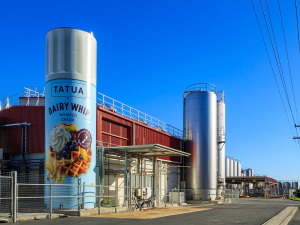
Waikato milk processor Tatua has again declared a record milk payout to farmer shareholders, leaving other processors in the dust.
A Labour-led Government won’t be bringing back the controversial freshwater rules of 2020.
National’s much-touted free trade deal with India featured in the Rural Issues Debate at Mystery Creek, Hamilton on Wednesday night.
New Zealand's 2026-27 freshwater fishing season has opened, with anglers encouraged to head to rivers and lakes over the coming days as conditions look favourable across much of the country.
Central Otago District Council (CODC) has voted against a plan to spread treated sewage sludge from Cromwell and Alexandra on farmland near Lauder, a decision Federated Farmers says reflects strong opposition from rural residents.