Milk Powder Prices Prop Up Farmgate Milk Price
Milk powder prices are keeping farmgate prices up, helping processors offset the dip in milk fat prices.
 increase font size
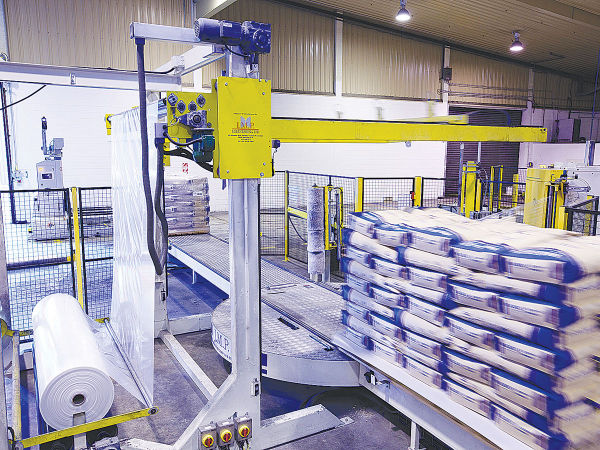 Major disruptions to Chinese supply chains following the lockdown in Shanghai is leading to local dairy production being redirected away from fresh milk into less perishable powders.
Havoc wreaked in parts of China by Covid is being blamed for the latest drop in whole milk powder (WMP) prices.
Major disruptions to Chinese supply chains following the lockdown in Shanghai is leading to local dairy production being redirected away from fresh milk into less perishable powders.
Chinese authorities last week extended a lockdown in Shanghai to cover all of the financial centre's 26 million people - a major test of China's zero-tolerance strategy to eliminate the coronavirus.
ASB economist Nat Keall says this means the Chinese WMP market is now well supplied.
But he points out that the current dynamic in China isn't likely to be permanent, which is a positive for NZ dairy producers.
Dairy prices in last week's Global Dairy Trade (GDT) fell, with the price index down 1%. However, WMP prices dropped 1.5% to US$4,532/metric tonne.
Skim milk powder rose 1% to US$4,599/MT, cheddar rose 2.7% and butter dipped 0.6%.
Keall says the latest GDT result highlights the drop in WMP prices, but it seems buyers don't expect the glut to last.
"The contract curve is looking unexciting over the near term - albeit at a still healthy US$4,400/MT - but there's a sharp kink at contract number 5, which suggests prices still have quite a bit of momentum and there's an eagerness to secure supply once the near term WMP glut subsides," he told Rural News.
Looking further ahead, Keall says that Chinese economic growth is set to slow over the course of the year, but dairy's status as a staple food means demand isn't all that elastic.
He says dairy demand is a global story: buying activity from South East Asia and the Middle East is also acting as a support.
 |
|---|
|
ASB economist Nat Keall. |
At the same time, global dairy production is still looking very weak.
Keall says the latest production data in both the US and Australia is poor - down 6.1% and 0.3% year-on-year respectively.
Things aren't that flash in NZ either, with drought conditions stretching into the spring now.
"To sum up all of those threads: don't expect recent reticence for NZ product from Chinese buyers to last," Keall explains. "While demand is set to ease a bit over the year, that tight supply picture should keep prices well supported."
He says ASB is retaining its lofty milk prices forecast for this season ($9.50/kgMS) and also next season ($9.20/kgMS).
Milk powder prices are keeping farmgate prices up, helping processors offset the dip in milk fat prices.
OPINION: With 10,500 dairy farms, New Zealand continues to punch above its weight around the world.
A milk glut around the world shows no sign of easing, putting downward pressure on farmgate milk prices for the next few months.
Fonterra has reduced its forecast 2026/27 Farmgate Milk Price.
New Zealand dairy farmers are set to be the first in the world to receive access to a new digital physical milk pricing tool that enables them to fix the price for their physical milk.


Waikato milk processor Tatua has again declared a record milk payout to farmer shareholders, leaving other processors in the dust.

A Labour-led Government won’t be bringing back the controversial freshwater rules of 2020.
National’s much-touted free trade deal with India featured in the Rural Issues Debate at Mystery Creek, Hamilton on Wednesday night.
New Zealand's 2026-27 freshwater fishing season has opened, with anglers encouraged to head to rivers and lakes over the coming days as conditions look favourable across much of the country.
Central Otago District Council (CODC) has voted against a plan to spread treated sewage sludge from Cromwell and Alexandra on farmland near Lauder, a decision Federated Farmers says reflects strong opposition from rural residents.
Pāmu has released its FY26 Integrated Annual Report, reporting a Net Operating Profit of $113 million, more than double the $49 million recorded in FY25.