fbpx
Print this page
Friday, 14 October 2022 10:25

Big stubble, no trouble!

Written by  Mark Daniel
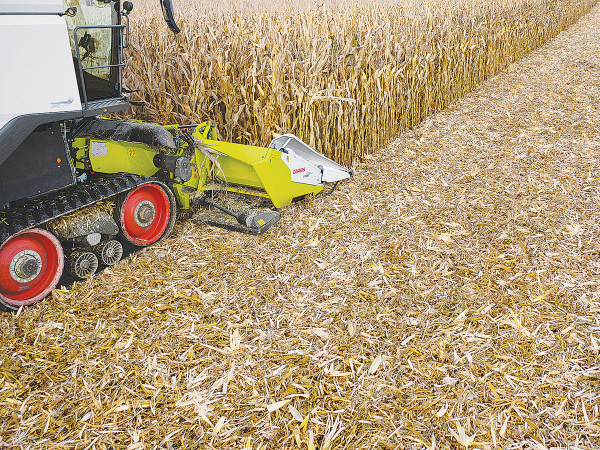
Claas has released the world’s first corn picker with an integrated stubble buster for one-pass harvesting and mulching. Claas has released the world’s first corn picker with an integrated stubble buster for one-pass harvesting and mulching.

German manufacturer Claas has released the world’s first corn picker with an integrated stubble buster for one-pass harvesting and mulching.

The Stubble Cracker was developed for the Claas Corio four, five, six and eight-row corn pickers. It features one rotating plate per row, each equipped with two specially developed mallets with a special coating, which crush and splice any stubble below the first internode.

The unit is attached to the frame of the harvester via a threepoint linkage. This allows three-dimensional ground tracking, via a skid plate that ensures a constant distance between the flails and the ground in all operating conditions. This also helps optimise performance and reduce wear.

Designed to be operated at a speed of 1,200 rpm, the mechanically driven rotors are monitored by the harvester’s CEBIS system, which send the operator a message if rotor speeds decrease. Twin hydraulic rams lift the rotors if there is a risk of overload, or they encounter obstacles. Meanwhile, a ratchet-style overload system protects the rotor drive line.

In addition, the cracker unit is raised automatically when reversing or raising the picker.

The Stubble Cracker system for the eightrow CORIO 875 FC adds around 400kg to the overall weight and is said to require around 32 extra horsepower.

While this means a little extra fuel consumption of 2 litres/ ha, the system eliminates follow up passes with a mulcher, knife rollers or supplementary tillage.

Independent studies have demonstrated fuel savings of 30% and a 50% reduction in labour requirements, when compared to performing an additional or secondary mulching operation. From an agronomy point of view, Claas Harvest Centre product manager – Lexion, Luke Wheeler, says the new unit allows faster decomposition of corn stubble and helps to break the lifecycle of fungal diseases and insect pests.

More like this

New CLAAS Swath Turner Fixes Twin-Rotor's Blind Spot

Twin rotor swathers have become the ‘go-to’ for forming swaths to feed hungry harvesters and balers, however, the design layout often means that crop located between the two rotors is not picked up, turned over or incorporated into the swath formed for subsequent harvesting.

Motueka Farm Machinery Sold as Sturgeons Retire After 44 Years

Close to the Abel Tasman and Kahurangi National Parks, Motueka is known for apples, pear and kiwifruit orchards, alongside specialised crops such as hops. Indeed, that specialisation, saw the area being the New Zealand centre of the tobacco growing, until the early 1980s.

Can-Am Unveils 2027 SSV, ATV Range With New Defender HD10

Can-Am has introduced its 2027 range of side-by-side vehicles (SSV) and all-terrain vehicles (ATV), including the industry leading Defender, the Maverick R and the hugely capable Outlander ATV, incorporating a host of advancements designed to deliver an exceptional riding experience.

Featured

Southland Farmers Face Wet Weather Toll, Support Available

Farmers across parts of Southland and South Otago are continuing to deal with difficult conditions after a prolonged run of wet weather, with pressure building around feed supply, stock management, pasture damage, farm infrastructure and everyday workloads.

How Wearable Tech Powers This 1,850-Cow Dairy Farm

For Canterbury dairy farmers Sian Meijer and Rick Wobben, wearable technology has become one of their most valuable on-farm tools - helping manage 1850 cows across an expansive, high-performing dairy operation while improving efficiency, mating outcomes and day-to-day decision making.

New Dairy Welfare Code Released, Takes Effect 2027

The first major update to the Dairy Cattle Code of Welfare in more than a decade has been released, marking what DairyNZ describes as an important step in ensuring animal welfare standards continue to evolve alongside scientific evidence and on-farm realities.

National

Machinery & Products