Govt Commits $4m to Rural Wellbeing Initiatives
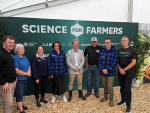
While the District Field Days brought with it a welcome dose of sunshine, it also attracted a significant cohort of sitting members from the Beehive – as one might expect in an election year.
 increase font size
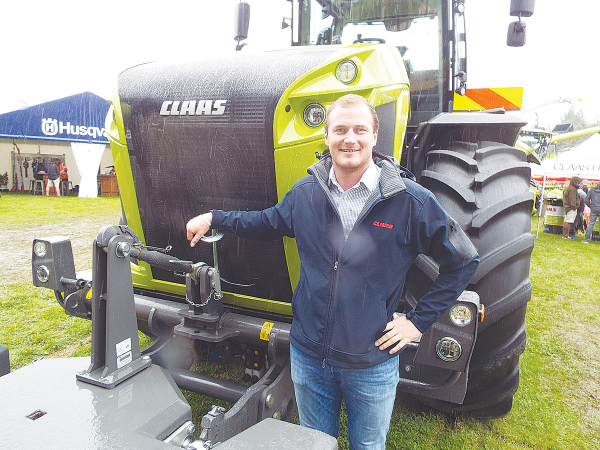 Tim Koep typically spends around 240 days each year away from home in Northern Germany.
The next time your partner moans about your work keeping you away from home, point them towards a German native, currently working in New Zealand, who is a well-known member of many airline and hotel loyalty schemes.
That’s because Tim Koep typically spends around 240 days each year away from home in Northern Germany, working for the Agri Expert company, who are contracted to Claas and its importers and dealers around the globe.
A machine optimisation specialist for Claas grain and Forage harvesters, alongside the company’s extensive range of tractors, Tim’s task is to help new or existing operators to set up and get the best out of their machines, some of which arrive with seven figure price tags.
Since 2019, Koep has chased the world’s harvests, but more recently arrived in New Zealand during the first week of January, with an expected departure at the end of March. During that period, he will see around 60 users, tackling the usual crops like wheat or barley, before starting into the likes of carrot seeds in the next few weeks.
Working with a widely varied group of users, in terms of experience and age, part of the task is to encourage them to be open minded, putting aside preconceived ideas about how their machine should be operated.
Tim says that initially some older operators are sceptical that a ‘young un’ will be able to teach them anything about harvesting, often taking the “I’ve been driving harvesters for over twenty years” attitude, but once they realise the likeable German knows his stuff, they tend to be a little more receptive.
“Sometimes operators are pre-programmed to drive at a certain speed they are comfortable with, failing to realise that today’s modern harvesters produce a better sample when the threshing drum is kept full, or more consistent chop length when a forage harvester has its feed rollers constantly open and the chopping drum full,” says Tim.
“Of course, this typically means that they will have to drive at a higher forward speed.”
In the case of combines, Tim advocates the “only make one adjustment at a time” principle, given that making multiple adjustments to the likes of drum speed, concave opening, top and bottom sieve settings and fan speed at the same time can lead to unbridled chaos.
“Adjust one setting at a time,” says Tim. “If it doesn’t make an improvement to the sample or machine, return to where you were and try something different.”
Indeed, many owner/ operators are fixated with losses, often saying “I want nil losses”, but experience says that managing losses against daily output requires a compromise.
Accepting losses of around 1% means an operator can push on and get the crop safely stored in the shed, maintaining quality and keeping ahead of inclement weather. Being pedantic about keeping losses to zero means forward speed is dramatically reduced, but in average crops means ‘grabbing’ an extra 50kg, that at today’s depressed prices has a very minimal value.
As the saying goes, “you’re never too old to learn!”
While the District Field Days brought with it a welcome dose of sunshine, it also attracted a significant cohort of sitting members from the Beehive – as one might expect in an election year.
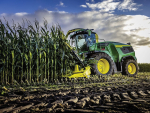
After what has been a difficult year with redundancies and factory downsizing, John Deere is reversing course, announcing it will bring 140 employees back to its Waterloo, Iowa operations as demand increases for its 8R and 9R tractors.
Austrian manufacturer Pöttinger gave a sneak peek of a new automatic swath placement system for the Novacat V 10000 ED/RC Collector mowers at Agritechnica 2025, and recently confirmed that the upgrade will be available for the upcoming European mowing season.
Mahindra & Mahindra, the world's largest tractor producer by volume and India's leading automobile manufacturer, has announced plans to establish its largest integrated automobile and tractor manufacturing facility in Nagput, Maharashtra, marking a major expansion of its manufacturing footprint.
John Deere has announced the launch of three new models in both 8R and 8RX formats, featuring additional higher horsepower (HHP) options and improved performance, manoeuvrability, and versatility.

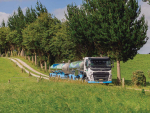
Farmer-owned fertiliser company, Ballance Agri Nutrients is welcoming National’s plan to negotiate security agreements with key supplier countries to protect New Zealand-bound products from export restrictions and greater supply chain certainty.
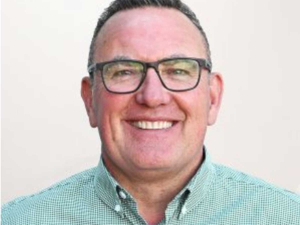
Carrfields has announced the appointment of Stu Hall to the newly created role of chief operating officer, Carrfields Ltd, reflecting the continued growth of their agribusinesses and the need to ensure the company has the leadership capacity and support in place as it pursues the emerging opportunities ahead.
New Zealand's role is not to compete with Indian growers, according to NZ Apples and Pears.
The potato industry is celebrating the success of two rising stars - James Blair, the 2026 Young Grower of the Year and runner-up and innovation award winner, Amber Davy.
Twenty-eight emerging leaders from across the horticulture sector spent two days last month learning valuable skills and connecting with industry experts.
There are five entrants in this year’s Young Horticulturist of the Year, competing in a series of technical, practical, business and leadership challenges.