Massey Uses Portable Analyser to Measure Pasture Soil GHGs
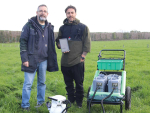
Researchers at Massey University are using a special piece of scientific equipment to improve the measurement of greenhouse gas emissions from pasture soils.
 increase font size
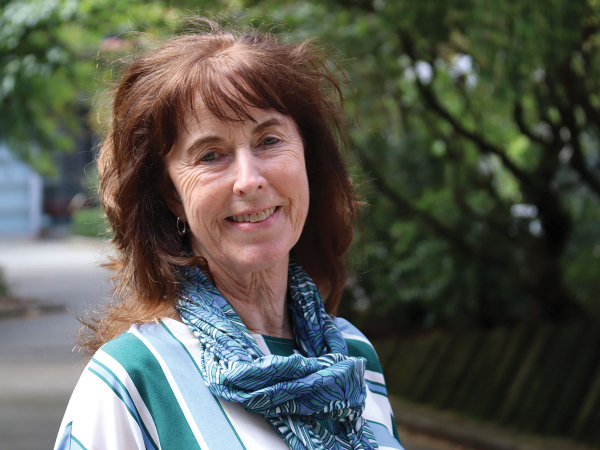 Leading Irish scientist Dr Mary Ryan says Ireland and NZ have very similar issues with nitrates leaching into lighter soils.
Finding and supporting ‘champion farmers’ – or top-quality farmers - is one of best ways of getting other farmers to take the appropriate measures to mitigate environmental issues, according to a leading Irish scientist Dr Mary Ryan.
She was in NZ recently as a keynote speaker at Massey University’s Farmed Landscape Research Centre Conference. While in NZ she was looking at how we are developing farmer-run catchment groups which Ireland is in the process of setting up.
Ryan is a specialist in agricultural economics and works for Teagasc – the Irish agricultural research organisation based near Galway in the west of Ireland.
She says Ireland and NZ have very similar issues with nitrates leaching into lighter soils in the east of the country. But she says they have overland flow, phosphorus, sediment and pesticides that largely happens in the poorer, heavier soils and steeper country in the west coast of the Ireland where there is much more organic matter such as peat. These soils retain a lot of moisture which leads to overland flow.
The EU sets the standards that member countries must achieve, but how they do this is left to the individual country. The issue for Ireland, says Dr Ryan, is similar to NZ – ensuring higher quality waterways and looking at ways of doing this. Obvious options include stock exclusion and reducing pollutants on the land.
Ireland has identified 97 priority catchments that need special attention and it’s to these that scientists are sent to determine the cause of the problem and the associated risks. Their findings are passed on to a group of Agricultural Sustainability, Support and Advisory Programme advisors (ASSAP) whose role is to engage with the farmer to get them to deal with any problem.
“Firstly, the ASSAP advisor prepares a dedicated farm plan, where they look at what’s happening in farmers’ yards and where the risks are, what is happening terms of nutrient management planning and seeing if they can they pull back in the application of chemical fertilisers.
“They also look to see if the farmer needs more storage for slurry, because in Ireland, we house animals the winter and sometimes we have very wet land coming out of the winter, so it’s not always possible to get slurry out into the land,” she says.
Ryan says having got all this data, the onus is now on the farmer to decide what mitigation strategies to adopt. While advisors can advise, she says the more effective way is to involve what “champion farmers” – highly successful, innovative and respected farmers who help and mentor other farmers to make appropriate changes.
“The advisors do a dedicated farm plan in which they look at what’s happening in farmers yard and where the risks are,” she says.
Ryan says the farm plan is free, but the farmers don’t get any money for the mitigation work; that’s where the challenge begins and where the role of ‘champion farmers’ becomes important. She says in the first instance they are the ones most likely to understand the complexity of the issues and know that they have the wherewithal to do what is required.
“Those who feel that they may not do a good job and are fearful of what their fellow farmers may say about them are less likely to get involved at the beginning. So, they will look to someone they respect and who is already doing the work well to motivate them to give it a go,” she says.
Ryan adds that the most successful farmer champions in influencing others are locals, not someone a hundred kilometres away who the local farmers don’t know. She says getting the local expert out on site and explaining the issues they’ve had to deal with, and the associated costs, is the best way of effecting the change in farmer behaviour on environmental issues.
Dr Mary Ryan says there is a strong move in Ireland to develop catchment groups which are organised and led by farmers.
She says one of the reasons for coming to NZ was to see how our farmer-led catchment groups are run and how effective they are.
Ryan says it is critical to make sure these are farmer led and well run but supported by scientists and other rural professionals.
She says in Ireland dairy farmers have taken the initiative and set up their own effective systems of dealing with environmental issues on their farms and are not claiming any government money to this. Ryan says they have access to catchment maps and are monitoring water quality themselves
While in NZ, Ryan has spent time talking to catchment groups in both the North and South Island.
“In the Manawatu I saw Dr Margaret Brown, who is a scientist and a very successful farmer and who’s involved in a very successful catchment group. In the South Island it was about going to Canterbury and meeting catchment groups in the upland regions,” she says.
Ryan says the visit to NZ was very successful and the research being carried out in Ireland and NZ is very complementary. She says by sharing information, they are able to progress research much faster for the benefit of both countries.
Researchers at Massey University are using a special piece of scientific equipment to improve the measurement of greenhouse gas emissions from pasture soils.

Interest in agritech and production animal systems has prompted Massey University's School of Agriculture and the Environment to new majors to its popular animal science degree.
The industry is crying out for graduates with agricultural related degrees.
A four year trial has reaffirmed that mixing plantain into dairy pastures can help reduce nitrogen losses to freshwater while maintaining milk production and profitability, say researchers.
Special courses for secondary school teachers to help excite kids about agriculture and horticulture are now being run at Massey University.


Now in its fourth year, the 2026 Fencing Industry Awards, formed part of the proceedings of the FCANZ Conference, held in Nelson during August.
DairyNZ deputy chair Cameron Henderson has been re-appointed unopposed for another term.
OPINION: The stats speak for themselves.
Farms across the upper North Island are trialling different pasture mixes as part of a research programme that aims to build greater resilience into farming systems.
Election years are always a concerning time for farmers, according to DairyNZ chair Tracy Brown.
The Ballance Farm Environment Awards are coming to the West Coast of the South Island.