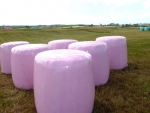
Pink and blue bales highlight cancers
Agpac will continue its efforts to raise awareness of breast cancer in rural communities.
 increase font size
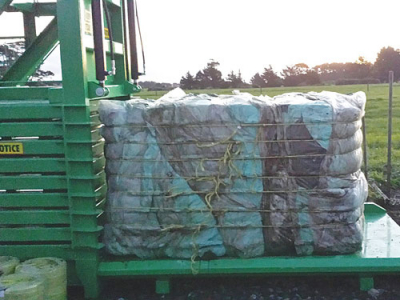 Agpac’s plastic baler in action.
The rules on waste disposal by farmers and growers are changing: the traditional options of burning and burying are no longer allowed.
The Plasback recycling service collects plastics from farms and sends it for recycling.
Plasback is a government-accredited product stewardship scheme owned and operated by Agpac Ltd, New Zealand’s largest supplier of crop packaging products.
It collects such plastics as balewrap, silage covers, twines, drums and polypropylene bags. Plasback operates a bin and liner system for collection. The liner system keeps the plastic cleaner and allows it to be collected in large bags -- easier to collect and bale than loose plastic.
Plasback owns six recycling balers that handle the large bags of waste plastic. Once baled, the plastic is sent away for recycling.
Since its start in 2006 the scheme has recycled 10,000 tonnes of used plastics.
Plasback is now working with Astron Plastics, Auckland, to recycle farm silage plastic into Tuffboard, a plywood-replacement product with many uses on farms. Using new dry-clean technology, silage plastic is heated and treated to clean the shredded film before it is made into pellets.
Tuffboard is strong, easily cleaned and hygienic. The deer industry uses it in upgrading velveting barns to new hygiene standards. Tuffboard is also used by pig farmers to replace plywood – pigs do not eat the plastic sheet.
The Tuffboard range has been expanded to both a recycled and virgin plastic. The recycled plastic is black and the virgin a natural colour.
Agpac will continue its efforts to raise awareness of breast cancer in rural communities.
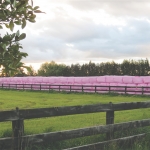
Crop packaging company Agpac says its use of coloured silage and hay bales to raise awareness of breast cancer in rural communities is catching on in other countries.
A NEW ZEALAND crop packaging company is using pink bales of silage and hay to raise the awareness of breast cancer in rural communities.


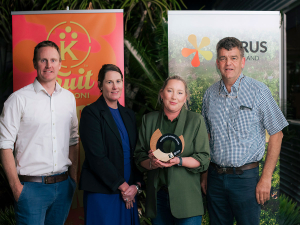
New Zealand's citrus growers were challenged to build their future on the value embedded in their fruit rather than the volume they produce, at Citrus New Zealand's annual gathering in Gisborne on 17 September.
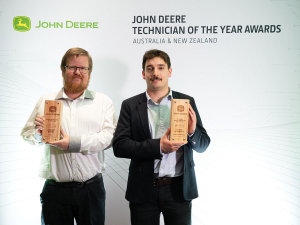
Leading John Deere technicians and apprentices from New Zealand and Australians were recognised at the recent sixth annual JD Technician of the Year Awards, held in Brisbane.
In Dacre, near Invercargill in New Zealand’s South Island, Bruce Dinnington is running a dairy operation unlike any other.
A free online platform aggregating governance vacancies across rural and regional New Zealand has been launched.
Environment Minister Nicola Grigg has announced details of a new rural plastics recycling scheme.
Agricultural drone operators say that a government decision to allow lower-risk drone work without certification won’t lower standards but drive innovation and efficiency.




