It's The Margins That Matter
OPINION: It appears to be difficult for people who haven’t tried to run a business to understand the difference between assets and cash.
 increase font size
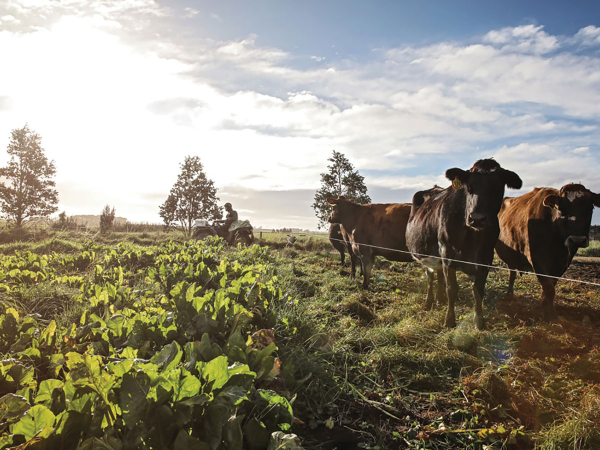 Science should be the starting point for decision making on farm.
OPINION: Information is everywhere. So are misinformation and disinformation.
The second two are distinguished by intent – misinformation might be genuine misunderstanding or mishearing.
Disinformation is deliberate; cherry-picking ‘bits’ to support a case is rife.
Sorting fact from fiction is an art, and understanding the scientific process can help.
In fact, science should be the starting point. Making the wrong decision will not result in the desired outcome. On farm, this can be costly, which, given the uncertainty that is innate in ‘life on the land’, can be devastating.
The scientific process tests hypotheses in a credible and repeatable manner. It produces conclusions that are checked through a peer-reviewing process.
Marketing departments and enthusiastic entrepreneurs take the conclusions and use them to persuade customers that the product is important for their future (to generate sales). Media people in institutions are inclined to do the same thing, to show how good the scientists are, and what a difference they are making (and therefore why they should be funded in the future).
During this process, distortions can occur.
A search for prostate cancer and pomegranates reveals both “Pomegranate Juice Keeps PSA Levels Stable in Men Treated for Prostate Cancer” and “… experts now report that there isn’t enough evidence to support the use of pomegranate for the treatment or prevention of prostate cancer”.
Similarly, headlines designed to attract interest (such as “Farmer whose SC community was ‘poisoned’ by fertilizer warns others of danger”) turn into less definitive content (“When we find out if this stuff is poison….”).
In both cases, delving into the primary sources of information allows reality to surface.
When faced with an adoption or purchase decision, step one is to decide whether the new idea, system or product solves a problem that you actually have.
If the ‘thing’ being presented is touted to solve many ‘things’, antennae should rise. ‘Better’ and ‘Holistic’ are common words, but better than what? And ‘Holistic’ needs examination for actual information such as ingredients, cause and effect.
Next is to gauge whether you are being presented with Facts, Evidence and Data or Feelings, Emotion and Diatribe. The first group is OK to a scientist, the second is not.
Then consider whether the ‘seller’ (of the ideas, systems or products) is credible. Is the seller backed by relevant, credible qualifications and a track record of professional experience? Is the track record appropriate for New Zealand? Farming systems here are very different from those in the rest of the world because of soil and the environment. Under pasture, New Zealand soils have relatively high organic matter. Increasing organic matter from a high starting point is not easy. Nor is introducing new micro-organisms to the soil ecosystem which is already rich in organisms adapted to the conditions. Does the seller understand the issues?
Are the claims being made about the new idea, system or product supported with scientifically gathered data?
Anecdotes and client testimonials are experience. Both are subject to the placebo effect - if an improvement follows an action people think that the two are linked. In addition is the care effect - people spending money on a new ‘thing’ take more notice of what they are doing. A story told by a long-time editor of an agricultural journal as a warning to enthusiasts…makes the point. It involved a crystal placed at the centre of the farm, where it can radiate energy across the paddocks. The crystal system requires that the farmer approaches the crystal from a different direction every day, turns the crystal by 90 degrees, and leaves in a different direction. On the way, and not connected to the crystal directly, the farmer might notice that a gate needs swinging, the lambs need moving and the weeds need management. The ultimate effect is a better run farm, but it has nothing to do with the energy of the crystal.
Evidence encompasses facts and data based on research. The research should include appropriate comparisons with other products or systems, indicate the time frame and methods of analysis, give actual data (not just percentages) and be in a setting appropriate for New Zealand. It should have involved scientists from an independent science organisation, which is transparent about involvement. And it should explain ‘why’ the effect is being seen. Are the mechanisms and processes of operation in the new product or approach outlined credibly? If the mechanisms and processes aren’t known, the drivers and potential interactions with other factors will not be known.
Finally, Fear Of Missing Out (FOMO) is a common lever in sales pitches. If you are offered a one-off deal or told that the opportunity is for limited time, take a step back. A bit of research on the web, and some simple questions, will help make robust decisions – based on reliable information, not the other sort.
OPINION: It appears to be difficult for people who haven’t tried to run a business to understand the difference between assets and cash.
OPINION: In the 1980s, concern was expressed in West Germany about the falling birth rate. Some simple analysis was performed by Professor Helmut Sies, physician and biochemist at Dusseldorf University. His letter ‘A new parameter for sex education’ was published in Nature in 1988:
OPINION: Humans are resilient. We are part of nature and have evolved for survival.
OPINION: Is New Zealand ‘Godzown’ or the ‘Last bus stop on the planet’?
OPINION: "The worst thing that agriculture does is take land from nature."


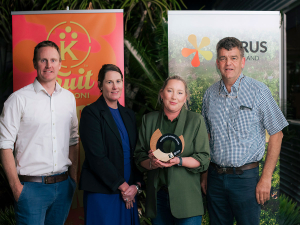
New Zealand's citrus growers were challenged to build their future on the value embedded in their fruit rather than the volume they produce, at Citrus New Zealand's annual gathering in Gisborne on 17 September.
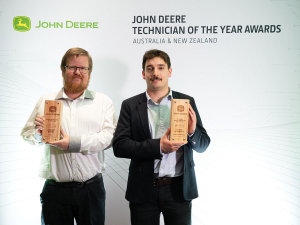
Leading John Deere technicians and apprentices from New Zealand and Australians were recognised at the recent sixth annual JD Technician of the Year Awards, held in Brisbane.
In Dacre, near Invercargill in New Zealand’s South Island, Bruce Dinnington is running a dairy operation unlike any other.
A free online platform aggregating governance vacancies across rural and regional New Zealand has been launched.
Environment Minister Nicola Grigg has announced details of a new rural plastics recycling scheme.
Agricultural drone operators say that a government decision to allow lower-risk drone work without certification won’t lower standards but drive innovation and efficiency.