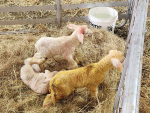
Beef + Lamb NZ's Lambing Kit Checklist for a Tough Season
With lambing underway in many regions, Beef + Lamb New Zealand is encouraging farmers to put together a wellequipped lambing kit to help minimise lamb losses, particularly in bad weather.
 increase font size
 The 7250 bales of North Island wool on offer saw a 72% clearance with most types easing further.
The 7250 bales of North Island wool on offer saw a 72% clearance with most types easing further.
NZ Wool Services International Ltd’s marketing executive Malcolm Ching reports that some good colour types resisted this trend as buyers continue very focused buying with targeted better style wools getting more support.
The weighted indicator for the main trading currencies was 0.64% lower than last week’s sale, having minimal positive impact.
Ching advises that subdued demand and continued uncertainty around new market interest in coming weeks, is restricting buying activity.
Compared to the last similar North Island selection on November 10: Good colour fine crossbred fleece were 1 to 2% dearer with average/poor styles 3 to 7% cheaper. Good colour fine crossbred shears 3 / 5 and 3 / 4 inches were 2.5 to 5.5%t easier with 2 / 4 and 2 / 3 inches firm to 5% dearer. All poorer style fine crossbred shears were 3.5 to 7% cheaper.
Good colour coarse crossbred fleece were firm with poorer styles 7 to 8% cheaper. Coarse shears 3 / 5 to 2 / 4 inches were 1 to 5% cheaper with 2 / 3 inches 1.5% dearer.
Short oddments ranged from 7 to 13% cheaper.
Competition was limited with Australasia, Western Europe and China principals, supported by Middle East, India and the United Kingdom.
Next sale on December 1 comprises about 4550 bales from the South Island.
With lambing underway in many regions, Beef + Lamb New Zealand is encouraging farmers to put together a wellequipped lambing kit to help minimise lamb losses, particularly in bad weather.

New Zealand wool is reaching new heights as air filtration companies move away from synthetic products to biodegradable alternatives.
Will a stronger, more coordinated voice help rebuild confidence and improve returns in the wool sector?
OPINION: Confidence in the wool sector is rebounding as prices hit levels not seen in more than 15 years.
The recently signed free trade agreement with India is an invitation to strengthen relationships between the New Zealand and Indian strong wool industries, says Wool Impact chief executive Andy Caughey.


The National Animal Welfare Advisory Committee (NAWAC) is seeking public feedback on proposed changes to the Code of Welfare for Rodeos.
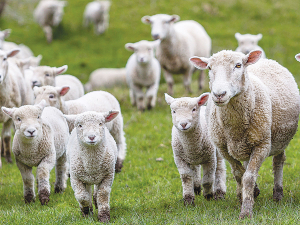
A New Zealand initiative supporting farmers to restore the health of grazing landscapes has received international backing through the Regenerative Fund for Nature, a global collaborative fund supporting regenerative agriculture and the communities that produce natural fibres for the fashion industry.
Combine premium New Zealand products, blend in a family ritual and what do you get? A world-class functional drink.
Entries are now open across eleven regions for the 2027 New Zealand Dairy Industry Awards (NZDIA).
Safer Farms is urging farmers to make sure everyone working on farm has safe, suitable footwear for the job.
The Government is backing work on a community-led water storage scheme that could irrigate up to 11,000 more hectares of the Poverty Bay flats, Agriculture Minister Todd McClay says.
