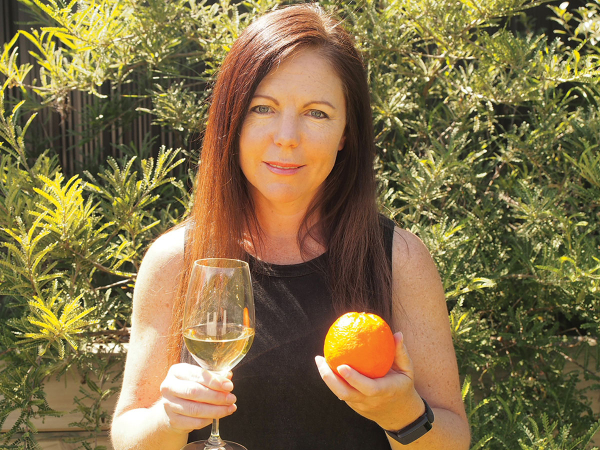
While grappling with the environmental cost of imported Italian organic tomatoes versus the local but non-organic option, she realised consumers needed something akin to the nutritional labels on packaged food, disclosing consistent environmental data.
By 2018, Kate had completed a PhD and written a textbook on Planetary Accounting, a framework to help people, companies and governments operate within the limits of the nine Planetary Boundaries, established by international scientists. She then founded the Planetary Accounting Network (PAN), a not-for-profit research centre, and began working towards PAN’s Planetary Facts labels, inspired by the tomato quandary. The labels show a product’s carbon emission, air quality, waste, water use and biodiversity score, for example, so consumers can make more informed decisions, and producers can see areas for improvement. Each product assessed is given a “Percentage Daily Limit” score, just as nutritional facts show recommended daily limits. A glass of Marlborough wine, for example, comes in at around 0.35% of a 100% daily limit, which is comparable to a locally produced apple or orange.
PAN has been working with a range of New Zealand primary sector groups, as well as research organisations, and companies in tourism, construction and events. In 2024 they began working with Bragato Research Institute on a Planetary Facts Assessment for Hawke’s Bay, Marlborough and Central Otago wine, to help wine companies quantify, compare and communicate the environmental performance of their wine production. Planetary Insights software was used to assess Sustainable Winegrowing New Zealand data, along with the SWNZ National Plant Protection Report, the New Zealand Winegrowers Annual Report, and an industry study by Clothier & Green, to determine the relative impacts of the wine regions.
While inspired by nutritional labels, the Planetary Facts labels have been designed for simple recognition. A wheel shows each product’s impact in the context of the Planetary Boundaries, with red shading showing impacts exceeding the recommended limit, orange and yellow a lighter impact, and green a positive, regenerative signal. But the key for many consumers is the Percentage Daily Limit tally. A 750ml bottle of New Zealand wine has a score of 1.8%, hovering at a low-level yellow. That’s pretty good news for wine, but Kate does point out that a daily limit of 100% will be largely absorbed by shared infrastructure and household impacts, including driving a car. She also notes that not all wine is equal, with light glass bottles and locally sourced wine decreasing the impact score. “Ideally every brand would publish their Planetary Facts to make sustainable wine selection easy.” NZW’s General Manager Sustainability, Dr Edwin Massey, says Planetary Facts is “a really interesting and quite exciting way of presenting the data”, and further evidence that New Zealand wine “can be consumed as part of sustainable lifestyle.”
Kate says the food and fibre sectors have been enthusiastic adopters of the concept, seeing commercial value in a transparent assessment of their impacts. Silver Fern Farms recently used their results to unlock a major international commercial deal, “which is really exciting”. The construction sector has also jumped in, as has Ngai Tahu Tourism, and an A&P event, which will enable attendees to “tally up” the impact of their day. Companies that go through the assessment can delve beyond the visual wheel and into the Planetary Insights software, to see specifics on their impacts. That makes the accounting a “risk mitigator” for those who want to understand areas that require improvement.
Kate, who wants to see the labels become ubiquitous, says the international market is “suddenly ready” for the PAN framework and Planetary Facts. She’s had calls from major companies in Europe, and was invited to present PAN’s work to the European Commission. It’s an exciting momentum. “If I could have told past-me where this would get to today, I would have been over the moon.”
Read more about Planetary Facts for New Zealand Wine in the December 2025/January 2026 edition of Winegrower Magazine at nzwine.com/en/media/nzwm. To access more Planetary Facts join the network at planetaryaccounting.org/join-individuals.