
Philip Gregan Named 2026 NZ Winegrowers Fellow
For the past 35 years, Philip Gregan has helped select New Zealand Winegrowers Fellows, working with the board to choose a cohort of extraordinary industry champions.
 increase font size
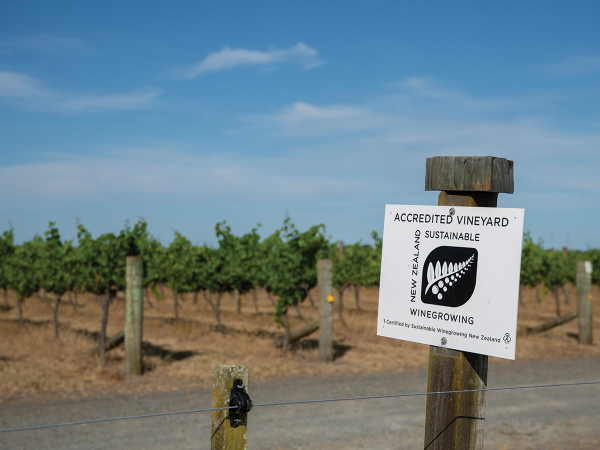
Canada's liquor monopolies might be convinced that sustainability is the "DNA" of New Zealand wine, but they want to see proof of certification on every label.
Sustainable Winegrowing New Zealand Programme Manager Meagan Littlejohn met with sustainability teams from the LCBO (Liquor Control Board of Ontario) and the SAQ (Société des alcools du Québec) in October, and was told a "sticking point" is the lack of SWNZ logo on some bottles. "It's the ultimate proof that they can show their consumers that this wine has gone through a rigorous process, and you can be confident in the producer's sustainability claims and credentials."
Meagan, who was in North America to mark 30 years of SWNZ and share the Roadmap to Net Zero, says conversations were centred on the New Zealand wine industry's long standing commitment to sustainability, including initiatives at vineyards and wineries. "What we're doing aligns really closely with what the LCBO and the SAQ are focusing on in terms of their own sustainability strategies," Meagan says. "They both have a really strong focus on reducing and measuring emissions. And they're already very convinced of our sustainability credentials. The SAQ literally said to me a couple times, 'sustainability is New Zealand's DNA.'"
But they want to see proof on the label. "We know that 98% of all vineyards are SWNZ certified, and about 90% of wine is made in SWNZ certified facilities." But some companies do not put the SWNZ logo on their label, with little space and plenty of legally required information. "I also think there might be a bit of a mindset where, within New Zealand, we know so many people are a part of the programme, so maybe some companies decide, 'we're all with SWNZ, so why would I put the logo on my label?' But externally, in the market and from these retailers, they really want to see it."
Meagan says the LCBO and SAQ are not making the logo a mandatory requirement, "but it could happen in the future". In Norway there is such a requirement, and some New Zealand wine companies have had wine turned away because of it, she adds. The logo may not necessarily sway consumer purchasing decisions on its own, but market gatekeepers have a growing focus, due to targets and government mandates. "It's really more at that level, which for producers is really important because that could be the difference between your wines getting on their shelves or not at all."
At the New Zealand Winegrowers Wine Business Forum earlier this year, audiences saw a filmed conversation between Meagan and Barry Dick MW, from Waitrose in the United Kingdom. “He said consumers kind of expect the retailer to make sustainability-minded decisions for them. So that’s why I think those conversations are really happening at the market gatekeeper level.”
In terms of the Roadmap, Meagan says the LCBO and SAQ both have sustainability strategies in place, with emissions and climate change as a major focus. “They are looking at actively reducing their footprint. And of course, if you are selling wine into that market, you’re a part of their supply chain, so they expect that those producers will also have that commitment and will be reducing their emissions.” While that is not formalised yet in Canada, the Nordic monopolies are again leading the charge and beginning to implement product carbon foot printing requirements, and are influencing other markets, she says.
For the past 35 years, Philip Gregan has helped select New Zealand Winegrowers Fellows, working with the board to choose a cohort of extraordinary industry champions.
With ethical employment practices a "hot topic" in key markets, Sustainable Winegrowing New Zealand (SWNZ) is strengthening its People Pillar.
Dr Ed Massey is General Manager Sustainability at New Zealand Winegrowers.
Sustainability is no longer a "nice to have", says Sustainable Winegrowing New Zealand Programme Manager Meagan Littlejohn.
As Sustainable Winegrowing New Zealand marks 30 years, it needs to become “business as usual” for the wine industry, says viticulturist Gwyn Williams.


