
Philip Gregan Named 2026 NZ Winegrowers Fellow
For the past 35 years, Philip Gregan has helped select New Zealand Winegrowers Fellows, working with the board to choose a cohort of extraordinary industry champions.
 increase font size
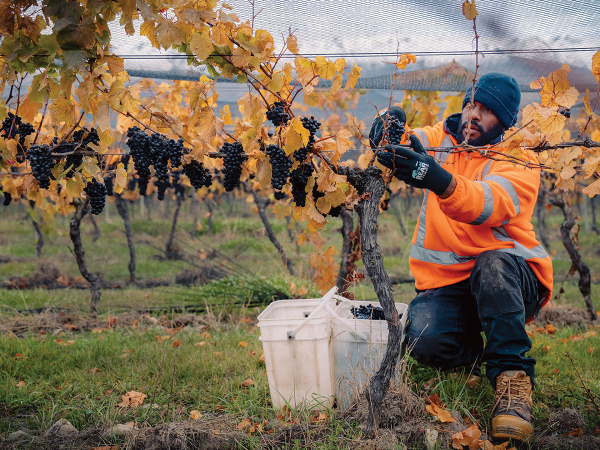 RSE worker George Lani harvests at Amisfield in Central Otago, vintage 2026. Photo Credit: Anda Bulgakova for COWA
With ethical employment practices a "hot topic" in key markets, Sustainable Winegrowing New Zealand (SWNZ) is strengthening its People Pillar.
SWNZ members will soon face new requirements around employment policies and employee rights, to ensure they are in line with market expectations, says Programme Manager Meagan Littlejohn.
She notes that historically the SWNZ programme has been focused on its environmental pillars, and "it's time to bring the social sustainability piece up to the same level".
Having good employment policies in place, treating workers fairly, and being able to prove that in market is increasingly important, with many markets following the strong lead of Nordic countries in demanding verifiable social sustainability measures, alongside environmental, Meagan says.
"The Nordic countries are going way above and beyond any other market gatekeepers right now in terms of how closely they're looking at sustainability credentials and using it in their tender processes."
Other gatekeepers are likely to adopt similar requirements, so the SWNZ People Pillar is being strengthened to meet the requirements of the Nordic frameworks, she adds.
"These improvements will also give SWNZ-certified wines preferential market access in Sweden."
New Zealand has strong employment law, and many in the wine industry have deemed that sufficient.
But increasingly markets are not taking laws as evidence that you're doing the right thing, Meagan says.
"You actually need to make sure you're formalising and documenting what you do and having that verified."
The review took place over a year and was signed off by the New Zealand Winegrowers board in February.
It will result in a few additional questions in the People section of the SWNZ questionnaires, which reflect new requirements around having robust employment policies in place "and evidence that you're implementing them".
Later this winter members will start getting communications around the changes, and will have access to templates and resources online, as well as webinars and workshops, Meagan says.
"So that when everyone completes their next season questionnaire, which is due June 30, 2027, they'll have all the knowledge and the tools to help them answer those questions and implement those new requirements with confidence."
 |
|---|
|
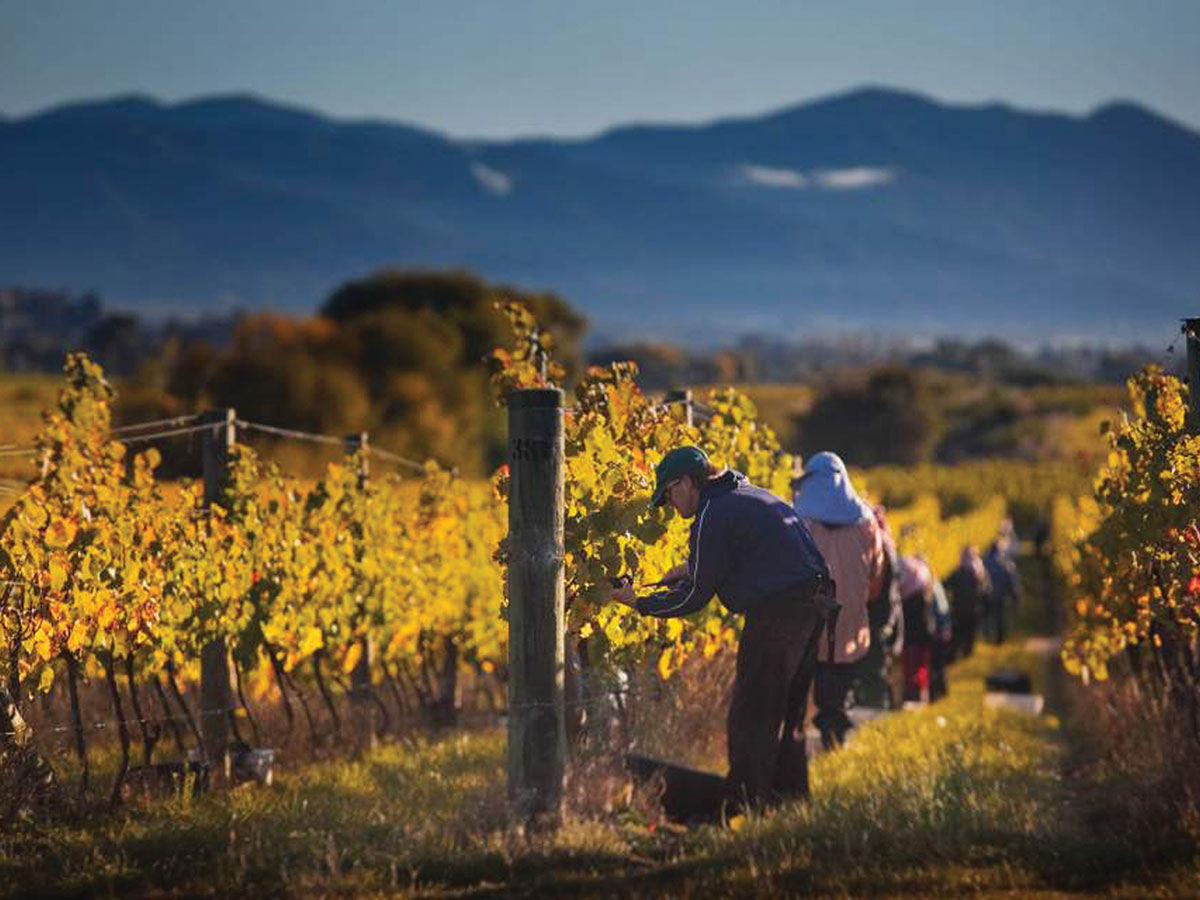
Harvest workers at Cloudy Bay. |
Cloudy Bay Technical Director Jim White, who is also on the NZW board and the Environment Committee that signed off the SWNZ changes, says there's growing international pressure for rigorous labour standards in the wine industry.
He sees that through the work of Cloudy Bay parent company LVMH, and also through growing interest in forums like the Sustainable Wine Roundtable, of which Cloudy Bay is a member.
Jim says New Zealand companies already operate at a high level, given employment laws and the regulations governing the Recognised Seasonal Employer Scheme.
Most vineyard RSE labour suppliers are members of New Zealand Ethical Employers, which provides additional confidence that high standards are being met, Jim says.
"We think we're in a relatively good position anyway, but what we lack is the capabilities to demonstrate that to the market. And really, that's what the People section needs to do. Because we might be doing all these really good things, but we have to be able to prove it to someone else."
Jim notes that many larger wine companies will already have rigorous policies in place, but smaller companies don't always have the resources to stay abreast of social sustainability measures.
"What SWNZ is able to do under the People standard is to provide a lot of templates so people can adopt those policies for themselves. Ultimately, we want that to deliver better outcomes for New Zealand employees."
For the past 35 years, Philip Gregan has helped select New Zealand Winegrowers Fellows, working with the board to choose a cohort of extraordinary industry champions.
Winemaking and photography each require an understanding of science, says Kevin Judd. But the final product is judged by someone else’s senses, “so they’re both an art”.
One of Australia's most decorated winemakers will speak at the Aotearoa New Zealand Chardonnay Symposium in Hawke's Bay this September.
OPINION: Farmers have been clear: it is getting harder, not easier, to find and keep good people.
When Ben Enock came to New Zealand for vineyard work in 2007, his primary aim was to pay for his children's education at home in Vanuatu.