IrrigationNZ has hit back at a call for a five-year ban on new irrigation schemes.
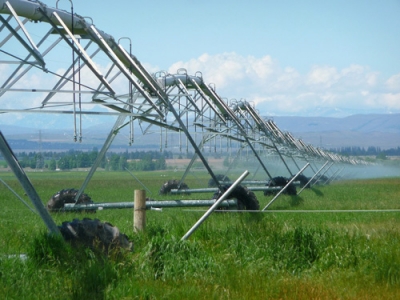
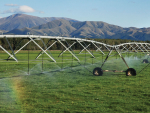
It says irrigation is not solely about dairying; it supports a variety of land uses including viticulture, horticulture, cropping and sheep and beef.
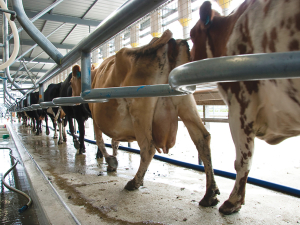
Pastoral-based activities make up approximately three quarters of our irrigated area (dairy 50% and sheep and beef finishing 25%). The other 25% of irrigation supports predominately vegetable and arable crops alongside fruit and wine growing.
In a radio report, the Tourism Export Council (TEC) called for a 5 year ban on new irrigation schemes.
IrrigationNZ says without irrigation, the tourism industry would not be able to promote the food and wine packages it offers in regions such as Hawke's Bay, Marlborough and Central Otago. These growers are only able to produce quality vintages and products with the support of reliable water.
In 2012, it was estimated that irrigated farms provided a $2.7billion contribution to New Zealand's economy, and more than double this in terms of the benefits to the wider community. Irrigated agriculture underpins many of the provincial economies on the east coast of New Zealand. Towns like Hastings, Blenheim, Ashburton, Timaru, Oamaru, Cromwell and Alexandra would be far less vibrant and resilient without irrigation.
IrrigationNZ says irrigation actually benefits tourism because the renewed vitality of these rural centres has created openings for tourism.
Currently New Zealand only abstracts around 2% of its water resource (if hydropower is included this rises to about 5%).
Irrigation accounts for approximately 60% of this and by international standards our general abstraction rate is very low.
The worldwide precipitation average is 800mm per annum but New Zealand receives in excess of 2000mm per annum, which is two and a half times more rainfall. Taking both our abstraction and precipitation rates into account, New Zealand is definitely a water-rich country.
More information about the current state of play in New Zealand's irrigation sector can be found in the 2015 New Zealand Irrigation Snapshot at http://irrigationnz.co.nz/wp-content/uploads/INZ-IrrigationIndustrySnapshot-4Nov15.pdf