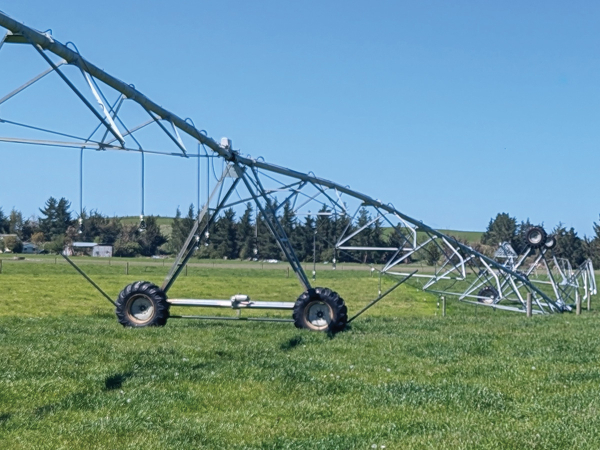
Moves are afoot to get a team of Australians over here to help repair North Canterbury's irrigation machinery, ravaged by the big windstorm of late October.
With summer weather starting to kick in to threaten production, the race is on to try to get the bulk of the damaged irrigators back on by Christmas, says Irrigation NZ chief executive Karen Williams.
The worst hit are for downed irrigators was Culverden/Amuri. It is an intensive dairying area but also has a lot of irrigated dairy support and sheep, beef and deer grazing.
Three weeks after the storm, Williams said it was hard to get firm figures but it now appeared that 400 to 500 spans were toppled and many different repair firms were working in the area.
"Certainly our conversations with the service industry have been that they're on track to have the repairs done by Christmas. That's by standing up a number of teams and also bringing in some support out of Australia," she told Rural News.
The main irrigation suppliers had their own teams in the area as well as local contractors. Waterforce has confirmed that it is planning to bring in a team of four from Australia to start in early December and work through to Christmas to help give the existing workers some breathing space.
However, Williams said it was only those irrigators that could be repaired that were expected to be done by Christmas. Any that were so badly damaged as to need complete replacement would not be done until the new year.
Read More:
When parts needed to be ordered in from overseas, IrrigationNZ was working with MPI and Biosecurity New Zealand to see if they can get priority import clearance.
North Canterbruy Federated Farmers president and sharefarmer chair Bex Green is among the dairy farmers who suffered widespread damage.
She believed all the damaged irrigators in the district had now been assessed and repairs were starting, but without a time frame on the repairs it was too soon to estimate the likely losses in production.
"We definitely need to be looking at more feed to get us over the hole of having no water. I can already see the grass browning off in this heat wave that we had this week," she says.
"I think it's going to be a combination of getting more feed in, or drying off, or going to once a day earlier than we'd like, to just go around that feed deficit."
Green said her own farm had 100ha or irrigated area out but they were "holding steady" because they had been ahead of forecast production.
It was a waiting game to see whether or not the district got rain, she says.