A rare weather double-whammy has seen many South Island farmers having to deal with unseasonal snow while still cut off from power supplies after an unprecedented windstorm.
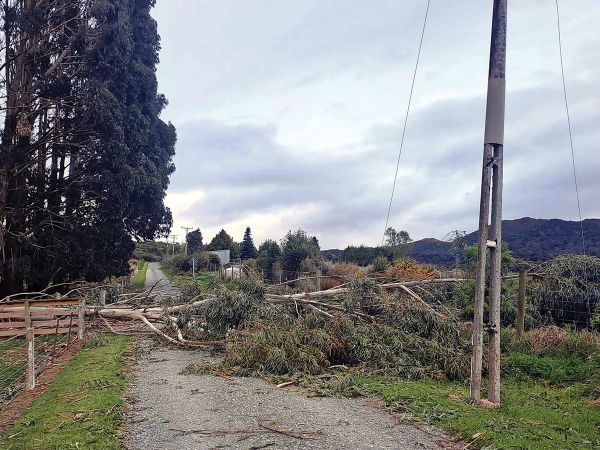
The wind struck on the Thursday before Labour weekend, ripping across Clutha and Southland and many parts of Canterbury, destroying farm buildings, bringing down trees and power lines and toppling irrigators.
Then a cold snap came through at the end of Labour Weekend with snow closing alpine highways and falling to sea level in some areas.
Southland Mayor Rob Scott told Radio New Zealand the ferocity of the windstorm had taken everyone by surprise.
Four days on, there were still many farm properties across Southland and Clutha without power and states of local emergency were still in force.
Kass Rauber, Federated Farmers Southland vice-president, said that while Southland wasn't getting the worst of the snow when the cold snap came though, it was bitterly cold.
Rauber told Rural News it was very hard on people who were then approaching 120 hours without mains power.
Read More:
"These people living on the generator at their houses, they might have running water with the power to the pump, they'll have some lights in the house and they can run the toaster and the jug, they might just be able to run the microwave.
"But these people haven't got the hardwired stuff. They haven't got an oven. They haven't got a hot water cylinder that's going, they haven't got heat pumps going. So that will become more difficult."
Rauber said almost all dairy sheds cut off from the networks were running on generators and the roads were open.
Quite a lot of farms suffered damage from trees falling on to sheds with equipment and the likes parked in them.
"There's the odd tree across the road here and there, but the biggest thing was power lines on the road. But within 24 hours, those power guys have done a fantastic job and cleared most of those lines, roads are open again, tankwers are getting around and getting the milk out."
He said the lines companies were doing a fantastic job, but they had to start with the biggest lines and work down, and some of the very small lines to individual properties hadn't been fully assessed yet.
"There's a lot of damage out there."
"I have to say they have worked day and night getting poles back up, getting wires back up, getting contractors into clear trees off power lines and power poles. That's worked very efficiently and very well."
Speaking from the Balclutha emergency management centre, Associate Agriculture Minister Mark Patterson said the snow was adding insult to injury but he hoped it would come and go quickly as more normal spring weather returned.
While lambing would be over for most, there would still be some lambs being born in higher country.
Patterson said the bigger problem was still assessing and restoring the power network, with about 8000 homes across Clutha and Southland still without power, although many would have access to generators.
Power companies were working overtime with crews coming in from all around the South Island to help.
"There is just a lot of trees down on those lines," said Patterson.
"We deployed the defence force to get generators down here on a Hercules, and soldirers deployed to go up driveways basically, and get to farmers who were without power and communication to just get some information to them and gather information to bring back into the emergency management."
The aircraft were also bringing transformers and other electrical equipment for repairs to the lines network.
"This is a big event and there's people everywhere that are terribly impacted. So, the snow just compounds their misery. But there's an incredible network of people, volunteers and lines company, water, and telecommunication workers working overtime to get those services back up and running. But the widespread nature of the impact is just stretching everyone's resources."
Patterson said his own farm, at Lawrence, also suffered damage.
"A couple of sheds, and trees down everywhere but there's nothing unusual. That's just like everyone else really. There's very few farms that got through unscathed."