Resilient Global Dairy Industry Overcoming Volatility
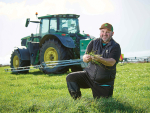
Fonterra chief executive, Richard Allen says being resilient has helped the dairy industry overcome extreme volatility in recent years.




 increase font size
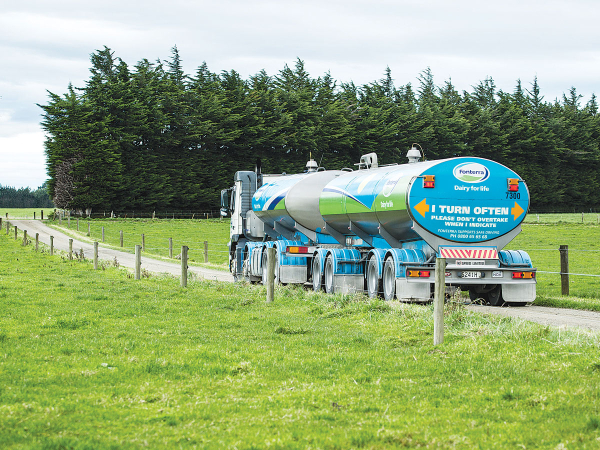
Fonterra board members are in line for a pay rise of around 3%.
The co-operative’s Directors’ Remuneration Committee (DRC) is recommending that Fonterra chair Peter McBride gets a $15,500 bump to his annual fee, while directors get an extra $6000.
If approved by shareholders at the co-op’s annual meeting in Hamilton next month, the chairman’s remuneration will rise 3% to $528,500/annum.
Director fees will rise 2.9% to $214,000. Directors who chair permanent board committees will get an extra $41,000 – an increase of $1000.
The chair of the audit, finance and risk committee will get $56,500, a jump of $1500.
The DRC comprises six elected shareholders. According to the notice for Fonterra’s annual general meeting, the committee reviewed remuneration practices in New Zealand and Australia.
It considered whether current remuneration levels were appropriate to ensure highly skilled directors were attracted and retained on the board, noting the substantial director workload.
The DRC confirmed that small incremental annual increases in fees continued to be its preferred approach, rather than having periods of no increase followed by large uplifts.
It applied the same rule for Fonterra Co-operative Council remuneration.
It recommends that the council chair’s annual fee rise 3% - by $4000 to $136,000.
Councillors will get a 3.5% rise – an increase of $1500 to $44,000.
Fonterra’s AGM will be held at Mystery Creek, Hamilton, on November 12.
Fonterra chief executive, Richard Allen says being resilient has helped the dairy industry overcome extreme volatility in recent years.

Northland farmer Greg Collins has taken over as chair of the Fonterra Co-operative Council.
Fonterra’s 2026 financial year was a year of delivery, with record volumes of milk collected, processed and shipped by the co-op.
Dairy farmers, still holding onto their Fonterra shares despite switching milk supply elsewhere or exiting the industry, now face a stricter share sell-down requirement.
Milk powder prices are continuing their merry run, firming up a potential $10/kgMS farmgate price this season.


OPINION: At first glance it appears that Father Christmas has delivered the rural sector good tidings, with most pundits predicting the return of the centre-right coalition.
For 15 years, Glenda Rees has travelled from Gore to Awarua, often several times a week, to keep watch over one of the country’s rarest birds.
With some farmers opposing a government-industry partnership set up to develop methane reducing products, one NZ company claims that it already has a product on the market.
During the nesting season, from September to December, industrious starlings can quickly build nests in the darker areas behind tractor and vehicle, usually close to hot engines, typically resulting in localised damage or in some cases complete write-offs.
The meat processing industry is much more collegial than it was in the past and is now more focused on common goals.
With the last couple of months having seen some potential tractor purchases put on hold with the impending election and continued input cost rises, year-to-date figures, ending September, has seen deliveries up around 5% over the same period in 2025, with a total of 2026 units.

OPINION: It seems Canterbury processor Synlait is still in the doldrums.
OPINION: Get offside with New Zealand First leader Winston Peters at your own peril.