Resilient Global Dairy Industry Overcoming Volatility
Fonterra chief executive, Richard Allen says being resilient has helped the dairy industry overcome extreme volatility in recent years.




 increase font size
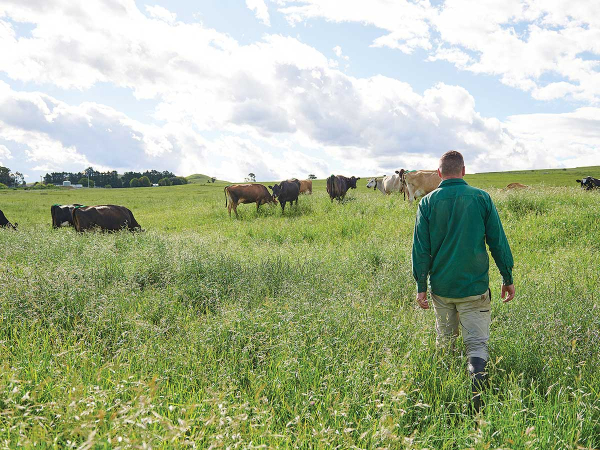 Fonterra has 100 fully certified organic farmers and is looking for more suppliers.
A record farmgate milk price and strong global demand is laying the foundation for continued growth of organic dairy farming in New Zealand.
Fonterra last month announced a record final organic milk price of $14.13/kgMS for 2025-26, surpassing the previous record of $12.35/kgMS set in 2024-25. The co-operative has lifted the forecast organic milk price for this season to even higher - a mid-point of $14.3/kgMS, within a range of $13.30-$15.30/kgMS.
Coastal Taranaki organic dairy farmer and Fonterra supplier, Rachel Short isn't surprised with the new record price.
She told Dairy News that the demand for organic is constant and the demand for NZ certified organic, grass-fed and non-GMO is much higher than current supply.
"Health and quality unadulterated foods is in increasingly global demand."
The global organic dairy sector is valued at approximately US$23 billion, growing at an annual rate of about 6%.
Fonterra has 100 fully certified milk suppliers and is growing its supply base. The co-op's organic business has been running since 2002 and is expanding into the South Island and recruiting more organic farmers in the North Island.
Fonterra's head of milk supply, Lisa Payne, says the record milk prices reflect continued global demand for organic, grass-fed dairy.
"Landing a record final organic milk price for the co-op's organic farmers is a fantastic outcome, and a direct reflection of how strongly customers value the dairy produced through organic farming practices," she says.
"To follow that with a lift in the forecast for 2026-27 really builds on that momentum as we look to grow the organics programme further."
Payne says there's room to grow the co-op's organic supply to help keep up with global demand.
"And we'd encourage any farmer who's been thinking about it to reach out and start that conversation with the co-op," Payne says.
Payne also acknowledged the hard work of Fonterra's existing organic farmers.
"Records like what we achieved in 2025/26 don't happen without the people behind them," she says.
"Our organic programme is in great shape and that ultimately comes down to the commitment of our farmers."
Short, who milks 350 cows, has been an organic farmer for eight years.
She's also a member of the Organics Aotearoa New Zealand board and says organic producers are doing well.
"Our market report and sector intelligence supports this."
However, the current Government's attempt to introduce a Gene Technology Bill is causing anxiety among some farmers.
While the Bill has been stalled due to a lack of support from New Zealand First, it's future will depend on the outcome of the upcoming general election.
Short agrees that many farmers are anxious about the Government's attempt to release gene technology into the environment.
She says these concerns aren't only shared by organic farmers.
"It simply does not make any economic or environmental sense."
Fonterra chief executive, Richard Allen says being resilient has helped the dairy industry overcome extreme volatility in recent years.

Northland farmer Greg Collins has taken over as chair of the Fonterra Co-operative Council.
Fonterra’s 2026 financial year was a year of delivery, with record volumes of milk collected, processed and shipped by the co-op.
Dairy farmers, still holding onto their Fonterra shares despite switching milk supply elsewhere or exiting the industry, now face a stricter share sell-down requirement.
Milk powder prices are continuing their merry run, firming up a potential $10/kgMS farmgate price this season.

With some farmers opposing a government-industry partnership set up to develop methane reducing products, one NZ company claims that it already has a product on the market.

During the nesting season, from September to December, industrious starlings can quickly build nests in the darker areas behind tractor and vehicle, usually close to hot engines, typically resulting in localised damage or in some cases complete write-offs.
The meat processing industry is much more collegial than it was in the past and is now more focused on common goals.
With the last couple of months having seen some potential tractor purchases put on hold with the impending election and continued input cost rises, year-to-date figures, ending September, has seen deliveries up around 5% over the same period in 2025, with a total of 2026 units.
Beef+Lamb New Zealand is calling for nominations for director roles in the Northern South Island and Northern North Island electoral districts.
Fonterra chief executive, Richard Allen says being resilient has helped the dairy industry overcome extreme volatility in recent years.
OPINION: It seems Canterbury processor Synlait is still in the doldrums.
OPINION: Get offside with New Zealand First leader Winston Peters at your own peril.