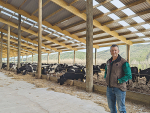
Banks Peninsula farm converts to dairy, cuts footprint by 46%
Converting a Banks Peninsula farm to dairy is expected to reduce its environmental footprint by 46%, say its owner and manager.




 increase font size
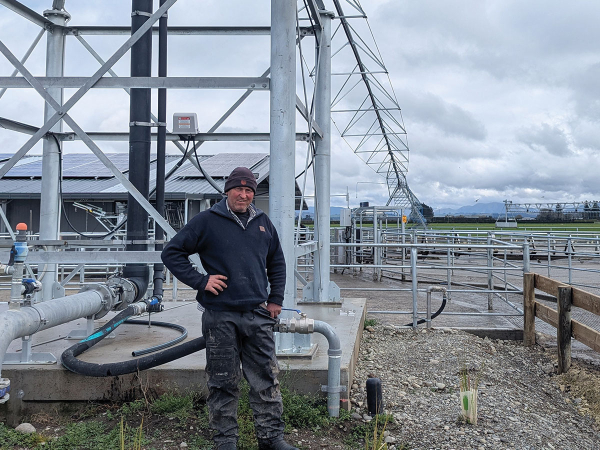 Rod May’s farm is the second in a “new wave” of dairy conversions now underway in a belt from Greendale through Darfield to the Waimakariri.
Converting a longstanding cropping farm to dairy was the only way to ensure the land stayed in the family long term, says new dairy farmer Rod May.
May farms at Greendale, near Darfield, on land that has been in the family as a cropping farm for about 150 years.
But he says rising costs, poor returns and uncertainty in the arable sector have forced the change. His was just the second in a "new wave" of many dairy conversions now underway in a belt from Greendale through Darfield to the Waimakiriri.
"In the last two to three years here, land values have gone up because of one industry. And it's not the cropping."
May said dairying was very good for farm succession and business, while cropping was "living on the edge".
As a cropping farmer he grew clover and ryegrass, alongside specialist crops like spinach, radish and Chinese kale seed, which were high input and high return but at the mercy of the weather.
May said cropping was a lot more hands-on, and he's "not missing it".
Previously he could have 12 or more different crops all with their own management needs and schedules.
"We spent a hundred thousand a year just on chemicals.
"Then we pay for all the seed dressing. Then we pay for the germination test, even if it fails.
"Then we pay for the transport. We pay to get the seed here and then we pay to get it taken away.
"And then all that machinery we've got sitting in the yard."
Despite spending about $12,000 a year on leased bees, yield was poor in his last cropping season because of poor germination.
May also notes that many Canterbury arable farmers suffered crop losses in major hailstorms in the past couple of years.
"If a crop fails you only get one go at it. And in this modern age with our costs, the cost of being a cropping farmer, it hurts you.
"Once you lose those crops, that's it. Whereas we get another go with the cows. We can get more feed in."
Another big driver was rising costs. He could no longer afford to insure crops after premiums went up 30%.
The last big development on the farm was installing irrigation under the Central Plains Water scheme about nine years ago, when May put in a central lane dividing the farm into eight big paddocks, four each side. The lane is still the main highway for the dairy operation but the internal fences have been shifted to create multiple seven-hectare paddocks.
"It's been a two-year journey. Eleven months to build it, 12-months-plus planning it. So it's been on our mind for a while."
May says it had been a busy last season trying to get the last crops off while building the dairying infrastructure.
The dairy shed, yards and effluent ponds have gone in at the centre of the farm under the existing large centre pivot, which has been raised to clear the shed.
CPW irrigation water cannot be used to run the shed or for stock water so a separate well and supply line was put in a year ago in readiness for the conversion.
May called CPW one of the best irrigation systems in New Zealand, albeit the priciest.
"We put that in because we knew, 10-pluis years ago, that water was gold. And water is the secret. You can do anything under it.
"Once you've had water there wouldn't be anyone that would farm without it."
May said that on the CPW system he was operating under "probably the strictest criteria in New Zealand," with every drop of water accounted for, and probes to monitoring leaching and soil moisture.
So, did May know how to milk a cow? Not at all, he readily admits.
"The kids laughed at me when I said what I was doing. But we knew we had to do it to keep the land."
He said there were a lot of good people in dairying and it was a matter of getting the right expertise.
Consultant John Donkers of Dairy Farm Management Services was instrumental, as was hiring an experienced dairy manager, Adrian Holden. May's wife Adrienne is looking after the calves and their son Locky is Holden's 2IC.
May owns the herd, which numbers 650 cows in the first season. The cows are KiwiCross with Jersey genetics, chosen because they are not too large for his heavy soils.
They are running a modern system with AllFlex SenseHub collars on the cows. The 54-ball rotary shed boasts a ProTrack auto drafting gate, automatic cup removers and scales on the feed silos.
Although the conversion required many new fences, May chose not to try virtual fencing collars because of the cost.
"We've got to walk before we run. We're mindful of that. These things you can add later if you want."
Converting a Banks Peninsula farm to dairy is expected to reduce its environmental footprint by 46%, say its owner and manager.


Converting a longstanding cropping farm to dairy was the only way to ensure the land stayed in the family long term, says new dairy farmer Rod May.
As the election heats up, Organics Aotearoa New Zealand (OANZ) has launched its election scorecard designed to help voters wanting to support policies that grow organic and New Zealand's organic sector.
A 'tsunami' of milk from key exporting countries is winding down and this may be good news for New Zealand dairy farmers.
Will the good times last? That's one of the key issues to come out of the latest Federated Farmers confidence survey.
Outgoing Fonterra Co-operative Council chair John Stevenson says that it has been a privilege to represent the co-op's farmer shareholders.
Have a plan in place for your cows and staff.



OPINION: It seems Canterbury processor Synlait is still in the doldrums.
OPINION: Get offside with New Zealand First leader Winston Peters at your own peril.




