Women clean sweep Auckland/Hauraki dairy awards
It was a clean sweep by women at last night’s Auckland/Hauraki regional dairy awards.




 increase font size
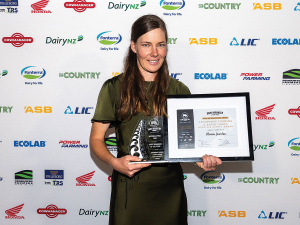
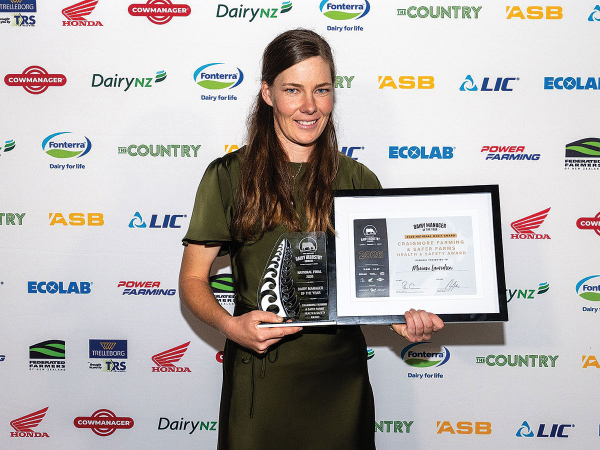 Miriam Lauridsen won the 2026 Taranaki Dairy Manager of the Year title.
When dairy manager Miriam Lauridsen learned the farm, she was joining held weekly health and safety meetings, she initially thought that was “a bit over the top”. Experiencing that culture changed her mind.
The 2026 Taranaki Dairy Manager of the Year says she soon realised many of the issues discussed had come up at previous farms she had worked on.
“The meetings create good opportunities to ensure those are raised promptly. It involves everyone and ensures everyone has a voice.
“The meetings are often just five minutes long and we talk about anything we need to be aware of. It might be hazards people have noticed or things we need to be aware of.
“Sometimes there simply isn’t anything new to discuss and that’s okay. I know some people who won’t do meetings regularly because they don’t think there’s enough to discuss to make it worthwhile. But I think having that opportunity where things can be discussed on a regular basis is what’s important.”
Lauridsen, who is pasture, forage and herd manager in New Plymouth, won the Craigmore Farming & Safer Farms Health & Safety Award, DeLaval Sustainable Pasture Award and the Personal Planning & Financial Management Award at the 2026 Taranaki Dairy Industry Awards.
Safer Farms is dedicated to leading and inspiring a safer farm culture throughout New Zealand.
The organisation’s long-term Farm Without Harm system-wide strategy and action plan has been developed by the agricultural sector for the agricultural sector.
Lauridsen says her three years working on her current farm, which has two full-time workers and one part time milking 370 cows over 137ha, has been a major factor in setting her views around health and safety.
“The culture on farm is very good. The owner has created an environment where people feel they can speak up and are really comfortable with doing that - and any concerns they raise are acted upon.
“For instance, something that was coming up a lot was that the cowshed floors get very slippery, so we put rubber matting in the area where we stand to cup the cows and concrete scabbing in the concrete the rest of the way around the platform.”
She says that culture has helped ensure buy in from all of the staff around health and safety.
“I feel it makes a big difference when the whole team is on board and contributes, and our team has done a really good job of that and play a major role in the health and safety on farm.”
She says there is a strong focus on ensuring people are well rested.
“We have a 5:2 roster most of the year. During calving, we go over to a 6:1 which ensures even when it is very busy, we have time to recharge.
“People do feel comfortable to speak up about any issues on farm - or they might be going through some things outside of work and in that situation, we can arrange jobs to take a bit of pressure off.
“There is good training, including around practices like using chemicals and ensuring we use the correct PPE and have all the checks and processes in place. We wear helmets on bikes and make sure we have established escape routes from the runs when handling animals.
“We don’t have quads anymore. We previously had them with crush protection devices. Now we use two wheelers and a side by side with a roll cage.”
Most contractors they use on farm are long-term and familiar with the property, but Lauridsen says they update them on the ‘need to know’ for every visit.
“There’s very good communication across the farm and with contractors. We have farm maps that clearly show any hazards.
“We just had someone come in to do some spraying and we’d noticed there was a hole in the field, so I let them know and also put a standard in the hole, so that it was visual.”
She says that creating that culture where everyone feels safe to speak openly and know they are heard is critical.
“That includes being open to suggestions, new ideas and being humble and ready to listen to what everyone has to say, so you identify the risks before an accident happens.”
It was a clean sweep by women at last night’s Auckland/Hauraki regional dairy awards.

Canterbury/North Otago Dairy Manager of the Year winner Stephen Overend needed a little pushing to enter the Dairy Industry Awards.
The first solo woman winner of the Dairy Manager of the Year title, Hayley Hoogendyk, hopes to be a role model for others switching to a career in farming.
Despite the low milk price there was a positive vibe among the 33 finalists competing for the NZ Dairy Awards this year.
Thirty three of the nation's top dairy farmers will be heading to Wellington to vie for the three top titles.

When dairy manager Miriam Lauridsen learned the farm, she was joining held weekly health and safety meetings, she initially thought that was “a bit over the top”. Experiencing that culture changed her mind.
Nominations are open for the 2027 Fonterra Dairy Woman of the Year Award.
Keeping up with pasture moisture demands is likely to be the key challenge for dairy farmers during this season’s El Niño weather pattern, says Blue Skies Weather & Climate Services meteorologist Tony Trewinnard.
Farmers have until the end of this week to help shape DairyNZ’s future focus.
Wayne McNee, chief executive of AgriZeroNZ, has resigned and will leave the organisation on 15 January 2027.
The New Zealand dairy sector set a record in the 2025/26 season, producing more than two billion kilograms of milksolids for the first time.

OPINION: It seems Canterbury processor Synlait is still in the doldrums.
OPINION: Get offside with New Zealand First leader Winston Peters at your own peril.