Call for Accurate Use of ‘Dairy’ Term
The head of global dairy organisation, International Dairy Federation (IDF) is calling for accurate use of ‘dairy' term.




 increase font size
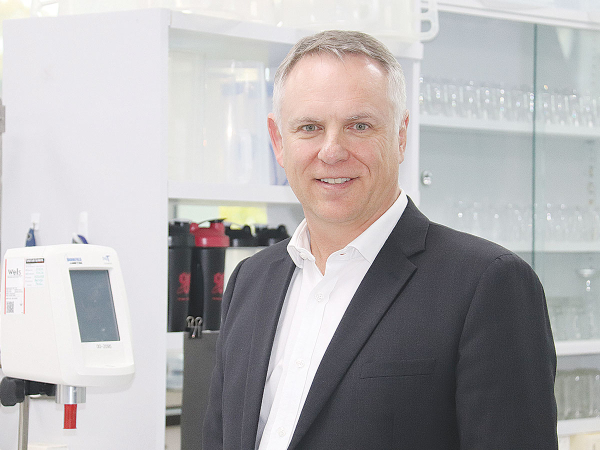 Pierre Venter
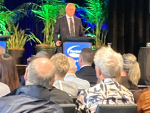
Massey University is best placed to solve the “problems” facing the dairy industry, says vice chancellor, Pierre Venter.
His comments come in the lead-up to the university celebrating its centenary next year, where there will be a significant emphasis on the dairy sector. It will also be 100 years since the Dairy Research Institute (DRI) was founded and sited on the same campus.
Finally, 2027 marks 60 years since Massey University began working with Fonterra which has its main R&D centre just across the road from Massey on the outskirts of Palmerston North.
In an exclusive interview with Dairy News, Venter noted that the DRI and Massey grew up together and there has always been close collaboration between the two organisations – and then more recently Fonterra.
Venter knows the dairy industry very well. Originally from a rural background in South Africa, he became an academic specialising in food safety microbiology, then joined Fonterra in 2011, his final role there beng director for global R&D. During some of that time he also served as an adjunct professor at Massey.
For 100 years the university has initiated or co-developed with partners such as the DRI some of the biggest and most significant innovations in the dairy sector. Right now, it is involved in Whenua Haumanu - a partnership between Massey University and the Ministry for Primary Industries (MPI) through the Sustainable Food and Fibre Futures fund which centres on exploring the most comprehensive programme on regenerative agriculture in NZ history. This is taking place at Massey’s No.1 dairy farm.
Venter says the role of Massey is to support the primary sector and to do this effectively it must be well connected with the sector, understand and solve its problems and support the whole of the value chain in the context of NZ’s exports globally. He says Massey does this exceptionally well and in a myriad of ways.
“Many of the people currently doing R&D in the dairy industry are also adjunct professors within our food technology area. When you look at who teaches most in terms of education for the dairy industry, it’s Massey.
“We have a post graduate diploma which is heavily utilised by the industry, especially for the processors in the manufacturing plants, who come and do that potentially part time from where they are working and they only come in for the contact blocks,” he says.
Venter says Massey University supports Fonterra with its graduate training programme and also trains local Fonterra staff in China at Massey's institutes in that country.
While Massey continues to lead the way in training students to work in the multi-faceted value chain of the primary sector - from farm to fork - Professor Venter says the key to success lies with people, and the university boasts a large and influential alumni.
In terms of people, there is one area that sits quietly in the background yet is extremely important to the dairy industry. Venter says that is what is called the 'sleep lab'.
"During calving, fatigue is the biggest threat for that farmer, and our people understand fatigue and also the impact of sleep and nutrition on fatigue, which is really important on farms at certain times of the year," he says.
Finally, Venter says Massey is in a growth phase having financially managed its way carefully through some difficult times, such as covid, and the focus will now be on implementing the university's new strategy with its focus on value creation.
The head of global dairy organisation, International Dairy Federation (IDF) is calling for accurate use of ‘dairy' term.

The New Zealand government is calling on global dairy industry players to urge their countries to bring down trade barriers.
Be alert but not alarmed about El Niño. That’s the message from Professor Danny Donaghy, deputy head of the Massey University’s school of agriculture and the environment.
Massey University vice chancellor Pierre Venter says his institute is moving from a period of austerity into a growth phase, based on their new strategy.
OPINION: Political parties are getting plenty of advice and recommendations from sector groups as the election approaches.

For 15 years, Glenda Rees has travelled from Gore to Awarua, often several times a week, to keep watch over one of the country’s rarest birds.
With some farmers opposing a government-industry partnership set up to develop methane reducing products, one NZ company claims that it already has a product on the market.
During the nesting season, from September to December, industrious starlings can quickly build nests in the darker areas behind tractor and vehicle, usually close to hot engines, typically resulting in localised damage or in some cases complete write-offs.
The meat processing industry is much more collegial than it was in the past and is now more focused on common goals.
With the last couple of months having seen some potential tractor purchases put on hold with the impending election and continued input cost rises, year-to-date figures, ending September, has seen deliveries up around 5% over the same period in 2025, with a total of 2026 units.
Beef+Lamb New Zealand is calling for nominations for director roles in the Northern South Island and Northern North Island electoral districts.
OPINION: It seems Canterbury processor Synlait is still in the doldrums.
OPINION: Get offside with New Zealand First leader Winston Peters at your own peril.