NZ Technicians Honoured at 2026 John Deere Awards in Brisbane
Leading John Deere technicians and apprentices from New Zealand and Australians were recognised at the recent sixth annual JD Technician of the Year Awards, held in Brisbane.




 increase font size
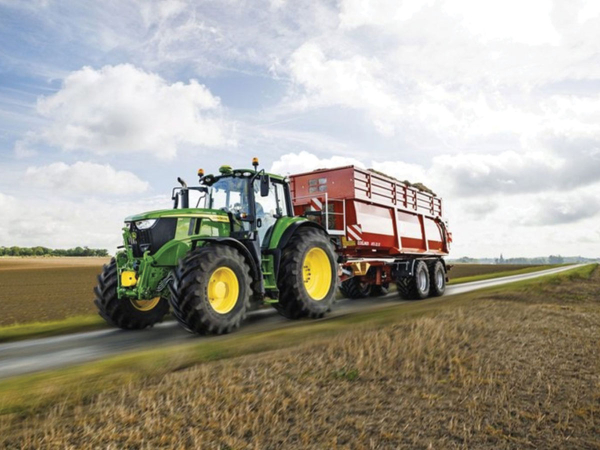 John Deere’s artificial intelligence (AI) assistant, JD, aims to simplify data processing on farms.
A long way from when AI meant plunging a plastic-covered arm armpit deep up a cow’s rear, John Deere has shown off its new artificial intelligence (AI) assistant, aptly called JD, which aims to simplify data processing on farms.
Initially available in the US, the tractor and machinery manufacturer is updating its ‘John Deere Operations Centre’ management platform with JD, an AI assistant built into the system that the company says, “offers farmers an entirely new way to put their data to work”.
John Deere says farmers can ask JD a question, to which it will generate results based on data collected in the tractor. The AI “enables farmers to have a conversation with the vast amount of field, machine and operational data they generate”, the company says. In turn, it is said to create the opportunity to improve yields, drive savings and strengthen farm profitability.
In practice, instead of searching across multiple dashboards and reports, farmers can ask questions, such as, How did my fuel use during tillage this year compare with the last three years? How did singulation compare across my fields, and what impact did it have on yield? Which sprayer operator is covering the most acres per hour, or when is the optimal time to harvest based on historical trends? According to John Deere, farmers can “source the right information quickly and receive practical responses grounded in their own data”.
John Deere chief technology officer, Jahmy Hindman, spoke about the role JD can play in improving data analysis on farms.
“Farmers have more data available to them than ever before, but the value comes from their ability to use it in the moments that matter, “he said. “JD changes the experience from navigating through a sea of data to simply asking it a question, putting advanced data analysis within reach by enabling farmers to receive answers tailored to their farm and their needs in a matter of seconds.”
John Deere says that farmers should remain in control of their data, claiming its Farmer Data Commitment reinforces that approach with 10 principles, including that the farmer controls their data, the company does not sell data and only uses it as described in agreements and policies. It also confirmed that any data it uses is anonymised and aimed at developing “improved machine performance and decision-making insights”.
Farmers can choose not to share farm data with third parties or also choose which third parties they want to share data with. Deanna Kovar, who leads John Deere’s agriculture division, spoke about the company’s commitment to putting farmers in control of their data.
“Our view is simple,” she said. “Farmers should control their data, clearly understand how it is used, and benefit from the insights it can create. JD and the Farmer Data Commitment are part of the same vision for helping farmers put their data to work on their terms.”
John Deere is opening a limited early access programme for select agricultural customers in the US. It will then become more broadly available later this year through Operations Centre on web, mobile, and eventually via in-cab display interface. Timelines for availability in ANZ are yet to be confirmed.
www.deere.co.nz
Leading John Deere technicians and apprentices from New Zealand and Australians were recognised at the recent sixth annual JD Technician of the Year Awards, held in Brisbane.
In Dacre, near Invercargill in New Zealand’s South Island, Bruce Dinnington is running a dairy operation unlike any other.
Gareth Hale is the current custodian of a 160-year legacy that saw his great grandfather dairying in Taranaki since the mid-1850s and grandfather dairying in the Waikato from the early 1900s.
OPINION: One of the privileges of judging the Ballance Farm Environment Awards for more than a decade is the opportunity to spend time on farms and orchards across New Zealand and hear from people constantly looking for ways to improve their businesses.
Developed in Australia and launched in 2021, John Deere’s See & Spray Select System uses camera-based green-on-brown technology to identify living green plant matter in fallow paddocks and apply herbicide only where it is needed.


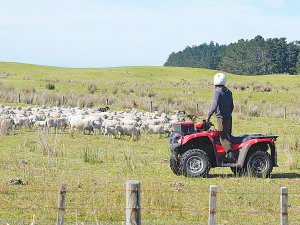
Farmers across parts of Southland and South Otago are continuing to deal with difficult conditions after a prolonged run of wet weather, with pressure building around feed supply, stock management, pasture damage, farm infrastructure and everyday workloads.

Federated Farmers says it welcomes Labour's commitment to reviewing the Sharemilking Agreements Act, calling on other major parties to do the same.
For Canterbury dairy farmers Sian Meijer and Rick Wobben, wearable technology has become one of their most valuable on-farm tools - helping manage 1850 cows across an expansive, high-performing dairy operation while improving efficiency, mating outcomes and day-to-day decision making.
Fonterra has unveiled its annual results for the 2026 financial year, posting $27 billion in revenue and close to $20 billion returned to New Zealand farmer owners and unit holders.
The first major update to the Dairy Cattle Code of Welfare in more than a decade has been released, marking what DairyNZ describes as an important step in ensuring animal welfare standards continue to evolve alongside scientific evidence and on-farm realities.
Ravensdown shareholders have elected Jane Montgomery and Kate Acland to the Ravensdown Board for three-year terms, following a closely contested director election.

OPINION: It seems Canterbury processor Synlait is still in the doldrums.
OPINION: Get offside with New Zealand First leader Winston Peters at your own peril.