Almond Hulls Trialled to Cut Dairy Cow Emissions in NZ
Almond hulls sourced from Australian orchards may have the potential to help New Zealand cows reduce emissions, boost milk yield and lower input costs.




 increase font size
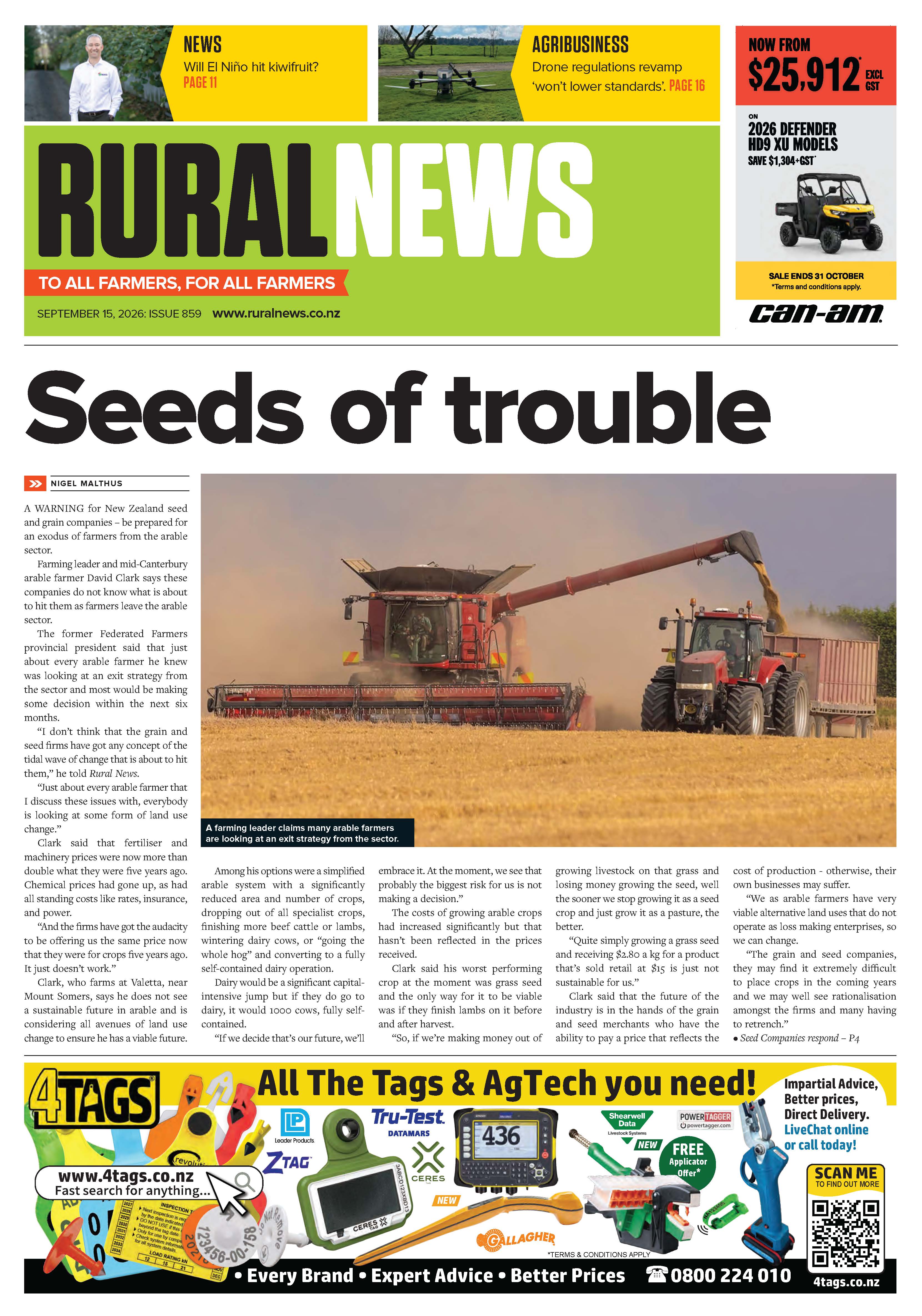
 Bruce Dinnington’s farm combines a freestall wintering barn with modernised robotics and a traditional grazing system.
In Dacre, near Invercargill in New Zealand’s South Island, Bruce Dinnington is running a dairy operation unlike any other.
By combining a freestall wintering barn with modernised robotics and a traditional grazing system, Bruce has created a unique hybrid farm that prioritises pasture health and cow welfare.
Running a herd of about 350 cows, the farm utilises six Lely Astronaut A4 robots, four Lely Discovery Collector manure robots, a Lely Calm automated calf feeder and a Lely Juno feed pusher.
The journey to automation began with raising calves. After installing an automatic calf feeder, Bruce noticed huge benefits on how the calves behaved, walking in and out to feed at their own pace. As their 50-bail rotary shed neared the end of its life after 18 years of use, Bruce knew he wanted that same relaxed atmosphere for his cows.
“It’s how quiet and contented those cows were... nobody’s herding them in, nobody’s pushing them out,” Bruce recalls after visiting his first robotic dairy farm. Seeing big, well-fed cows naturally managing their own schedules convinced him to take the plunge.
While the farm does not explicitly operate under a certified organic banner, its entire design is rooted in protecting the natural state of the pastures and promoting holistic animal welfare. The 360-bed freestall barn keeps the cows comfortable and the soils safe from damage during wet winter months.
In the summer, the cows graze naturally outdoors, while autumn brings a hybrid approach where they graze during the day and return to the barn at night for supplements. This flexible, four-way grazing system (A, B, C, D blocks) ensures the cows always have access to fresh, natural pasture while flowing back to the robots at their leisure.
The switch to robotics brought unprecedented insights into herd health. Every milking acts as a full herd test, providing Bruce with health and milk quality control readings for each individual quarter. Combined with milk temperature and somatic cell count monitoring, Bruce can detect mastitis infections much earlier than in a conventional system.
Furthermore, the robots feature built-in scales. If a cow loses more than 7% of her body weight in three days, Bruce receives an immediate alert on his phone, allowing him to catch lameness or other hidden illnesses rapidly before they escalate. “You are no longer just looking at an udder in a rotary; you are observing the health of the entire cow as she walks naturally in and out of the shed,” Bruce said.
The financial and operational benefits have been immense. By downsizing the farm to a family unit and eliminating the need for outside staff, the Dinningtons save approximately $150,000 annually on labour and housing costs. Production has soared from 560 to 750 milk solids per cow.
Thanks to the highly customised feeding and stress-free environment, the herd has transitioned to an 18-month calving interval. This extends the cows’ peak lactation periods and adds three to four years to their lifespan, keeping the “money cows” in the herd much longer. Ultimately, the entire robotic investment saw an estimated five-year payback period.
For conventional farmers hesitant about the technology, Bruce offers simple advice: “If you keep doing what you’ve always done, you always get what you’ve always got”. He encourages farmers to take a leap of faith, visit a robotic farm, and witness the benefits firsthand.
Almond hulls sourced from Australian orchards may have the potential to help New Zealand cows reduce emissions, boost milk yield and lower input costs.

Gareth Hale is the current custodian of a 160-year legacy that saw his great grandfather dairying in Taranaki since the mid-1850s and grandfather dairying in the Waikato from the early 1900s.
By September, pre-mating heat recording is underway on many spring-calving dairy farms.
OPINION: One of the privileges of judging the Ballance Farm Environment Awards for more than a decade is the opportunity to spend time on farms and orchards across New Zealand and hear from people constantly looking for ways to improve their businesses.
Rural leader Mark Hooper has been appointed as an independent director to the NZPork board, bringing extensive farming, governance and advocacy experience to the role.


In Dacre, near Invercargill in New Zealand’s South Island, Bruce Dinnington is running a dairy operation unlike any other.

A free online platform aggregating governance vacancies across rural and regional New Zealand has been launched.
Environment Minister Nicola Grigg has announced details of a new rural plastics recycling scheme.
Agricultural drone operators say that a government decision to allow lower-risk drone work without certification won’t lower standards but drive innovation and efficiency.
OPINION: Warning bells are ringing in the arable sector.
Farmgate lamb prices are down by 8%, beef cattle by 4.5% and farm expenditure up by 4.2%.

OPINION: The same mainstream media muppets that brought you Jacindamania in 2017 have been flat out pimping for the Opportunities…
OPINION: Your old mate reckons the atrocious way farmers in the UK are treated by their lords and masters in…