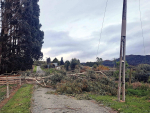
The recent windstorm that cut power to dairy farms across Southland for days has taught farmers one lesson – keep a generator handy on each farm.
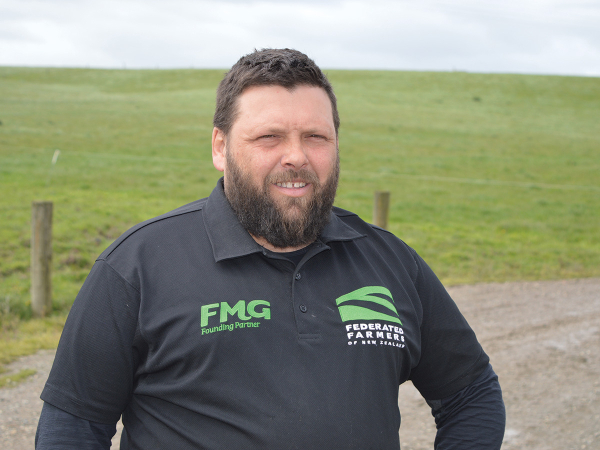
Power is restored on almost all farms. But Southland Federated Farmers vice president Kass Rauber says in the few days following the windstorm on Thursday, October 23, there was mayhem.
Rauber, whose family dairy farm is at Hedgehope, about 25km northeast of Invercargill, says there was a scramble for generators as about 500 farms were left without power.
“Now Southland has a very reliable power grid,” he told Dairy News.
“In our family cowshed, in 25 years we haven’t missed a milking due to power outage,” he says. “Another farmer told me this is the first time since 1994 that he lost power in the cow shed.”
Rauber says the practice among many Southland dairy farmers is to share generators between family and friends.
“And a lot of people own generators also in a partnership or a group, where generators might be owned by four people who have pitched in together to buy the generator.
Read More:
“Or in some cases even five people and people with bigger farming operations might have one or two generators to go through their farming operation.”
Rauber says with so many cow sheds without power, suddenly there weren’t enough generators to keep all cow sheds milking.
On his farm, he switched to milking once-a-day for three days.
“So, there are some big learnings from this event: mother nature is unpredictable,” he says.
“We bought a generator straight away for our farm and so did many other farmers. That’s one of the big learnings from this event.”
Rauber says no one expected a natural disaster of this scale.
“Who would have ever thought of 500 farms losing power at once?
“Normally we would have an idiot driver ram into a power pole, but the pole and power are up before the morning milking. This time things were very different,” he says.
“The milk tankers were arriving on farm but there was no milk to pick up because people were unable to milk. Also, keeping milk chilled in the vats within industry regulations was a major issue.”
Rauber believes many farmers now have generators on their farms.
“Farmers like to be resilient and that means having a generator on each farm.”