
Feds Back National’s 19 Farming National Standards
National’s pledge to introduce 19 new national standards shows the party is serious about getting Wellington out of farming, Federated Farmers says.
 increase font size
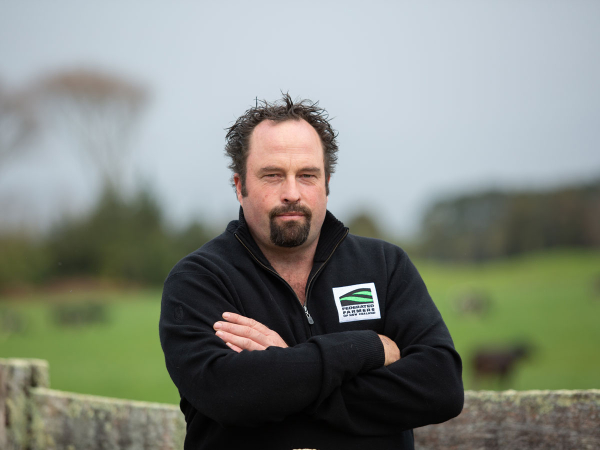 Richard McIntyre says that 42.3% of respondents to the Federated Farmers Banking Survey said they felt their mental health and wellbeing were impacted by banking issues.
Farmers' relationships with their banks are “absolutely” having an impact on their mental health.
That’s according to Federated Farmers domestic commerce and competition spokesperson Richard McIntyre.
McIntyre says that 42.3% of respondents to the Federated Farmers Banking Survey said they felt their mental health and wellbeing were impacted by banking issues.
“That’s nearly half of farmers feeling as if their mental health is suffering as a result of their relationships with banks,” he told Rural News.
“The struggle is real, and this is a huge issue for farmers.”
He says a significant issue is that farmers do not receive enough support from their banks.
According to the banking survey, one in five farmers felt their banks were doing enough to support them during periods of high interest rates.
“In addition, the number of farmers feeling undue pressure from their banks has gone from one in 20 farmers in 2015, to one in four farmers today,” McIntyre adds.
“The pressure farmers are facing from their banks is real and is rapidly becoming the number one issue facing farmers today.”
He says that farmers have accepted that margins on their loans are “a bit higher” than home loans, as there is more risk associated with running a business.
“However, we think this margin is higher than it used to be, and higher than it needs to be,” McIntyre says. “The difference seems to be getting larger.
“The core issue is that banks seem to be pricing for risk, but not actually taking it,” he explains.
“In many cases we’ve seen millions of dollars in equity that should cover the risk of the loan completely, but banks still charging high interest rates.”
McIntyre’s comments come after a Primary Production Select Committee hearing late last month which saw committee members ask for their perspective on the issue of rural bank lending.
ANZ managing director business and agri Lorraine Mapu told the committee that there has been “a lot of discussion” surrounding the cost of borrowing for farmers.
“Interest rates for agri customers are influenced by economic conditions, regulatory settings, and monetary policy,” Mapu says.
She says the higher interest rates farmers have experienced in the past two years are largely due to a combination of the Official Cash Rate (OCR), wholesale rates, and funding costs.
“So, the increase in the amount of capital banks must hold against the lending also has an impact. Risks around the sector impact the amount of capital banks must hold against the lending and therefore the interest they charge.”
Mapu says these risks include volatility in the export market, farmgate prices and inflation.
She says ANZ remains “committed” to supporting farmers.
National’s pledge to introduce 19 new national standards shows the party is serious about getting Wellington out of farming, Federated Farmers says.

Mobile phone coverage and reliability are deteriorating in rural areas, and farming families are bearing the cost, according to a Federated Farmers survey.
Sam Whitelock is an All Black rugby great, Farmstrong Ambassador and working dairy farmer in the Manawatu. Having stepped away from professional sport and returned to his roots on the family farm, he talks about balancing farm life with advocating for rural wellbeing.
Central Otago District Council (CODC) has voted against a plan to spread treated sewage sludge from Cromwell and Alexandra on farmland near Lauder, a decision Federated Farmers says reflects strong opposition from rural residents.
Federated Farmers has called on Central Otago District Council (CODC) to drop or vote down a plan to truck sludge from Alexandra and Cromwell to farmland near Lauder, warning it would compound an "outrageous" situation created by a separate council's decision weeks earlier.



National’s pledge to introduce 19 new national standards shows the party is serious about getting Wellington out of farming, Federated Farmers says.
The National Party’s policies to make it easier to grow fresh vegetables, secure reliable water and energy and simplify farm planning are practical changes that will give growers the confidence to invest, according to Horticulture New Zealand (HortNZ).
Fonterra Co-operative Group chief financial officer Andrew Murray has resigned to take up a role outside the dairy giant.
A major move is about to get underway to improve the quality and viability of dairy beef and cattle in NZ.
Veterinarians say changes to the code of welfare for dairy cattle provides a positive foundation for improved cattle welfare across the country.
Today, 15 October, is the International Day of Rural Women, which recognises rural women’s contribution to farming, communities and the environment.