'Clip board' council out of touch
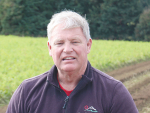
Commercial grower Bruce Rollison says he's spending a lot of time dealing with existing regulations and planning to deal with new ones that keep appearing.
 increase font size
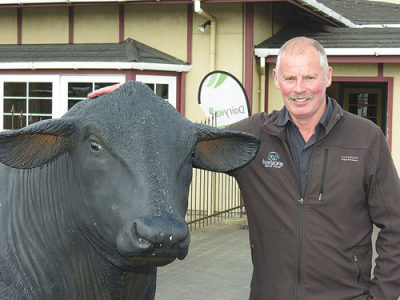 Horizons Regional Council chairman Bruce Gordon.
It's a dog’s breakfast. That’s how Bruce Gordon, chairman of Horizons Regional Council (HRC) in the lower North Island is describing the One Plan as it’s been handed to them by the Environment Court.
Last week the Council and DairyNZ held three farmer workshops to explain the problems it’s facing to implement the plan in the way the Environment Court has decreed it must be done. Gordon says about 170 -- just under half -- the 400 dairy farms plus 20 or more horticultural businesses simply cannot meet the standards the court has set for nitrogen leaching in the region and are therefore technically operating illegally.
The worst hit are in Tararua district who get heavy rainfall and farmers on the western side of the ranges who have light soils through which nitrogen flows freely.
Gordon says dairy farmers who want to intensify their farming operations or others who want to convert to dairying have virtually no show of getting a consent under the court imposed rules.
This kerfuffle began when Fish and Game (FAG) and the Environmental Defence Society (EDS) took the HRC to court for what they saw as its failing to implement the One Plan that had earlier been agreed to. The court sided with FAG and EDS and the council has to do its best to do what the court has determined, but this is proving nigh impossible.
The council is in a complete pickle and is hamstrung by the plan as it stands.
One option is a ‘plan change’ but this could take years given that all parties to it would have to agree on a solution and that is not happening now. Gordon says the council has tried to get alongside FAG and EDS without much success.
“EDS won’t talk to the council’s elected members but they have spoken to our officials. As for FAG, we addressed their annual meeting in Palmerston North and invited them to come and speak with our council and so far they have refused which disappoints me terribly.
“I believe if people sit around the table and eyeball each other they will come to a practical solution. But the plan we have now doesn’t have any practicality and we are struggling with it,” he says.
Gordon says there is no science in sight that can help and the problem is creating uncertainty in the region.
“Who’s going to invest in a region when that uncertainty exists?” he asks.
Gordon says the problem is not just a dairy problem. Sooner or later sheep and beef will get caught, especially if they use irrigation and try to intensify, he says.
“Horticulture is in a lot of trouble and worse than dairy. Nobody can come close to the new limits and none of our growers, be they in Otaki or Levin -- a food bowl of NZ -- or Ruapehu where carrots and spuds are grown, can meet the new limits,” he says.
In the meantime the long term economic future for the region looks grim unless Winston Peters or some other politician can see their way clear to intervene. Gordon say they have talked to NZ First and Labour, and to government officials, and all are aware of the problems the council faces through no fault of its own.
Commercial grower Bruce Rollison says he's spending a lot of time dealing with existing regulations and planning to deal with new ones that keep appearing.
Applications have now opened for the Horizons Regional Council Don Linklater Memorial Bursary.
Federated Farmers says it is pleased that Horizons Regional Council (Manawatu-Whanganui) has recognised the need to get work done on-farm by empowering them to fix infrastructure without getting consents.
After more than a decade of at times acrimonious wrangling, it seems that peace is breaking out on how to manage the environment in the Manawatu, Whanganui and Rangitikei districts.
After more than a decade of at times acrimonious wrangling, it seems that peace is breaking out on how to manage the environment in the Manawatu, Whanganui and Rangitikei districts.


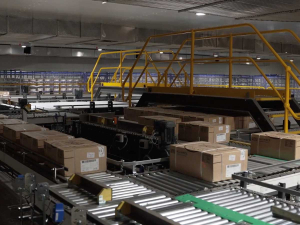
Alliance is calling for final applications for its 2027 Graduate Programme, with applications closing on Sunday 25 October.
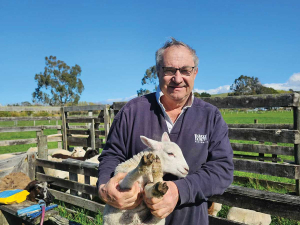
Decades piloting planes has ensured vet and farmer David Hayes is focused on safety. So, after a serious accident while welding on farm, he is sharing his experience so others can learn from it.
Canterbury milk processor, Synlait Milk has confirmed Leon Fung as its chief executive officer.
OPINION: Making it easier to collect rainwater and use it to grow crops and livestock is a no brainer.
As part of its Election 2026 coverage, Rural News asked political parties how they would help pull the arable sector out of the doldrums. Here's what they said:
Farmers are being encouraged to rethink how they manage waste on farm with the launch of ruralwastesorted.co.nz, a new website bringing together practical tips, real farmer experiences and resources.