Fonterra Names Four Independently Assessed Director Candidates
Fonterra Co-operative Group has confirmed the independently assessed candidates standing for election to its board in 2026.
 increase font size
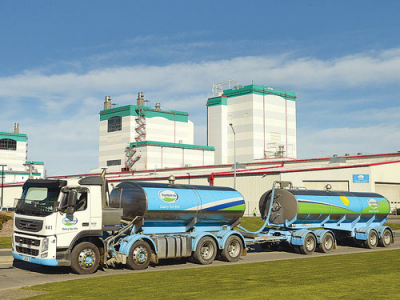 Fonterra’s milk intake is down following a dry start to summer.
Dry conditions in the early part of summer are suppressing milk production and squeezing dairy prices higher, says BNZ senior economist research Doug Steel.
A weaker US dollar is generally supporting all USD denominated commodity prices with dairy no exception, he told Dairy News.
“The GDT price index rose 4.9% in the second auction of the year, following the 2.1% lift at the previous event,” he says.
“All product prices rose, with whole milk powder prices up 5.5% to just over US$3000/tonne.
“The price gains unwind some of the decline late last year. Prices could squeeze higher in the near term if New Zealand production continues to suffer from poor grass growing conditions, although we expect softer prices to resume later in the year on strong global milk supply (particularly from the EU) supported by low grain prices.
“Still large EU stockpiles of skim milk powder (SMP) and possible changes to the EU’s intervention programme provide for some potential price weakness.”
SMP prices rose 6.5% at the latest auction, but at US$1818/t they are still at very low levels.
“Some recent rain in NZ will help production at the margin, but more is needed. Fonterra has reported its milk collections in December were 6% lower than a year ago.
“We think total NZ milk production for the 2017-18 season will be down by about 2% on the previous season, which includes the second half of the season being down about 5% on a year ago.
“This will dent NZ GDP growth and is one reason we are a little cautious on such in the near term.
“The 7% price gain this year converts to a smaller 3% gain when expressed in NZ dollars, given that the NZD/USD is now about 0.73 rather than sub 0.70 as it was late last year.
“Nevertheless, the first two GDT results of the year help reduce the downside risk to milk price forecasts that we were highlighting toward the end of last year. Our milk price forecast for the 2017-18 season remains at $6.30/kgMS (Fonterra’s latest view is $6.40/kgMS).”
Rabobank dairy analyst Mike Harvey says all prices rose at the latest auction and whole milk powder (WMP) made a healthy jump (up 5.1%, average price US$3010/t).
“The result is not surprising given the news prior to the event: Fonterra’s milk intake for December dropped 6% for the month. This is a big drop and concrete evidence of how impactful the dry conditions have been.
“While some regions have had much needed rain since the start of 2018, for many it is not near enough.”
Fonterra is expecting a 3% decline in milk volume for the season (vs last season) as announced prior to Christmas, says Harvey.
Hence Fonterra is managing volumes on the GDT.
“This will help restore some balance to the global market in the first half of 2018 when we expect to see pressure on global prices continue.
“Growth elsewhere across the dairy export regions is still tracking higher but at different rates; and growth in Europe will still be key to the price direction in the first half of the year.”
Fonterra Co-operative Group has confirmed the independently assessed candidates standing for election to its board in 2026.

Fonterra has revised its Farmgate Milk Price forecast for the 2026/27 season, lifting the midpoint and narrowing the range on the back of improving global dairy commodity prices.
Outgoing Fonterra Co-operative Council chair John Stevenson says that it has been a privilege to represent the co-op's farmer shareholders.
Kiwifruit growers are watchful but remain optimistic as concerns around the potential effects of the El Niño weather pattern this season.
OPINION: It seems Canterbury processor Synlait is still in the doldrums.



Will the good times last? That's one of the key issues to come out of the latest Federated Farmers confidence survey.

Outgoing Fonterra Co-operative Council chair John Stevenson says that it has been a privilege to represent the co-op's farmer shareholders.
Have a plan in place for your cows and staff.
New Plymouth-based Manuka honey exporter Egmont Honey has completed its acquisition of Taihape beekeeping business Tweeddale's Honey, with settlement finalised on Friday, 18 September.
Westpac NZ is calling on farmers and growers to start preparing now for the possibility of a dry summer, as likely El Niño conditions raise the risk of drought across parts of the country.
Fonterra Co-operative Group has confirmed the independently assessed candidates standing for election to its board in 2026.