Federated Farmers Welcomes ACT’s New Farming Policies
Federated Farmers has welcomed new rural policies released by ACT, saying they align closely with its own election priorities.
 increase font size
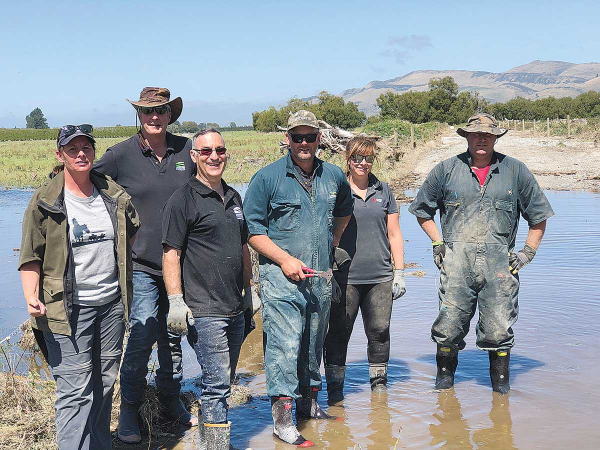 Federated Farmers executives led by president Katie Milne (left) help clean up affected farms.
The financial impact of the flooding which ripped through Southland in the first week of February is huge, says Southland Federated Farmers vice-president Bernadette Hunt.
“I was talking to an arable farmer who’s lost a lot of arable crops and the cost to them is about a quarter of a million dollars.
“That’s just one landowner,” said Hunt.
“A lot of people are on a much smaller scale than that but the number of affected farms that will be incurring costs are high.”
Hunt said the feed situation in the province would be very challenging because other parts of the country are in drought with little feed to spare.
In the very short term there had been a lot of feed moving around the province over the last few days but longer term would be a challenge because a lot of winter crop and baleage has been lost.
“We were already short in Southland with the challenging season we’ve had so there’s going to be some people getting their heads together to try and come up with a solution to that over the coming days.”
Hunt, who was co-ordinating Farmy Army volunteers to go into farms to help the clean up, said clearing debris that had ripped through farm fences was the main work of the volunteers.
“Most of them don’t have specialist farming skills so if they can go along and clear the fencelines then the farmers themselves can go along or get contractors to come and actually do the repair work. But all that rubbish has got to be gone first.”
Hunt said the damage was incredibly wide ranging.
Fence damage was very widespread but there had also been a lot of damage to lanes, tracks and even tanker tracks and farm entrances.
“A lot of that work involves heavy machinery and carting of stone and sand and all sorts.
“There’s a lot of that repair work needing to be done.”
In some cases underground water systems and underground cabling for electric fences had been ruined.
A lot of gravel had been deposited on pasture and would have to be removed, while baleage and “all sorts of rubbish” has been strewn across the land, Hunt says.
Federated Farmers has welcomed new rural policies released by ACT, saying they align closely with its own election priorities.

A farmgate milk price of $10/kgMS this season is firming up as milk powder prices soar and the New Zealand dollar weakens.
Federated Farmers is backing Feilding High School’s call to keep Agriculture and Horticultural Science as a standalone subject in Year 11.
National’s pledge to introduce 19 new national standards shows the party is serious about getting Wellington out of farming, Federated Farmers says.
Southland's wet winter and spring will potentially cost Wyndham sheep and beef farmer Ben Dooley between $100,000 and $120,000 in lamb losses.


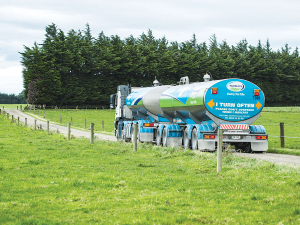
Fonterra board members are in line for a pay rise of around 3%.
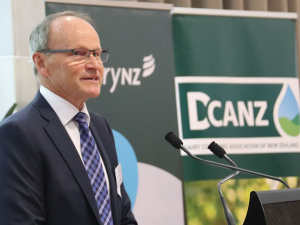
Dairy processors are ready to further boost New Zealand’s export earnings but want the incoming government to match their ambition with good policy.
Massey University is best placed to solve the “problems” facing the dairy industry, says vice chancellor, Pierre Venter.
Synlait's longest serving employee – a man who joined the Canterbury-based milk processor even before it began processing milk – is now its newest executive.
A dairy industry leader believes eradicating the common and costly disease, Bovine Viral Diarrhoea (BVD) is within reach.
A farmgate milk price of $10/kgMS this season is firming up as milk powder prices soar and the New Zealand dollar weakens.