Fonterra FY26 Results: $9.69 Milk Price, $3.4bn Profit
Fonterra has unveiled its annual results for the 2026 financial year, posting $27 billion in revenue and close to $20 billion returned to New Zealand farmer owners and unit holders.
 increase font size
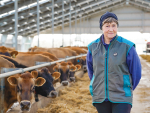
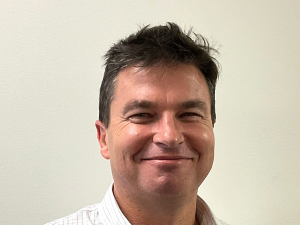
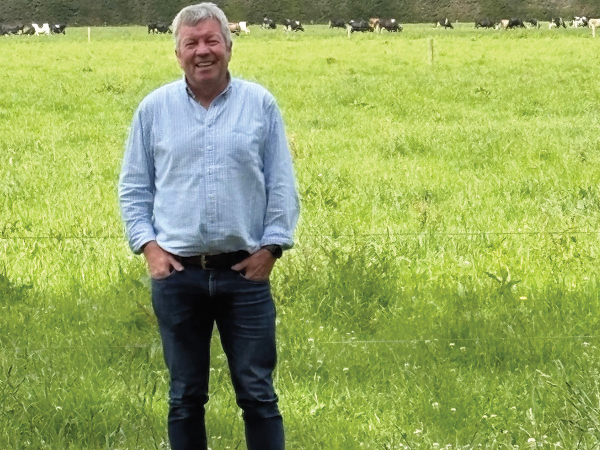 Andy Macfarlane steps down from Fonterra’s board this week.
Retiring Fonterra director Andy Macfarlane believes the co-operative has made good progress over the past decade but adds that there's still a way to go.
The Canterbury agribusiness consultant and farmer was elected to the board in 2017 and steps down at the co-op's annual meeting this week.
According to Macfarlane, Fonterra must continue to perform exceptionally to retain the trust of farmer shareholders and be resilient as a global trader.
Speaking to Dairy News, Macfarlane says "some significant" reset done by Fonterra in the last eight years are showing results. The co-op has shifted focus from global operations to New Zealand. Farms owned in China were sold and the co-op pulled out of Chile where it has a consumer business. Over the years, Fonterra's debt level has shrunk with earnings on the up.
"We've reset the platform to put Fonterra in a good position to deliver. The ship is sailing well in the right direction," says Macfarlane.
And Macfarlane puts the turnaround down to the leadership shown by chief executive Miles Hurrell since his appointment in 2018.
Hurrell was tapped by the board, then chaired by John Monaghan, to take over as interim chief executive following the decision by the late Theo Spierings to step down. He was confirmed in the post in March 2019. With Fonterra reporting a financial loss in 2018, Macfarlane says Hurrell took over at "a very difficult time".
"It was a good call by then chair John Monaghan to have confidence in Miles for the job. And he has built a very good set of people below him."
Macfarlane believes performance will be key to Fonterra's future success. As a co-op, Fonterra must perform better than other companies to maintain the confidence of its shareholders.
"Because if we don't, our shareholders will drift away," he adds.
"As shareholders, they expect the return on their capital to be higher than the cost of capital, otherwise they will redeploy that capital.
"The value proposition being in a co-op has to be very clear and very clearly articulated to them."
Macfarlane says the divestment of its global consumer and related businesses means more capital investment into NZ operations. This would help lift earnings and boost the milk price and shareholder returns.
His message to Fonterra shareholders is to have confidence in the co-op and its future but be ready for challenges.
"Don't expect everything to go in a straight line," he says.
He also urged shareholders to take a long-term view and not just focus on the next two to three years.
Macfarlane will be farewelled by the board and management in Christchurch where the co-op's annual meeting will be held on Thursday.
He says leaving the Fonterra board will take a big chunk out of his life. However, he has no plans to slow down.
"There's still lot I can do in the agriculture space and spend more time with my family."
He is a director of meat company ANZCO, chairs the SFFF Plantain Project and Edgewater Hotel Lake Wanaka boards and is a member of the International Farm Management Association (IFMA). He has served as a director of Ngai Tahu Farming Limited and AgResearch and is past chair of Deer Industry New Zealanad and served on the council of Lincoln University for 12 years.
Fonterra has unveiled its annual results for the 2026 financial year, posting $27 billion in revenue and close to $20 billion returned to New Zealand farmer owners and unit holders.
Fonterra Co-operative Group has confirmed the independently assessed candidates standing for election to its board in 2026.
Fonterra has revised its Farmgate Milk Price forecast for the 2026/27 season, lifting the midpoint and narrowing the range on the back of improving global dairy commodity prices.
Outgoing Fonterra Co-operative Council chair John Stevenson says that it has been a privilege to represent the co-op's farmer shareholders.
OPINION: It seems Canterbury processor Synlait is still in the doldrums.


Pāmu has released its FY26 Integrated Annual Report, reporting a Net Operating Profit of $113 million, more than double the $49 million recorded in FY25.
Meat Industry Association data, released alongside the Red Meat Sector conference in Wellington, shows export value climbing across the US, China, UK and Canada.
Applications are set to open for the 2027 Zanda McDonald Award, a trans-Tasman award recognised for identifying and fast-tracking talented young leaders in agriculture and agribusiness.
The Royal New Zealand College of General Practitioners (the College) and Hauora Taiwhenua Rural Health Network are calling for investment in a proposed new training pathway for rural GPs, warning that many rural practices are struggling to recruit while a large share of the existing workforce nears retirement.
Federated Farmers has called on Central Otago District Council (CODC) to drop or vote down a plan to truck sludge from Alexandra and Cromwell to farmland near Lauder, warning it would compound an "outrageous" situation created by a separate council's decision weeks earlier.
Synlait has swung to second-half profit as operations stabilise, but the dairy processor still posted a $75.4m annual loss.