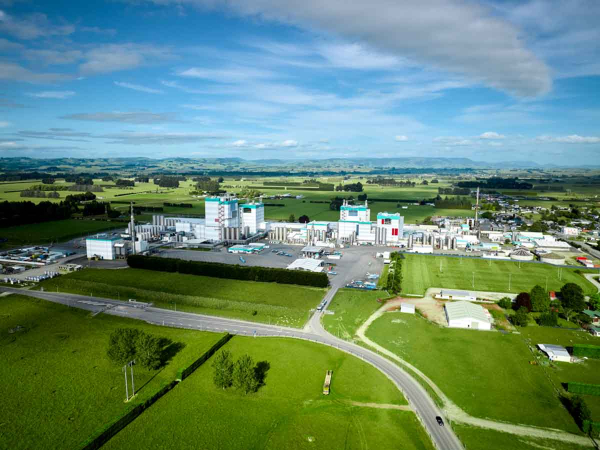
While opening the first electrode boiler at its Edendale site, Fonterra has announced a $70 million investment in two further new electrode boilers.
The announcement comes as the co-operative makes the move away from coal use and towards renewable energy in an effort to futureproof its sites.
The two new electrode boilers will replace two existing coal-fired boilers, providing renewable energy to support milk processing and future growth at the site, including additional power and steam heat capacity for the new UHT plant currently being built.
Anna Palairet, Fonterra’s chief operating officer, says the investment marks a key step in strengthening operations at the Edendale site.
“Investing in renewable energy solutions, such as electrode boilers, will help ensure we can continue to process milk efficiently both now and in the future,” Palairet says.
“Securing a reliable energy supply is critical to the resilience of our operations, and this investment will help future-proof Edendale for years to come."
Fonterra says the investment supports its broader decarbonization and emissions reduction targets.
Once the two new electrode boilers are complete, it is expected that emissions at Edendale will be reduced by approximately 72,800 tonnes of CO2e annually which is the equivalent of removing more than 30,000 cars from New Zealand roads.
This is forecast to result in an approximately 4% reduction towards Fonterra’s overall 2030 Scope 1 and Scope 2 GHG emissions reduction targets.
The investment is co-funded as part of a previously announced Energy Efficiency and Conservation Authority (EECA) partnership.
EECA Chief Executive, Dr Marcos Pelenur, believes the project is a positive step toward enhancing productivity, building resilient infrastructure, and ensuring long-term operational sustainability.
“This project supports greater energy security while laying the foundation for future growth and adaptability.”
Invercargill MP Penny Simmonds says she is delighted by the announcement.
“This is a major announcement for our province, creating employment opportunities and boosting the local economy,” she says.
“It is also an excellent way for the cooperative to cut its emissions and continue to reduce its environment footprint.”
Construction is set to commence shortly, with the new boilers expected to be operational by August 2027.