Fonterra FY26 Results: $9.69 Milk Price, $3.4bn Profit
Fonterra has unveiled its annual results for the 2026 financial year, posting $27 billion in revenue and close to $20 billion returned to New Zealand farmer owners and unit holders.
 increase font size
 Fonterra chief financial officer Marc Rivers.
Fonterra is receiving a $550 million cash boost following the sale of its 50% stake in pharmaceutical maker, DFE Pharma.
And the co-op is signalling more “one-off” transactions this year as it grapples to strengthen its balance sheet following two straight years of net losses.
The DFE Pharma sale, first announced in September 2019, has completed regulatory approvals from competition authorities.
Fonterra chief financial officer Marc Rivers says the completion of this sale is a key milestone in strengthening the co-op’s balance sheet, with cash proceeds of $554 million, comprising of the original sale proceeds of $537 million plus $17 million in settlement adjustments.
Over the course of the 2020 financial year Fonterra expects there to be other one-off transactions as it implements strategy and continues its asset portfolio review, he adds.
Rivers says it’s too early to comment on the impact of asset sales on the 2020 financial year.
“The announced forecast earnings range will continue to reflect just the underlying performance of the business.
“We will provide details of the overall impact of all one-offs as part of our full-year financial statements and will also provide an update as part of our Interim Results,” Rivers says.
DFE Pharma was a joint venture established in 2006 between Fonterra and Dutch-based FrieslandCampina. DFE Pharma is one of the largest suppliers of pharmaceutical bulking agents in medicines such as tablets and powder inhalers.
DFE Pharma has production locations in Europe, India and New Zealand (Kapuni).
Fonterra has unveiled its annual results for the 2026 financial year, posting $27 billion in revenue and close to $20 billion returned to New Zealand farmer owners and unit holders.
Fonterra Co-operative Group has confirmed the independently assessed candidates standing for election to its board in 2026.
Fonterra has revised its Farmgate Milk Price forecast for the 2026/27 season, lifting the midpoint and narrowing the range on the back of improving global dairy commodity prices.
Outgoing Fonterra Co-operative Council chair John Stevenson says that it has been a privilege to represent the co-op's farmer shareholders.
OPINION: It seems Canterbury processor Synlait is still in the doldrums.


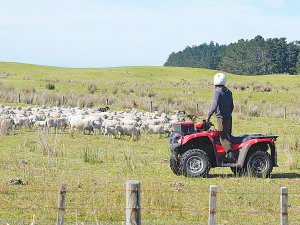
Farmers across parts of Southland and South Otago are continuing to deal with difficult conditions after a prolonged run of wet weather, with pressure building around feed supply, stock management, pasture damage, farm infrastructure and everyday workloads.
Federated Farmers says it welcomes Labour's commitment to reviewing the Sharemilking Agreements Act, calling on other major parties to do the same.
For Canterbury dairy farmers Sian Meijer and Rick Wobben, wearable technology has become one of their most valuable on-farm tools - helping manage 1850 cows across an expansive, high-performing dairy operation while improving efficiency, mating outcomes and day-to-day decision making.
Fonterra has unveiled its annual results for the 2026 financial year, posting $27 billion in revenue and close to $20 billion returned to New Zealand farmer owners and unit holders.
The first major update to the Dairy Cattle Code of Welfare in more than a decade has been released, marking what DairyNZ describes as an important step in ensuring animal welfare standards continue to evolve alongside scientific evidence and on-farm realities.
Ravensdown shareholders have elected Jane Montgomery and Kate Acland to the Ravensdown Board for three-year terms, following a closely contested director election.