
Fonterra CFO Andrew Murray Resigns
Fonterra Co-operative Group chief financial officer Andrew Murray has resigned to take up a role outside the dairy giant.




 increase font size
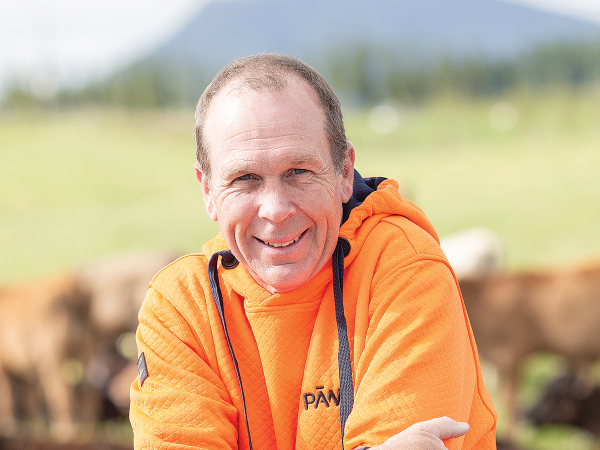 Pamu chief executive Mark Leslie says the state farmer voted in favour of Fonterra divesting its consumer and related businesses.
One of Fonterra's largest milk suppliers says Fonterra's board and management have got what they wanted - a great turnout and a positive signal from shareholders on the sale of its co-operative's consumer and related business.
The $4.22 billion sale to French dairy giant Lactalis got the nod of 88.47% voters at a special general meeting held online last week.
State farmer Pamu voted in favour of the sale.
Pamu chief executive Mark Leslie told Rural News it was good to hear that shareholders had delivered a strong 'yes' vote.
Leslie says it's also good to see how Fonterra is investing in its food service and ingredients businesses including investments at plants in Edendale and Clandeboye in the South Island.
"It's great to hear the outcome and also how the co-operative is investing in the future of its business."
Fonterra chair Peter McBride says the board and management team were encouraged by the level of engagement from shareholders in the lead up to the vote.
"We've been pleased to see so many farmers joining in the discussions since the start of this process in May last year when we first announced the decision to explore divestment options, and especially over the past month or so when the full details have been available," says McBride.
"It helps to demonstrate one of the key things that sets us apart from most other processors - our farmers have a direct say in the future of their co-operative, and they've made the most of that opportunity.
"We're pleased to have received a strong mandate, with 88.47% of the total farmer votes cast in suport of the recommendation and 80.59% participation based on milk solids voted. We want to thanks all farmer shareholders who voted."
McBride says the decision to divest the Mainland Group businesses is signficant and one the board did not take lightly.
"We have examined the strategic context we operate in, our strengths and how as a Co-op we create value for our farmer owners.
"The divestment will usher in an exciting phase for the co-op. We will be able to focus Fonterra's energy and efforts on where we do our best work. We will have a simplified and more focused business, the value of which cannot be overstated," says McBride.
The threshold required to approve the sale was for more than 50% of the votes from those entitled to vote (based on share-backed kgMS) and who actually voted to be in favour of the proposal.
Completion of the divestment remains subject to securing certain regulatory approvals and the separation of Mainland Group business from Fonterra, both of which are well underway.
Subject to these steps being completed, Fonterra expects the transaction to complete in the first half of the 2026 calendar year.
New Vote
Fonterra is targeting a tax-free capital return of $2 per share to shareholders and unit holders, equivalent to $3.2 billion, once the sale is complete.
Another shareholder vote will be required for the payment of the capital return. The process for that capital return is expected to be by way of a scheme of arrangement under Part 15 of the Companies Act 1993.
The Co-op plans to provide more detail on the timing and process for the capital return in early December.
Fonterra Co-operative Group chief financial officer Andrew Murray has resigned to take up a role outside the dairy giant.

Global dairy giant Lactalis has integrated its Australian operations with the Mainland Dairy consumer business it acquired from Fonterra earlier this year.
A major move is about to get underway to improve the quality and viability of dairy beef and cattle in NZ.
High country stations, mixed sheep and beef farms, Māori-owned farms, corporates and family operations are among the nine commercial farms taking part in the Livestock Innovation Farming Transformation programme, known as LIFT.
Pāmu has welcomed Taranaki student Paige Burston as its newest First Foundation Scholar, supporting her journey towards a career in agriculture and animal science.


National’s pledge to introduce 19 new national standards shows the party is serious about getting Wellington out of farming, Federated Farmers says.
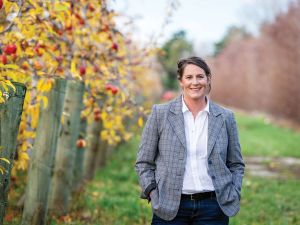
The National Party’s policies to make it easier to grow fresh vegetables, secure reliable water and energy and simplify farm planning are practical changes that will give growers the confidence to invest, according to Horticulture New Zealand (HortNZ).
Fonterra Co-operative Group chief financial officer Andrew Murray has resigned to take up a role outside the dairy giant.
A major move is about to get underway to improve the quality and viability of dairy beef and cattle in NZ.
Veterinarians say changes to the code of welfare for dairy cattle provides a positive foundation for improved cattle welfare across the country.
Today, 15 October, is the International Day of Rural Women, which recognises rural women’s contribution to farming, communities and the environment.



OPINION: The same mainstream media muppets that brought you Jacindamania in 2017 have been flat out pimping for the Opportunities…
OPINION: Your old mate reckons the atrocious way farmers in the UK are treated by their lords and masters in…




