Fonterra Elections 2026: Voting Opens Tuesday 20 October
Fonterra shareholders can begin voting on Tuesday 20 October in the 2026 Board of Directors’ election, a Co-operative Council election in one Ward, and seven Annual Meeting resolutions.




 increase font size
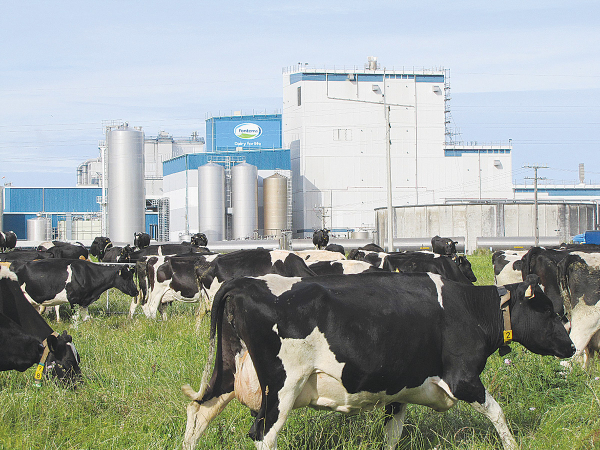
According to ASB, Fonterra's plan to sell it's Anchor and Mainlands brands could inject $4.5 billion in additional spending into the economy.
As part of the divestment of its brands, Fonterra has promised its farmer shareholders a capital return of NZ$2/share, adding up to approximately $3.2 billion.
Shareholders vote on the sale this month, with the sale set to come into force in 2026 pending regulatory approval from the Overseas Investment Office.
In its latest report, How the butter gets spread, ASB describes the prospective sale as "chunky, even for a behemoth such as Fonterra".
"Fonterra's cash returns from last season (dividends + milk price payouts) totalled $16.2 billion. A conservative estimate of $15bn this season plus a $3.2bn capital return would increase total cash returns for the 2025/26 season by ~20% for no material change in activity," the report says.
ASB argues that the capital return could inject approximately $4.5 billion into the economy. That flowthrough, the bank says, would likely be concentrated to industries like manufacturing, retail and accommodation, and rental and real estate.
"We estimate that 40-60% of the capital returns to dairy farmers would be saved or used to pay down debt," the report adds. "A high savings propensity constrains the immediate flow to the broader economy but can build stronger medium-term resilience for rural businesses."
The bank says while the co-operative's greater focus on producing commodities will leverage it's key strengths, it could potentially leave Fonterra more vulnerable to a global shift towards trade protectionism.
"This broadly reflects the structure of demand (concentrated in a few buyers) and weakening comparative advantage. A commodity focus makes Fonterra more dependent on a few customers.
"Although these contracts are lucrative, high concentration in only a few multinationals (MNE) leaves NZ dairy more exposed to any pivots made by these MNEs, including resultant actions from broader geographic fragmentation. To date, NZ exporters have not seen a material dent in incomes by way of a tariff-related hit, but we will be watching for further signs."
The bank adds that a commodity-focused approach has the potential to weaken the New Zealand dairy industry's competitive advantage.
"This is because our exports become mostly intermediate inputs in the mass production of overseas finished goods. When the advantages of using a kiwi product are less impactful to the end product, this weakens comparative advantage."
"Of the few NZ growth tailwinds we do have, the Fonterra capital return would be greatly received, giving a few key sectors good support."
ASB says that while dairy prices have reduced slightly, that reduction remains consistent with its price forecast.
"We retain our $9.75 per kgMS Fonterra payout forecast for the 2025/26 season which remains a lucrative price point that incentivises production."
Fonterra shareholders can begin voting on Tuesday 20 October in the 2026 Board of Directors’ election, a Co-operative Council election in one Ward, and seven Annual Meeting resolutions.

Fonterra Co-operative Group chief financial officer Andrew Murray has resigned to take up a role outside the dairy giant.
Four candidates have been confirmed for two director positions on Fonterra’s board.
A record farmgate milk price and strong global demand is laying the foundation for continued growth of organic dairy farming in New Zealand.
Waikato milk processor Tatua has again declared a record milk payout to farmer shareholders, leaving other processors in the dust.


Dairy processors are ready to further boost New Zealand’s export earnings but want the incoming government to match their ambition with good policy.
Massey University is best placed to solve the “problems” facing the dairy industry, says vice chancellor, Pierre Venter.
Synlait's longest serving employee – a man who joined the Canterbury-based milk processor even before it began processing milk – is now its newest executive.
A dairy industry leader believes eradicating the common and costly disease, Bovine Viral Diarrhoea (BVD) is within reach.
A farmgate milk price of $10/kgMS this season is firming up as milk powder prices soar and the New Zealand dollar weakens.
Federated Farmers has welcomed new rural policies released by ACT, saying they align closely with its own election priorities.

OPINION: It seems Canterbury processor Synlait is still in the doldrums.
OPINION: Get offside with New Zealand First leader Winston Peters at your own peril.




