Semi-robotic milking technology to boost parlour efficiency
Waikato Milking Systems’ latest innovation, ErgoPOD is now commercially available within New Zealand and Australia.
 increase font size
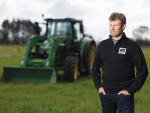
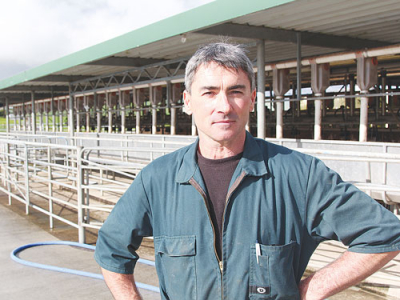 Waikato farmer Vernon Corbett.
More farmers are buying dairy technology that pays for itself promptly, says Waikato Milking Systems chief executive NZ Campbell Parker.
For example, more dairy farmers are installing automatic cup removers to reduce labour costs and increase efficiency, he says.
“Automatic cup removers have an instant payback. They reduce overmilking of cows and so shorten the time you are in the shed, freeing you up to do other things.”
Parker says Fieldays showed a trend for farmers to look at “getting more out of what they have by the simple addition of technology”.
“We still had farmers coming in to talk to us about new rotaries and herringbones but an increasing number wanted to look at technologies which would help them get more value and profit out of what they have.
“Many have sheds that are no longer efficient and which during the industry’s growth years would have been demolished and rebuilt. But now they prefer to optimise what they have and technology is the way to do that.”
Auto cup removers speed up milking and cow flow and raise comfort and udder health, says Parker.
“Modular components can be retrofitted into any milking system and immediately bring benefits.”
For example, Otorohanga farmers Vernon and Theresa Corbett retrofitted an old shed. They were sharemilking in Matamata when 80ha next to the family drystock farm in Otorohanga came up for lease.
“We already [had] 24ha that I’d been leasing off my family so the opportunity to lease the neighbouring 80ha dairy farm with a 10 year option to purchase was the opportunity we’d been waiting for,” Vernon Corbett says.
The family moved ‘back home’ in 2007 and he recalled the farm’s 18-year-old 21-aside herringbone shed had grown over the years.
“It started life as a 16-aside with room for 21 bails. We were milking 186 cows when we came here and planned to gradually increase numbers to the 380 cows we’ll milk in 2018-2019.
“From the start we decided to use the length of the pit by adding cups to make it a 21-aside.”
The need for him to milk on his own and drench and apply teat spray prompted their decision to add cup removers. “I’ve been milking in herringbones with cup removers for 15 years and wouldn’t milk without them”.
Waikato Milking Systems’ latest innovation, ErgoPOD is now commercially available within New Zealand and Australia.
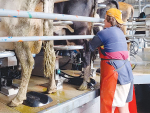
Waikato Milking Systems has unveiled the final production version of its ErgoPOD, a state-of-the-art semi-robotic technology designed to increase milking speed, productivity, and efficiency in the parlour.
While Waikato Milking Systems is committed to solving the challenges dairy farmers face with some of the world’s most innovative and technologically advanced dairy solutions, their approach differs from other companies, as their focus falls on retaining the essence of dairy farming.
Numedic Ltd has acquired a major part of Waikato Milking Systems' effluent and environmental business, including the well-known Cobra range of travelling rain gun irrigators.
OPINION: In the heartland of rural New Zealand, Waikato Milking Systems is on a transformative journey that seeks to revolutionise dairy farming practices with their latest innovation, ErgoPOD.

OPINION: David Seymour and James Meager's plan to make it easier for farmers and orchardists to operate drones can best be described a 'courageous' move.
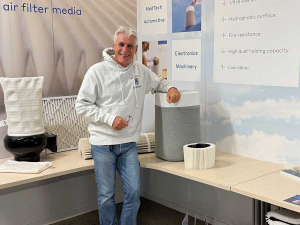
New Zealand wool is reaching new heights as air filtration companies move away from synthetic products to biodegradable alternatives.
Opuha Dam's ability to protect South Canterbury communities from major flooding has taken a significant step forward, with Opuha Water Limited (OWL) successfully commissioning a new outlet valve capable of releasing record volumes of water from the dam ahead of a weather event.
There's been widespread support from the primary sector for the Government's announcement on changes to freshwater farm plans that come under the Natural Environment Bill, which is now set to replace the existing RMA.
A partnership between state-owned enterprise Pāmu (Landcorp Farming Limited) and charity Meet the Need is putting more than quality New Zealand beef into food bank parcels this year.
The Opportunity Party has faced criticism during the election campaign that its policies are too urban-focused and offer little for rural communities.