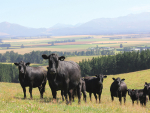
BVD Control Begins Long Before You See A Problem
Bovine Viral Diarrhoea (BVD) is sometimes viewed as a dairy industry issue, but the reality is that the disease can have serious consequences for beef breeding herds as well.




 increase font size
 Stuart Anderson, MPI
The head of the Ministry for Primary Industries (MPI) biosecurity operation, Stuart Anderson, has defended the cost and the need for a Plant Healht and Environment Laboratory (PHEL) being built in Auckland.
He says claims in another farming publication that the new facility is a white elephant are untrue and seem to miss the point about the need for NZ to have a quality laboratory to protect the primary sector.
Anderson says the present facility, based at Taranaki, is at the end of its life and is no longer fit for purpose.
"We now need a facility that will serve us for the next 50 years," he told Rural News.
Anderson says the MPI laboratory, which has about 60 staff, carries out several funcions including diagnostic, inspection analysis, diagnosis of plant pests, diseases and viruses and supports MPI's surveillance programmes. He says it deals with issues such as the recent fruit fly incursion and helps provide trade assurances of our 'pest-free status' for exports. He says it also has a quarantine facility which insures the safe importation of new plant material for the horticulture sector.
"The cost of the quarantine component of the new laboratory has attracted some criticism, but the fact is that this only accounts for about 10% of the total cost. All those other functions that the lab provides, such as surveillance responses and trade, are by far a bigger part of the cost of the facility," he says.
The new MPI laboratory is being built on what is widely known as and Plant and Food Research's campus at Mt Albert in Auckland and Anderson says co-locating on this site makes sense.
He says it means that scientists from both organisations will be able to collaborate and potentially share facilities as and when appropriate.
He says the new lab will feature new innovative technologies.
"This gives both of us a strategic advantage and creates a centre of science excellence. It is possible that other science organisations may also locate here in the future," he says.
The Auckland Factor
The siting of the Plant Health and Environment Laboratory (PHEL) in Auckland is logical because that city is a major entry point for imports of plant material and its airport is the major gateway into NZ where the biosecurity risk is arguably higher.
It acts as a hub, being close to the Bay of Plenty and Northland.
Having a new and modern biosecurity facility in Auckland also helps build resilience into MPI's overall response capability, says Ministry for Primary Industries (MPI) head of biosecurity operation, Stuart Anderson. It already has a quality animal laboratory at Wallaceville near Upper Hutt.
 |
|---|
|
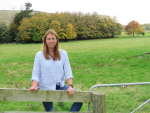
MPI's Stuart Anderson says a quality laboratory in Auckland is needed to protect the primary sector. |
"The new PHEL at Mt Albert will have containment laboratories and facilities built into it which are the equivalent to that of Wallaceville," he says.
“In the worst-case scenario of say a foot and mouth disease outbreak this plant lab would be able to handle an animal response of this kind of scale as well. So it provides that sort of resilience as well for biosecurity more broadly.”
NZ is very fortunate, he says, in that it doesn’t have the large numbers of pests that other countries have. This is because our biosecurity settings are more stringent than others and we have more to lose given that our primary exports are the mainstay economically of our country.
He says with modern communications the world has become smaller and is changing from a biosecurity perspective and so NZ must be more vigilant.
Anderson says things like climate change start to come into play, trade patterns are also changing and there are different supply chain demands.
“Taking all this into account we need to keep ahead of those everincreasing risks and one way of doing this is to have a modern high quality science facility to deal with @rural_news this,” he says.
Bovine Viral Diarrhoea (BVD) is sometimes viewed as a dairy industry issue, but the reality is that the disease can have serious consequences for beef breeding herds as well.

Election years are always a concerning time for farmers, according to DairyNZ chair Tracy Brown.
Testing confirms H5 bird flu in a single northern giant petrel, found dead on a remote Cape Palliser beach in the Wairarapa, says Dr Mary van Andel, the Ministry for Primary Industries' (MPI) Chief Veterinary Officer.
Bovine Viral Diarrhoea (BVD) is sometimes viewed as a dairy industry issue, but the reality is that the disease can have serious consequences for beef breeding herds as well.
Four years since it was first detected in New Zealand, researchers and growers now know much more about management of maize pest fall armyworm (FAW).


Decades piloting planes has ensured vet and farmer David Hayes is focused on safety. So, after a serious accident while welding on farm, he is sharing his experience so others can learn from it.
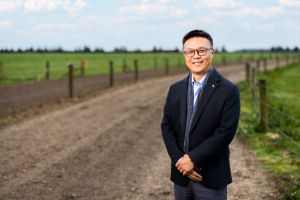
Canterbury milk processor, Synlait Milk has confirmed Leon Fung as its chief executive officer.
OPINION: Making it easier to collect rainwater and use it to grow crops and livestock is a no brainer.
As part of its Election 2026 coverage, Rural News asked political parties how they would help pull the arable sector out of the doldrums. Here's what they said:
Farmers are being encouraged to rethink how they manage waste on farm with the launch of ruralwastesorted.co.nz, a new website bringing together practical tips, real farmer experiences and resources.
New Zealand Winegrowers (NZW) is celebrating the India-New Zealand Free Trade Agreement (FTA) coming into force today, bringing New Zealand wine improved access to one of the world’s fastest-growing economies.

OPINION: The same mainstream media muppets that brought you Jacindamania in 2017 have been flat out pimping for the Opportunities…
OPINION: Your old mate reckons the atrocious way farmers in the UK are treated by their lords and masters in…




