Massey Uses Portable Analyser to Measure Pasture Soil GHGs
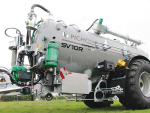
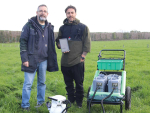
Researchers at Massey University are using a special piece of scientific equipment to improve the measurement of greenhouse gas emissions from pasture soils.
 increase font size
 Global Dairy Platform executive director Donald Moore says dairy and meat are key to feeding the world’s rising population.
The executive director of the Global Dairy Platform (GDP) Donald Moore says research being done at Massey University's Riddet Institute will help avert world hunger.
He says dairy and meat are key to feeding the world's rising population. The GDP is based in Chicago and Fonterra chief executive Miles Hurrell is its current chair.
Moore says NZ is well positioned to contribute to food solutions as it was uniquely export-driven and had achieved significant pasture-based production efficiency. He says NZ was also a leader in genetic research and in finding scientific answers to the problem of ruminant animal-derived methane emissions.
"Globally people are living longer, which is a remarkable achievement. But we need to focus on the health span not just life span, in the face of rising rates of diabetes, cardiovascular disease, obesity, sarcopenia and nutrient deficiencies," he says.,
Among the challenges facing humanity are malnutrition from food scarcity, and nutrient deficiencies - often accompanied by obesity or type 2 diabetes - from eating too much of the wrong foods.
Moore says other problems facing the food system were climate change and the need for science investment into research to find ways to futureproof food supply.
He says this is where the importance of animal-sourced food like meat and dairy in the diet became clear. He says maintaining a good diet influenced hospital rates and quality of life.
"If muscle mass declines, metabolic risk compounds. We need to preserve muscle function and maintain lean muscle mass to reduce frailty and preserve metabolic health. Older adults require proteins rich in essential amino acids and highly bioavailable micronutrients," he says.
Moore also reiterated the need for practical solutions, saying a lot of the food debate happens in countries with abundance and plenty. But by 2050, there would be greater rates of under five-year-olds that were stunted or wasted from food scarcity.
"In low- and middle-income countries the challenge is about nutrient sufficiency not sustainability; in high-income countries the challenge is healthy aging. The common denominator is that nutrient density matters."
Moore says ruminant animals were excellent at turning land that could not be used for arable crops into highly nutritious meat and dairy foods. He says adequacy is not just nutrient presence but nutrient utilisation and says small amounts of animal-sourced food can make a huge difference in population health. He adds that it plays a measurable and meaningful role.
"Food production does have a cost to the environment, but nutrition needed to come from somwehere. Optimisation, not elimination, is the key and practicality matters," he says.
Researchers at Massey University are using a special piece of scientific equipment to improve the measurement of greenhouse gas emissions from pasture soils.

Interest in agritech and production animal systems has prompted Massey University's School of Agriculture and the Environment to new majors to its popular animal science degree.
The industry is crying out for graduates with agricultural related degrees.
A four year trial has reaffirmed that mixing plantain into dairy pastures can help reduce nitrogen losses to freshwater while maintaining milk production and profitability, say researchers.
Special courses for secondary school teachers to help excite kids about agriculture and horticulture are now being run at Massey University.


National’s pledge to introduce 19 new national standards shows the party is serious about getting Wellington out of farming, Federated Farmers says.
The National Party’s policies to make it easier to grow fresh vegetables, secure reliable water and energy and simplify farm planning are practical changes that will give growers the confidence to invest, according to Horticulture New Zealand (HortNZ).
Fonterra Co-operative Group chief financial officer Andrew Murray has resigned to take up a role outside the dairy giant.
A major move is about to get underway to improve the quality and viability of dairy beef and cattle in NZ.
Veterinarians say changes to the code of welfare for dairy cattle provides a positive foundation for improved cattle welfare across the country.
Today, 15 October, is the International Day of Rural Women, which recognises rural women’s contribution to farming, communities and the environment.